Magnesium Glycinate For Sleep And Why It Works

Magnesium Glycinate For Sleep And Why It Works

If you’re a high-performer juggling a demanding career or an intense training schedule, a restless night isn’t just frustrating—it’s a performance killer.

This guide tackles that problem head-on. We're going to reframe magnesium glycinate for sleep not as just another supplement, but as a strategic tool for unlocking deep recovery, mental clarity, and next-day vitality.

Your Search For Better Sleep Ends Here

For so many driven people, bedtime becomes a battleground. You lie awake, your mind racing through tomorrow's to-do list while your body stays stubbornly tense. It's a vicious cycle that sabotages everything from cognitive function and mood to physical recovery and immune health.

It's a massive roadblock for anyone trying to operate at their peak, whether that's in the boardroom or the gym.

This guide goes way beyond generic sleep advice like "turn off your phone." We're diving into why one specific nutrient—magnesium glycinate—is a superior solution for calming both a racing mind and a tense body. Unlike other supplements that might offer a temporary band-aid, this form of magnesium gets to the core biochemical reasons you can't seem to switch off.

A Recovery Tool for High-Performers

Think of magnesium glycinate less as a simple sleep aid and more as a key to optimizing your entire system. For the athlete, it’s about muscle relaxation and repair. For the busy professional, it’s about dialing down the stress response that keeps your brain stuck in "on" mode.

This is your resource for a clear, science-backed understanding of how it all works.

By the end of this guide, you won't just know that magnesium glycinate can improve your sleep. You'll understand why it works and how to use it effectively to reclaim your nights and supercharge your days.

This isn't about finding a magic bullet. It's about making an informed, strategic choice to support your goals. We'll cover everything you need to know:

  • The Science: How magnesium glycinate actually calms your nervous system and preps your body for rest.
  • The Evidence: A no-nonsense look at the clinical research backing its use for better sleep quality.
  • Practical Application: Actionable advice on dosing, timing, and fitting it into your existing routine.

This deep dive will give you the knowledge to finally conquer restless nights and wake up feeling refreshed, focused, and ready to perform.

How Magnesium Glycinate Calms Your Brain

To get a handle on how magnesium glycinate works, think of your brain as a symphony orchestra. When you’re trying to wind down, over-excited neurons are like a rogue brass section playing way too loud, keeping the whole orchestra—and you—on edge.

Magnesium is the conductor who steps in to quiet the chaos. It doesn’t just knock you out; it works on a sophisticated biochemical level to prep your mind for deep, restorative rest.

The whole process comes down to balancing the key chemical messengers, or neurotransmitters, that decide if your brain is switched "on" or "off." And this is where magnesium glycinate really shines.

Taming Your Brain’s Accelerator

A racing mind at night is often caused by an excitatory neurotransmitter called glutamate. Glutamate is basically the accelerator pedal for your brain cells. When it’s pressed too hard, your neurons start firing like crazy, leaving you feeling restless and anxious.

Magnesium acts as the natural brake. It parks itself on the same cellular receptors that glutamate tries to activate (specifically, the NMDA receptors). By blocking these spots, magnesium stops glutamate from overstimulating your brain. It’s like turning down the volume on all that mental chatter so your nervous system can finally shift from high alert to calm.

Without enough magnesium to put a check on glutamate, your mental engine can keep revving long after the lights are out.

Boosting Your Brain’s Calming Agent

While it's blocking the brain’s accelerator, magnesium is also hitting the brake pedal by boosting your primary calming neurotransmitter: GABA (gamma-aminobutyric acid). If glutamate is the gas, GABA is the brake, slowing down brain activity and promoting relaxation.

Magnesium binds to and activates GABA receptors, making them better at their job. This one-two punch—turning down the "on" signals while amplifying the "off" signals—is what makes magnesium such a powerful tool for sleep.

And the "glycinate" part? That comes from glycine, an amino acid that’s bound to the magnesium. Glycine is a calming neurotransmitter on its own, adding another layer to the relaxation response.

This synergy is key. Magnesium quiets the noise, while glycine deepens the calm, creating the perfect internal environment to finally drift off to sleep.
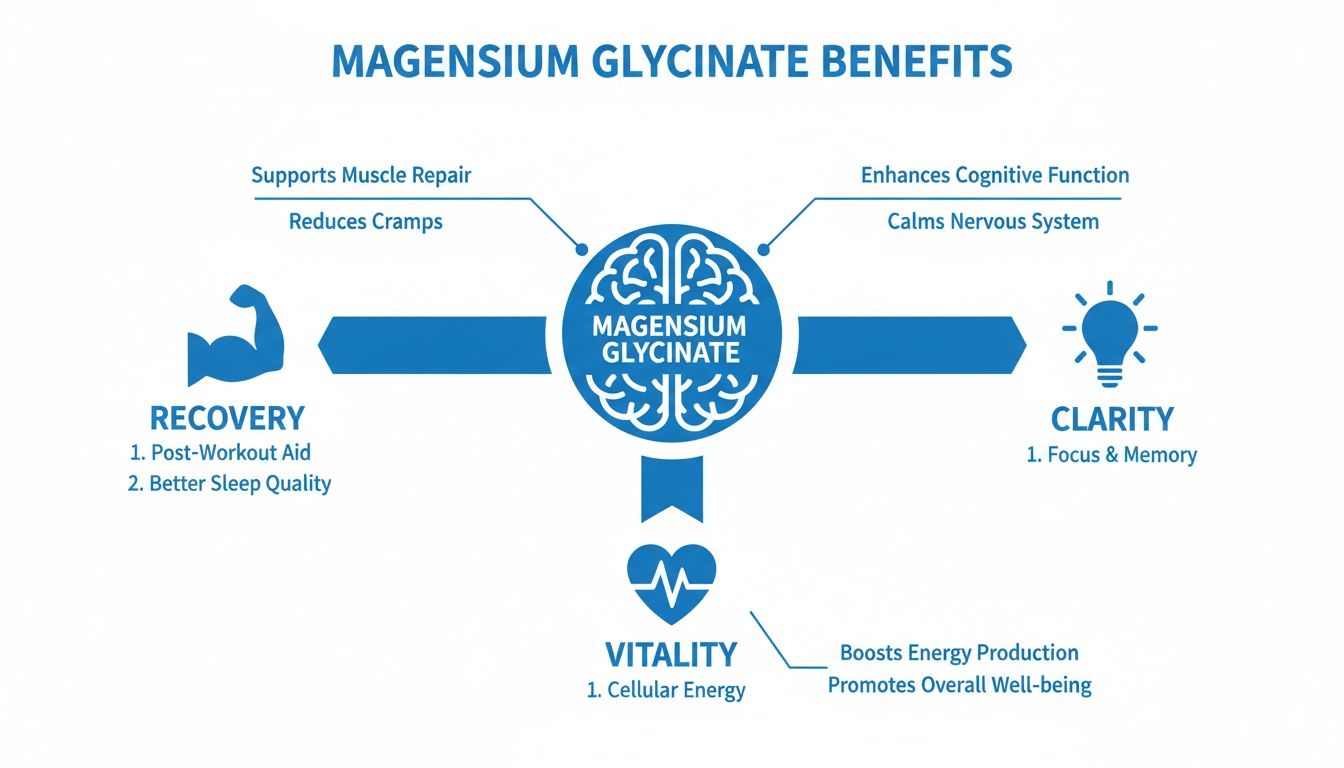
This infographic breaks down how magnesium glycinate’s benefits go far beyond sleep, tying into overall recovery, mental sharpness, and vitality.

An infographic detailing Magnesium Glycinate benefits for recovery, clarity, and vitality, including sleep aid.

As you can see, better sleep creates a positive cascade, sharpening your cognitive function and speeding up physical recovery.

Regulating Your Sleep-Wake Cycle

Beyond juggling neurotransmitters, magnesium is also a key player in regulating melatonin, the hormone that runs your internal sleep clock. Your body simply can't produce enough melatonin without adequate magnesium. This hormone is what signals that it's time to wind down for the night.

At the same time, magnesium helps manage levels of the stress hormone cortisol. High cortisol at night is a classic trigger for insomnia and waking up constantly. By helping normalize your cortisol rhythm, magnesium glycinate makes sure your body’s stress response isn’t sabotaging your rest.

This is why consistent magnesium intake is so important for your brain's sleep architecture. In fact, a 20-year study following young American adults found a clear link between higher magnesium consumption and better sleep quality over the long haul.

Lowering Body Temperature for Sleep

Finally, the glycine attached to the magnesium offers another subtle but powerful sleep benefit. To fall asleep, your core body temperature needs to drop slightly—it’s a critical biological cue for rest.

Glycine has been shown to help with this process. It increases blood flow to the skin, which allows heat to escape more easily. This gentle cool-down effect can help you fall asleep faster and get into those deeper, more restorative stages of sleep.

This multi-pronged approach—calming the brain, supporting melatonin, managing cortisol, and lowering body temp—is why magnesium glycinate for sleep is such an effective strategy. It tackles the core physiological roadblocks that keep high-achievers from getting the quality rest they need. To keep your mental edge, check out our guide on how other supplements can boost your brain health.

Choosing The Right Magnesium For Your Sleep Goals

Different forms of magnesium supplements, including capsules, powder, and tablets, displayed on a blue background with the text 'RIGHT MAGNESIUM'.

Walk down any supplement aisle and you’ll see a wall of magnesium options: oxide, citrate, malate, glycinate. It’s enough to make your head spin. But here’s the thing—they aren't all created equal, especially when your goal is deep, restorative sleep.

Picking the right form is the difference between feeling a real change and just wasting your money. For anyone serious about optimizing their recovery and performance, knowing what makes one type better than another is non-negotiable.

The secret to unlocking magnesium’s power comes down to two simple but critical ideas: bioavailability and chelation.

Why Not All Magnesium Is Created Equal

Think of bioavailability as how much of a nutrient your body can actually absorb and use. A supplement can have a huge dose on the label, but if your body can't absorb it efficiently, most of it passes right through you without doing much good. This is a classic problem with cheaper, less effective forms of magnesium.

This is exactly where chelation comes in. Chelation (pronounced "key-lay-shun") is a process where the magnesium mineral is chemically bonded to another molecule, usually an amino acid. This bond acts like a protective escort, shielding the magnesium as it travels through your digestive system and making it far easier for your body to absorb.

With magnesium glycinate, the magnesium is chelated to the amino acid glycine. This powerful pairing is what makes it the gold standard for anyone chasing better sleep and relaxation. Glycine doesn't just help the magnesium get absorbed; it has its own calming properties that work in perfect harmony with the mineral.

The Glycinate Advantage For Sleep And Recovery

The reason magnesium glycinate is a standout for sleep lies in its unique structure. The bond with glycine makes it incredibly gentle on the stomach, which is a huge contrast to other forms like magnesium oxide or citrate.

Those other forms are notorious for their laxative effect because they pull water into the intestines. That can lead to digestive chaos—the absolute last thing you need when you're trying to wind down for the night.

Because magnesium glycinate is so well-absorbed, it gets to your nervous system and muscles to deliver its calming benefits without the gut drama. More of the good stuff gets where it needs to go to help quiet a racing mind and relax a tense body.

By choosing a chelated form like magnesium glycinate, you’re not just taking a supplement; you’re ensuring maximum absorption and targeted action. You get the sleep-promoting benefits of both magnesium and glycine without the disruptive side effects.

This smart design is precisely why it’s the go-to for athletes who need muscle recovery and busy professionals looking for mental calm before bed.

Ready to experience the glycinate advantage for yourself?

Elemental Edge Magnesium Glycinate is fully chelated, gentle on digestion, and formulated specifically for adults who want deeper sleep, faster muscle recovery, and genuine calm — without the digestive drawbacks of cheaper forms.

⭐ 4.82/5 from 360+ verified customers • Made in USA • Third-Party Tested • Free U.S. Shipping • 30-Day Money-Back Guarantee

→ Shop Magnesium Glycinate — Starting at $34

Comparing Popular Magnesium Forms

To make the right choice, it helps to see how the options stack up side-by-side. While every form of magnesium has its place, there's a clear winner when it comes to sleep.

Magnesium Forms Compared For Sleep And Wellness

A side-by-side comparison of common magnesium supplements, highlighting their primary uses, bioavailability, and potential side effects to help you choose the best form for your needs.

Magnesium Form Primary Use Bioavailability Digestive Impact
Magnesium Glycinate Sleep, relaxation, anxiety relief, muscle recovery Excellent Very gentle, minimal to no laxative effect
Magnesium Citrate Constipation relief, general supplementation Good Can have a strong laxative effect
Magnesium Oxide Constipation, heartburn, indigestion Poor Very strong laxative effect, not ideal for correcting deficiency
Magnesium Threonate Cognitive function, brain health Good Generally gentle on the stomach

As the table makes clear, if your goal is to improve sleep quality, fall asleep faster, and feel genuinely calm, magnesium glycinate is the superior choice. Its high bioavailability and gentle nature mean you get the maximum therapeutic benefit right when you need it most.

What The Research Says About Magnesium And Sleep

Understanding the science behind magnesium glycinate is one thing. But for anyone driven by results, the real question is simple: does it actually work? When we move from the lab into real-world studies, the clinical evidence paints a compelling picture of how this supplement can genuinely shift your sleep quality.

Researchers don’t just ask people if they "slept better." They use validated, objective tools to measure specific outcomes. This data-driven approach lets us see exactly where magnesium makes a tangible difference, translating complex study results into the benefits you actually care about—like falling asleep faster and waking up less.

Looking at the collective body of research, a clear pattern emerges. Magnesium supplementation, especially with highly bioavailable forms like glycinate, has been shown to improve the key metrics that define a good night's rest.

Reducing The Time It Takes To Fall Asleep

One of the most common complaints from people struggling with sleep is that frustratingly long time it takes to finally drift off. In clinical terms, this is called sleep onset latency. If you’ve ever laid in bed with a racing mind, you know this feeling all too well.

Multiple studies have shown that magnesium can help shorten this window. By calming the nervous system and activating GABA receptors, it helps your brain transition from an alert, wakeful state into the first stages of sleep more efficiently.

Think of it as giving your brain a clearer off-ramp from the busy highway of your day. Instead of circling the lot looking for a parking spot, you’re guided directly to an open one, allowing you to "park" and rest much sooner.

Decreasing Nighttime Awakenings

Another major disruptor of restorative sleep is waking up throughout the night. These interruptions, even if they're brief, can pull you out of deep sleep cycles and leave you feeling groggy and unrefreshed in the morning.

Clinical findings suggest that having adequate magnesium levels contributes to more stable, consolidated sleep. By helping to regulate stress hormones like cortisol and supporting neurotransmitter balance, magnesium promotes a deeper, more consistent state of rest.

This translates to fewer instances of waking up at 3 a.m. for no apparent reason. The result is longer stretches of uninterrupted sleep, which is critical for both physical recovery and mental clarity.

The goal isn't just to get more hours in bed, but to get more high-quality, continuous sleep. Research indicates that magnesium is a powerful ally in achieving this, helping to minimize those frustrating middle-of-the-night disruptions that sabotage your rest.

Improving Overall Sleep Quality And Efficiency

Beyond these specific metrics, researchers often use comprehensive questionnaires to gauge a person's overall sleep experience. One of the most respected tools is the Insomnia Severity Index (ISI), which scores various aspects of sleep difficulty and its impact on daytime functioning.

A groundbreaking randomized controlled trial put magnesium bisglycinate to the test with adults suffering from poor sleep. The results were clear: those taking 250 mg of elemental magnesium combined with glycine saw a statistically significant improvement in their sleep quality over four weeks. Participants experienced an average reduction of 3.9 points on the ISI scale, a notably larger drop compared to the placebo group. You can explore the full study about these sleep improvements on the NIH website.

This kind of evidence is crucial because it moves beyond theory and demonstrates a measurable, real-world impact. An improvement on the ISI scale isn't just a number; it represents tangible benefits, such as:

  • Waking up feeling more refreshed and restored.
  • Having more energy and better focus during the day.
  • Feeling less worried or distressed about sleep.

Ultimately, the clinical research on magnesium glycinate for sleep points toward a consistent conclusion. It is a well-supported, evidence-based tool for enhancing multiple facets of sleep, from falling asleep faster to staying asleep longer and improving the subjective feeling of a restful night.

How To Use Magnesium Glycinate For Optimal Sleep

A bedside table with a sign saying 'Nightly Routine', a glass of water, a bottle, and a notebook next to a bed.

Knowing the science is great, but getting real results is what matters. Bringing magnesium glycinate into your nightly routine is simple, but a few details can make all the difference. Think of it less like a strict prescription and more like your own personal sleep protocol you can fine-tune over time.

Successfully using magnesium glycinate for sleep really boils down to getting the dose right. This is where a common point of confusion trips people up: the difference between the total weight of the supplement and the actual amount of magnesium you're getting.

Decoding Your Dose: Elemental Magnesium Matters

When you glance at a supplement bottle, you might see a big number like 1,000 mg of magnesium glycinate. That number is the total weight of the magnesium plus the glycine it's bonded to. The number you really need to pay attention to is the elemental magnesium—that’s the actual amount of the mineral your body can use.

For instance, a 1,000 mg capsule of magnesium glycinate might only deliver about 150-200 mg of elemental magnesium. Always flip the bottle over and check the "Supplement Facts" panel for this crucial detail. The elemental value is what determines the supplement's true potency.

The best way to start is low and slow. For most adults, 200 mg of elemental magnesium is the perfect starting line. Take that dose consistently for about a week, pay attention to how you feel, and see how your body responds. You can gradually increase it if you feel you need more, but many people find this initial amount is exactly what they need. The goal is to find your minimum effective dose.

Finding Your Perfect Timing

Timing is everything when you're trying to cue your body for rest. To get the biggest benefit from its calming effects, plan to take your magnesium glycinate 30 to 60 minutes before you want to be asleep.

This gives the magnesium and glycine enough time to be absorbed and start working their magic on your central nervous system. It helps kickstart that all-important wind-down process, quieting the mental chatter and easing physical tension right when you need it most.

Think of it like preheating an oven. Taking magnesium glycinate ahead of time ensures your internal environment is perfectly primed for rest when your head finally hits the pillow.

Creating A Powerful Sleep Synergy

While magnesium glycinate is a fantastic tool on its own, its effects are amplified when you pair it with other relaxation-promoting habits. This creates a powerful synergy where the total benefit is far greater than the individual parts.

Consider adding these to your routine:

  • L-Theanine: This amino acid, famously found in green tea, promotes a feeling of "wakeful calm" without making you drowsy. It works hand-in-hand with magnesium to quiet a busy mind.
  • A Mindful Evening Ritual: Swap your screen time for reading a physical book, doing some gentle stretching, or journaling. This sends a clear signal to your brain that the day is over and it's time to shift gears.
  • A Warm Bath: Soaking in a warm bath is relaxing, but it’s the cool-down after you get out that really helps. This drop in core body temperature is a natural trigger for sleepiness, an effect that glycine also supports.

Weaving these habits into your evening doesn't just make your supplement more effective—it turns the simple act of taking a capsule into a deliberate, holistic ritual for better sleep.

With the right dose, timing, and a few complementary habits, you can build a personalized and highly effective sleep protocol. Start building the foundation of your new nightly routine with our high-quality, chelated Elemental Edge Health Magnesium Glycinate.

Beyond Sleep: The Full-Body Benefits Of Magnesium

While getting a great night's rest is a powerful benefit in itself, looking at magnesium glycinate for sleep alone misses the bigger picture. Think of it this way: optimizing your sleep is just the first domino to fall. It triggers a cascade of positive effects that sharpen your performance, build resilience, and boost your vitality all day long.

This essential mineral is a key player in over 300 biochemical reactions in your body, making it a true cornerstone of full-body wellness. It’s an investment in your entire operating system, not just the nightly shutdown sequence.

Fueling Physical Recovery And Performance

For anyone who trains hard, magnesium is non-negotiable. Intense physical activity burns through your magnesium stores, and topping them off is critical for proper muscle function. Magnesium plays a direct role in muscle relaxation by acting as a natural calcium blocker, which helps your muscles release after contracting.

This process is vital for a few key reasons:

  • Preventing Cramps: It helps stop those painful, involuntary muscle cramps that can derail a workout or jolt you awake at night.
  • Accelerating Recovery: By easing muscle tension and supporting cellular repair, magnesium helps reduce post-workout soreness so you can get back to training sooner.
  • Supporting Energy Production: Magnesium is essential for creating ATP, the body's main energy currency. This ensures your muscles have the fuel they need to perform.

When your body has enough magnesium, you aren’t just sleeping better—you’re building a more resilient, responsive, and powerful physical machine.

Sharpening Your Mental Edge

For driven professionals, the battle against stress is constant. A racing mind doesn't just sabotage sleep; it tanks your focus, decision-making, and emotional control during the day. This is where magnesium glycinate offers a significant advantage by helping to manage the body’s stress-response system.

It helps regulate the release of cortisol, our primary stress hormone. When cortisol levels are chronically high, you feel wired, anxious, and unable to concentrate. By helping to keep this hormone in check, magnesium fosters a sense of calm and mental clarity.

This biological calm is the foundation for peak cognitive function. It allows for better focus during complex tasks, improved mood stability, and greater resilience against daily pressures, turning a good night's sleep into a sharper, more productive day.

Ultimately, the journey to better performance starts with better rest. And magnesium is a fundamental tool for achieving both. To dive deeper into its wide-ranging advantages, you can learn more about the full benefits of supplementing with magnesium glycinate in our detailed guide.

Common Questions, Answered

Adding a new supplement to your routine always brings up a few questions. Getting the practical details right is key to feeling confident and making sure you're using magnesium glycinate for sleep safely and effectively.

Let’s clear up some of the most common queries we hear.

How Long Does It Take for Magnesium Glycinate to Work?

Many people feel the calming effects of magnesium glycinate within the first 30-60 minutes, which is why it’s perfect to take shortly before you want to wind down.

But the real magic happens with consistency. While you might fall asleep faster on night one, the deeper benefits—like better sleep quality and fewer middle-of-the-night wakeups—build over time. Give it a week or two of nightly use to let your body’s magnesium levels stabilize and experience the full restorative impact.

Is It Safe to Take Every Night?

Yes, for most healthy adults, taking magnesium glycinate nightly is generally very safe, especially when you stick to the recommended dosages (typically under 350 mg of elemental magnesium from supplements). Because of its high bioavailability and gentle nature, it’s well-tolerated for long-term use.

Unlike some sleep aids that can lead to dependency, magnesium is just a mineral your body needs to function. Consistent intake simply helps maintain optimal levels for both sleep and overall health. That said, it's always a good idea to check in with your doctor before starting any new supplement.

The goal here isn't a quick fix; it's about supporting your body's natural rhythms. Consistent use of magnesium glycinate helps regulate your nervous system and sleep-wake cycle, making it a sustainable part of a healthy nightly routine.

What’s the Difference Between Glycinate and Bisglycinate?

This one sounds more complicated than it is. Magnesium glycinate and magnesium bisglycinate are essentially the same thing.

The term "bisglycinate" (bis- meaning two) is just a more technical way of saying one magnesium ion is bound to two glycine molecules. This is what creates the stable, "fully chelated" form that makes it so easy to absorb and gentle on your stomach. So, if you see either name on a label, you're getting the same highly effective, sleep-friendly magnesium.

Are There Any Side Effects or Interactions to Worry About?

Magnesium glycinate is known for having minimal side effects. Unlike other forms like magnesium citrate or oxide, it very rarely causes digestive issues like diarrhea. If you take an excessively high dose, you might experience some drowsiness or stomach cramping.

It's also smart to be aware of potential medication interactions. Magnesium can affect how your body absorbs certain antibiotics and osteoporosis medications (bisphosphonates). If you take any prescription drugs, particularly for heart conditions or kidney disease, it’s crucial to talk with your doctor before adding magnesium glycinate to your routine.


Ready to transform your nights and energize your days? At Elemental Edge Health, we provide clean, research-backed supplements to help you perform at your peak.

Ready to transform your nights and energize your days? Elemental Edge Magnesium Glycinate is clean, fully chelated, and backed by 360+ verified customers — with a 30-day guarantee so you can try it without risk.

→ Try Magnesium Glycinate risk-free — 30-Day Money-Back Guarantee


About the Author

Kim Brissett-Lier is the founder of Elemental Edge Health. After losing 100+ lbs in his 40s and rebuilding his strength, energy, and mental clarity through targeted supplementation and consistent daily habits, Kim created Elemental Edge to help other adults 40+ experience the same transformation — without the extremes. He writes about magnesium, creatine, Vitamin D, sleep, stress resilience, and the fundamentals of long-term health and performance.

Back to blog