

Benefits of Magnesium Glycinate for Better Sleep & Wellness
Magnesium glycinate is a unique form of magnesium, chelated (or bonded) to the calming amino acid glycine. The top benefits of magnesium glycinate include deeper sleep, reduced stress and anxiety, faster muscle recovery, improved heart health, and better blood sugar regulation — all without the digestive side effects of other magnesium forms. This pairing makes it a powerhouse supplement for anyone looking to improve their sleep, dial down stress, and support muscle recovery.
The Modern Solution for Stress, Sleep, and Recovery

Sound familiar? You're lying in bed, mind still racing from a packed day, while your muscles are screaming from a tough workout. In a culture that demands peak performance around the clock, true rest and mental quiet can feel like a luxury you can't afford.
This is the classic burnout cycle. Stress wrecks your sleep, and poor sleep sabotages your recovery. It's a downward spiral that hits everything from your focus at work to your strength in the gym.
But what if you could break that cycle? This is exactly where magnesium glycinate steps in. It's not just another mineral—it's a targeted tool built for the pressures of a high-performance life.
A Smarter Form of Magnesium
Think of most magnesium supplements as trying to get into an exclusive club. Some might make it past the velvet rope, but many get turned away at the door, causing a ruckus (digestive upset) on their way out.
Magnesium glycinate is different. It's bonded to glycine, a calming amino acid that acts like a VIP pass, smoothly escorting the magnesium directly into your cells where it can get to work.
This special "chelated" structure gives you two huge advantages:
- Superior Absorption: The glycine bond shields the magnesium, letting it absorb efficiently without the laxative effect you often get from forms like magnesium citrate or oxide.
- Dual-Action Calming: You get the muscle-relaxing, nerve-calming benefits of magnesium, plus the extra tranquility from glycine, which acts as an inhibitory neurotransmitter in the brain.
This unique combination is the key to unlocking profound relaxation and faster recovery. It directly targets the core problems of the modern burnout cycle—an overactive mind and an exhausted body—working together to restore balance from the inside out.
Understanding this mechanism is the first step to seeing how this powerhouse nutrient can transform both your nights and your days. It’s a sophisticated approach that goes beyond basic supplementation to provide foundational support for your body’s most critical systems.
For those looking to dive deeper, pairing supplementation with a holistic approach to stress management can create even more powerful results. Now, let's explore the science-backed benefits that make magnesium glycinate such an essential tool.
How Magnesium Glycinate Quiets a Busy Mind
In a world of constant notifications and back-to-back meetings, a racing mind can feel like the new normal. For high-achievers, this mental static isn't just distracting; it's a direct threat to your focus, performance, and overall well-being. This is where magnesium glycinate truly shines, acting as a powerful tool to bring a sense of calm and control back to your inner world.
The secret is how it interacts with your brain's own calming systems. Think of your brain as having both an accelerator and a brake. The constant pressures of modern life—deadlines, intense workouts, and information overload—keep that accelerator floored.
Magnesium glycinate helps you apply the brakes.
Turning Down the Mental Noise
At the very heart of this calming effect is a neurotransmitter called gamma-aminobutyric acid, or GABA. You can picture GABA as the brain's natural "off switch" or a dimmer dial for all that mental noise. When GABA levels are where they should be, your nervous system can downshift, promoting feelings of relaxation and tranquility.
Magnesium plays a critical role here by binding to and stimulating your GABA receptors. When magnesium glycinate enters the picture, it essentially makes GABA more effective, helping to turn down the volume on racing thoughts and anxious feelings. The addition of glycine—an amino acid with its own calming properties—amplifies this for a potent, dual-action result.
This is precisely why one of the most celebrated benefits of magnesium glycinate is its ability to foster a state of composed control.
Taming the Body's Stress Hormones
Beyond boosting GABA, magnesium glycinate directly intervenes in your body's physiological stress response. When you're under pressure, your adrenal glands pump out stress hormones like cortisol and adrenaline. While useful in short bursts, chronically elevated levels lead straight to burnout, poor recovery, and mental fatigue.
Magnesium helps regulate the release of these potent chemicals. It works to blunt the excessive output of cortisol and adrenaline, which helps prevent your nervous system from getting stuck in a perpetual "fight-or-flight" mode. This creates a much-needed buffer against the daily onslaught of stressors.
By managing these stress hormones, magnesium glycinate helps shift your body from a state of high alert to one of rest and recovery. This is vital for athletes preventing overtraining and for professionals seeking to maintain sharp focus without succumbing to mental exhaustion.
The research powerfully supports this. A groundbreaking study on college students—a group well-acquainted with high pressure—found that a single 310 mg dose of magnesium glycinate significantly lowered daily stress levels and blood pressure. Another study showed that an 8-week regimen of 300 mg daily dramatically slashed anxiety and stress symptoms, which is crucial since stress is known to deplete magnesium levels. You can read more about the research on magnesium and stress reduction.
Magnesium glycinate is a powerful aid in calming the nervous system. For a broader perspective on managing stress hormones, learn more about how to reduce cortisol levels naturally and proactively optimize your well-being.
This mineral is a key player in a well-rounded strategy for mental resilience. Check out our guide on the best supplements for stress relief to build a complete support system.
Unlock Deeper Sleep and Accelerate Muscle Repair

For anyone pushing their limits, whether in the gym or the office, the hours you spend asleep are just as critical as the hours you’re awake. This is non-negotiable time when your body and mind truly recover, rebuild, and gear up for the next day's grind.
One of the most powerful benefits of magnesium glycinate is its profound ability to enhance this nightly restoration, turning your sleep into a high-performance recovery session.
Think of your body’s internal clock—its circadian rhythm—as a finely tuned instrument. Stress, late nights, and a packed schedule can easily throw it out of sync, leading to restless nights and foggy mornings. Magnesium glycinate helps retune this instrument by supporting the natural production of melatonin, the hormone that tells your body it's time to power down.
Unlike many sleep aids that leave you feeling groggy, magnesium glycinate works with your body. The result is a smoother transition into deeper, more restorative sleep cycles, so you can wake up feeling genuinely refreshed and ready to perform.
From Quality Sleep to Faster Physical Gains
This boost in sleep quality is where the magic really happens for physical recovery. While you're in deep sleep, your body kicks into its prime repair mode. This is the window when it releases crucial compounds like human growth hormone (HGH), which is essential for repairing muscle tissue that’s been broken down during exercise.
At the same time, high-quality sleep helps lower inflammation, a natural byproduct of intense physical activity. By optimizing your rest with magnesium glycinate, you're creating the ideal internal environment for your muscles to heal faster and come back stronger. It’s a synergy that’s absolutely key for maximizing your results.
Clinical reviews consistently back this up. One study found that magnesium supplementation dramatically cut down periodic limb movements during sleep from 17 to just 7 per hour. This simple change boosted overall sleep efficiency from 75% to 85%. A 10% jump in restorative rest is a game-changer for athletes, since we know poor sleep tanks growth hormone and spikes inflammation.
For anyone struggling to get quality rest, magnesium glycinate can make a real difference, especially when combined with broader strategies for alleviating sleep disorders.
The Muscular Relaxation Response
Beyond just improving sleep, magnesium plays a direct, hands-on role in how your muscles function. It all comes down to a delicate dance between two minerals: calcium and magnesium.
Imagine calcium as the "on" switch for muscle contraction. When a nerve signal fires, calcium rushes into your muscle cells, causing them to tighten. Magnesium, on the other hand, is the "off" switch. It steps in to escort calcium back out of the cells, allowing the muscle fibers to relax and release.
When your magnesium levels are low, calcium can dominate, leaving your muscles in a partially contracted state. This imbalance is a primary cause of stiffness, painful cramps, and post-workout soreness that just won't quit.
By ensuring you have enough magnesium—especially a highly absorbable form like glycinate—you are directly supporting this crucial relaxation phase. This translates into some very real benefits:
- Reduced Muscle Cramping: Proper magnesium levels help prevent those involuntary, painful contractions that can derail a workout or jolt you awake at night.
- Less Soreness: By helping muscles fully relax, magnesium glycinate can dial down the intensity and duration of delayed onset muscle soreness (DOMS).
- Improved Flexibility: When muscles can properly release tension, it contributes to better overall mobility and a greater range of motion.
This direct impact on muscle physiology, combined with its sleep-enhancing properties, makes magnesium glycinate an indispensable tool in any nightly recovery stack. If you're serious about your physical condition, it's a foundational piece of the puzzle. For more recovery strategies, check out our guide on how to speed up muscle recovery.
Ready to put this into practice tonight?
Elemental Edge Magnesium Glycinate delivers fully chelated, high-absorption magnesium glycinate — formulated specifically for adults who want deeper sleep, faster muscle recovery, and genuine stress relief.
⭐ 4.82/5 from 360+ verified customers • Made in USA • Third-Party Tested • Free U.S. Shipping • 30-Day Money-Back Guarantee
→ Shop Magnesium Glycinate — Starting at $34
Support Your Heart Health and Metabolic Function
While most people reach for magnesium glycinate for its incredible calming benefits, its power runs much deeper than just quieting your mind. This mineral is a foundational piece of long-term vitality, playing a crucial part in both your cardiovascular and metabolic health.
Think of it as the master operator behind the scenes, making sure your body's most critical systems are running smoothly day in and day out.
Magnesium is a natural gatekeeper for your heart. It fine-tunes the flow of other key electrolytes, like calcium and potassium, into and out of your heart muscle cells. This delicate dance is what keeps your heartbeat stable and steady.
When magnesium levels dip too low, that rhythm can get thrown off, potentially leading to irregularities. By ensuring you have enough on board, magnesium glycinate helps keep your heart's electrical signaling system humming along perfectly.
Strengthening Your Cardiovascular Foundation
Magnesium's role in heart health doesn't end with rhythm. It's also key for relaxing the smooth muscle cells that line your blood vessels. Picture your arteries as tiny, flexible hoses; when they're relaxed, blood flows through them with ease.
This relaxation effect helps support healthy blood pressure levels, taking a significant amount of strain off your heart over time. For busy professionals and athletes dealing with high-stress periods—which can temporarily spike blood pressure—this is a massive benefit for long-term cardiovascular resilience. Its anti-inflammatory properties add another layer of protection, shielding your circulatory system from stress-induced wear and tear.
Magnesium is essentially the heart’s calming agent. It promotes a steady rhythm, encourages flexible blood vessels, and helps manage the body's inflammatory response, creating a robust foundation for lasting cardiovascular wellness.
This isn't just theory; it's backed by some pretty compelling research. In high-stakes situations post-surgery, intravenous magnesium was found to slash the risk of serious arrhythmias and cardiac events by roughly 50%. For a deeper dive, you can explore the research on magnesium’s cardiovascular perks.
Optimizing Your Metabolic Engine
Beyond your heart, magnesium glycinate is a master regulator of your metabolic function—especially how your body handles blood sugar. It's a critical cofactor for the enzymes involved in glucose metabolism, essentially helping your cells use sugar for energy far more efficiently.
This all starts with insulin, the hormone tasked with moving glucose from your bloodstream into your cells. Magnesium helps improve insulin sensitivity, which means your cells become more responsive to insulin's signals. Better sensitivity allows your body to manage blood sugar levels effectively, preventing the sharp spikes and crashes that tank your energy and fuel cravings.
Keeping blood sugar stable is fundamental for consistent energy, mental clarity, and long-term health. One huge meta-analysis covering over 52,000 people found a direct link between higher magnesium intake and better fasting glucose and insulin levels.
A Powerful Anti-Inflammatory Ally
One of magnesium's most powerful and far-reaching benefits is its ability to fight chronic inflammation—a root cause of countless health issues. While inflammation is a natural response to injury, it can wreak havoc when it sticks around, damaging everything from your joints to your skin.
Magnesium helps lower C-reactive protein (CRP), a key marker of system-wide inflammation. By keeping this low-grade fire in check, magnesium glycinate helps promote:
- Better Joint Health: Easing the inflammatory processes that can lead to stiffness and discomfort.
- Clearer Skin: Calming the inflammation that can trigger breakouts and other skin issues.
- Overall Resilience: Protecting your cells from the cumulative damage of chronic inflammation.
This anti-inflammatory power is the thread that ties all of magnesium's benefits together. Whether it's protecting your heart, optimizing your metabolism, or speeding up muscle repair, keeping inflammation under control is a key part of the equation. Magnesium glycinate isn't just a supplement for a single problem—it's a foundational tool for building a more resilient, high-performing life from the inside out.
How to Choose the Right Magnesium Supplement
Stepping into the supplement aisle can feel like a pop quiz you didn't study for. With dozens of bottles all promising better health, it's easy to get overwhelmed. When it comes to magnesium, that confusion multiplies. You'll see words like oxide, citrate, and glycinate—but what do they actually mean for you?
Here’s the secret: choosing the right form isn't about grabbing the bottle with the highest milligram count. It's about matching the supplement to your specific health goals. Each type of magnesium really does have its own personality and purpose.
Think of it like picking the right tool for a job. You wouldn't use a sledgehammer to hang a picture frame. In the same way, the form of magnesium you select determines how well it gets you to your destination, whether that’s deeper sleep, better digestion, or calmer nerves.
Understanding Bioavailability and Chelates
The real difference between all those magnesium options boils down to two things: the molecule it's attached to and its bioavailability. Bioavailability is just a simple way of measuring how much of the mineral your body can actually absorb and put to work.
Magnesium glycinate is what's known as a chelated form. This means the magnesium is bonded to the amino acid glycine. You can think of glycine as a friendly escort, protecting the magnesium as it travels through your digestive system. This special bond allows it to be absorbed gently and effectively, which is why it's famous for having minimal digestive side effects.
Other forms, like magnesium oxide, have very low bioavailability and are more likely to cause a laxative effect. Why? Because the unabsorbed magnesium just sits in your intestines and pulls water in. This is exactly why glycinate is the superior choice for restoring your body's magnesium levels to support stress, sleep, and muscle recovery.
Comparing Magnesium Forms to Find Your Best Fit
To clear up any lingering confusion, let's break down the most common types of magnesium you'll find on the shelf. This table breaks down the most common forms of magnesium to help you select the ideal type for your specific health goals.
| Magnesium Form | Primary Benefit | Bioavailability | Best For | Potential Side Effects |
|---|---|---|---|---|
| Magnesium Glycinate | Calming, Sleep & Stress | Very High | Anxiety, insomnia, muscle soreness, and sensitive stomachs. | Very rare when taken at the recommended dose. |
| Magnesium Citrate | Digestion & Regularity | Moderate to High | Occasional constipation and muscle cramp relief. | Can have a laxative effect, causing loose stools. |
| Magnesium Oxide | Constipation Relief | Low | Primarily used as a short-term laxative or for acid reflux. | High likelihood of diarrhea and digestive upset. |
| Magnesium L-Threonate | Cognitive Support | High | Brain health, memory, and focus (can cross the blood-brain barrier). | Can be more expensive than other forms. |
As you can see, your personal health goals really dictate the best choice. For anyone seeking the calming and restorative benefits of magnesium—without the digestive drama—the high absorption and gentle nature of glycinate are simply unmatched.
This chart offers a simple decision-making path if you're choosing a magnesium supplement for heart health or blood sugar support.
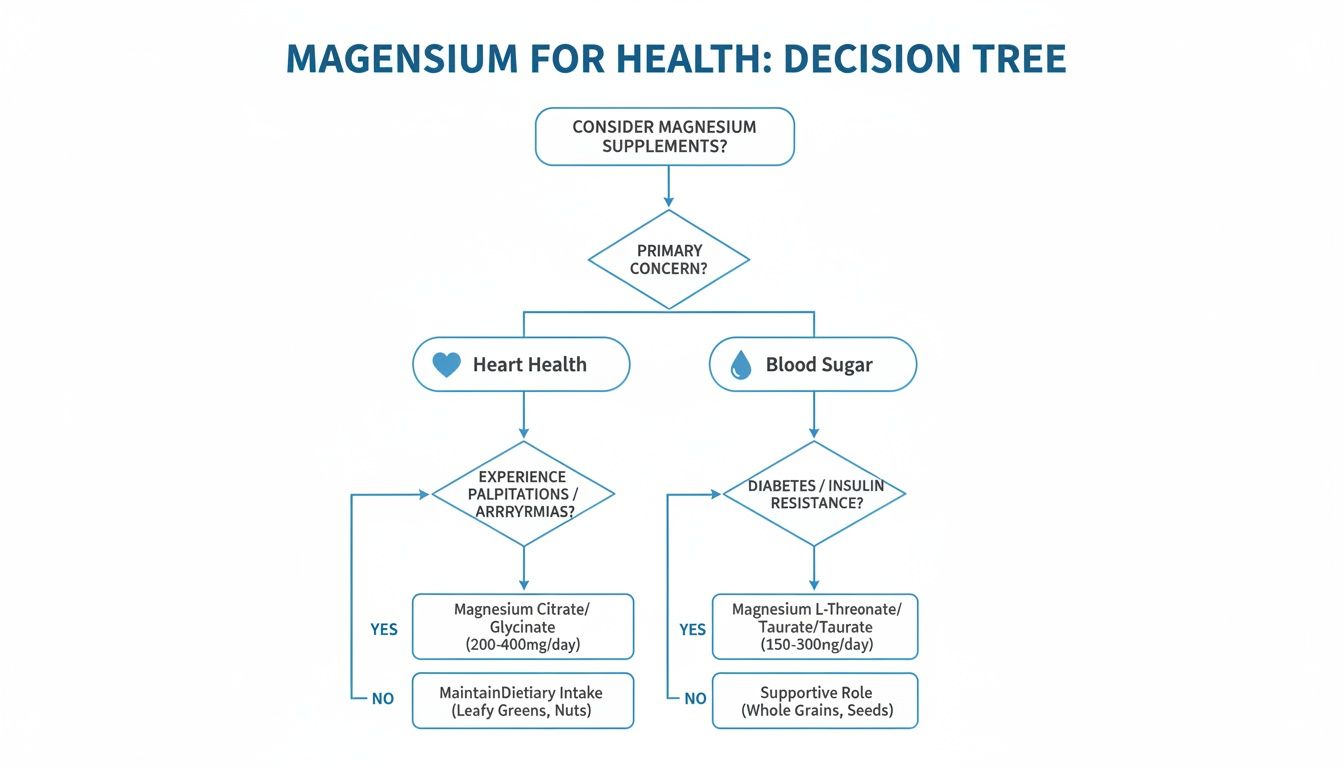
It’s a great visual reminder that different health targets often benefit from specific types of magnesium.
How to Read a Supplement Label Like a Pro
Once you’ve settled on magnesium glycinate, the final step is picking a high-quality product. Trust me, not all supplements are created equal, and the label holds all the clues you need.
Here’s what to look for to make sure you're getting a clean, effective product from a trustworthy brand like Elemental Edge Health:
- Third-Party Testing: Look for seals from organizations like NSF, USP, or Informed-Sport. This certification is your guarantee that an independent lab has verified the product contains exactly what the label says it does and is free from contaminants.
- Minimal "Other Ingredients": A quality supplement should have a very short list here. You want to avoid products loaded with unnecessary fillers, binders, artificial colors, or preservatives like magnesium stearate and titanium dioxide.
- Elemental Magnesium: The label should clearly state the amount of elemental magnesium per serving. This number tells you the actual amount of magnesium available to your body, which is what truly matters.
By focusing on these key quality markers, you can confidently select a magnesium glycinate supplement that delivers the powerful benefits you’re looking for without any unwanted junk. Making an informed choice is how you invest in your long-term health and performance.
Elemental Edge Magnesium Glycinate checks every box.
Fully chelated • Clearly labeled elemental magnesium content • No unnecessary fillers • Manufactured in the USA • 360+ verified customer reviews
→ Try it risk-free — 30-Day Money-Back Guarantee
Integrating Magnesium Glycinate Into Your Daily Routine

So, how do you make magnesium glycinate a seamless part of your life? It all comes down to what you want to achieve. The key is to match your timing to your goals, whether that's deeper sleep or better stress management throughout the day.
For most people, taking it in the evening is the sweet spot. A dose taken 30-60 minutes before bed helps your mind and muscles unwind, setting the stage for truly restorative rest. This timing takes full advantage of the calming duo of both magnesium and glycine.
But what if your main goal is to keep stress at bay during a hectic workday? In that case, splitting your dose can be a game-changer. Taking a smaller portion in the morning and the rest in the evening helps keep your levels steady, offering around-the-clock support for your nervous system.
Finding Your Optimal Dose
While everyone's needs are a little different, a solid starting point for most adults is between 200-400mg of elemental magnesium per day. It’s always best to begin at the lower end of that range to see how your body feels before increasing the amount.
The smartest way to start is with the "low and slow" approach. Kicking off with a smaller dose, like 200mg, lets you gauge your body's response and gradually work your way up if you feel you need more.
Of course, it’s always a good idea to chat with your doctor or a healthcare professional before adding any new supplement, just to make sure the dose is right for your unique health picture.
Creating Powerful Supplement Stacks
If you really want to dial things up, you can "stack" magnesium glycinate with other supplements. Think of it as creating a team where each player makes the others stronger, targeting your goals from multiple angles.
- For Enhanced Muscle Recovery: Try adding your magnesium glycinate to a post-workout protein shake. This combo helps soothe tired muscles while delivering the amino acids they need to repair and rebuild.
- For a Comprehensive Stress-Relief Protocol: Pair your evening dose with calming adaptogens like ashwagandha or L-theanine. This stack works in synergy to quiet a racing mind and promote deep physical relaxation before sleep.
Frequently Asked Questions About Magnesium Glycinate
So, you've got the rundown on what makes magnesium glycinate a powerhouse supplement. But I find that's usually when the practical questions start popping up. Getting the little details right is what separates just taking a supplement from truly getting the most out of it.
Let's clear up some of the most common questions I hear.
When Is the Best Time to Take Magnesium Glycinate?
Timing is everything, and it really hinges on what you want to achieve. Think of it as telling the supplement where to focus its calming effects.
- For Better Sleep and Recovery: The magic window is 30-60 minutes before bed. This gives the glycine time to work its magic on your nervous system, signaling your brain that it's time to wind down for a night of deep, restorative rest.
- For All-Day Stress Management: If your goal is to keep an even keel through a hectic day, splitting the dose is a great strategy. Try a smaller amount in the morning and the rest in the evening to maintain steady, supportive levels in your system.
How Long Does It Take for Magnesium Glycinate to Work?
This is a two-part answer. Many people feel a noticeable calming effect and even better sleep within the first week of consistent use. That's the glycine component getting to work quickly on your nervous system.
But the real, lasting benefits—like better stress resilience, improved muscle function, or healthier metabolic markers—take a bit longer. To see those full effects, you'll need to give it about three to four weeks of daily supplementation.
Consistency is key. Magnesium works by gradually replenishing your body's stores, so sticking to a daily routine is what delivers the best, most durable results.
Is It Safe to Take Magnesium Glycinate Every Day?
Yes, for most healthy adults, taking magnesium glycinate daily is considered very safe and well-tolerated, especially within the recommended range of 200-400 mg of elemental magnesium per day.
One of the biggest advantages of the glycinate form is that it's exceptionally gentle on the stomach. This makes it a reliable daily choice without the digestive upset you might get from other forms. Of course, if you have a kidney condition or take prescription medications, it's always smart to have a quick chat with your doctor first.
Can I Get Enough Magnesium From Diet Alone?
In theory, yes. In reality, it's surprisingly tough. Modern farming practices have left much of our soil depleted, meaning the vegetables on your plate likely have less magnesium than they did a few generations ago.
On top of that, a few common lifestyle factors can actively drain your magnesium stores:
- Chronic Stress: High cortisol levels basically tell your body to flush magnesium out.
- Intense Exercise: You lose a significant amount of magnesium through sweat, making it critical for athletes to replenish.
- Caffeine and Alcohol: Both can mess with how well your body absorbs magnesium and can also increase how much you lose.
For these reasons, a high-quality supplement is often the most practical and effective way to bridge the gap and ensure your body has what it needs to thrive.
Ready to experience these benefits for yourself? Try Elemental Edge Magnesium Glycinate — the form your body actually absorbs, designed for sleep, recovery, and calm.
Ready to feel the difference?
Better sleep, sharper focus, and faster recovery start with the right foundation. Elemental Edge Magnesium Glycinate — clean, fully chelated, and backed by 360+ verified customers.
→ Shop Magnesium Glycinate — Starting at $34
Footnotes (Peer-Reviewed & Authoritative Sources)
-
NIH Office of Dietary Supplements. Magnesium—Health Professional Fact Sheet. Functions, RDAs, interactions. https://ods.od.nih.gov/factsheets/Magnesium-HealthProfessional/ (Office of Dietary Supplements)
-
Abbasi et al. J Res Med Sci (2012). Double-blind RCT: magnesium improved insomnia indices in older adults. https://pubmed.ncbi.nlm.nih.gov/23853635/ (PubMed)
-
Schuster et al. Nature and Science of Sleep / Dovepress (2025). RCT: magnesium bisglycinate modestly improved insomnia severity in adults with poor sleep. https://pmc.ncbi.nlm.nih.gov/articles/PMC11812278/
-
Boyle et al. Nutrients (2017). Systematic review: magnesium supplementation and subjective anxiety/stress outcomes. https://pubmed.ncbi.nlm.nih.gov/28445426/ (PubMed)
-
Moabedi et al. Nutrients (2023). Systematic review of RCTs: mixed findings for depression outcomes (context for mood evidence). https://pmc.ncbi.nlm.nih.gov/articles/PMC10783196/ (PMC)
-
Zhang et al. Hypertension (2016). Meta-analysis of RCTs: ~2/1.8 mm Hg BP reduction with magnesium. https://www.ahajournals.org/doi/10.1161/HYPERTENSIONAHA.116.07664 (AHA Journals)
-
Alharran et al. Curr Hypertens Rep (2024). Umbrella meta-analysis confirms modest BP reductions. https://www.sciencedirect.com/science/article/pii/S0011393X24000250 (ScienceDirect)
-
Garrison et al. Cochrane-style review (2020): magnesium unlikely to prevent idiopathic skeletal muscle cramps in older adults; pregnancy data mixed. https://pubmed.ncbi.nlm.nih.gov/32956536/ (PubMed)
-
Maor et al. JAMA Intern Med (2017). RCT: magnesium oxide not superior to placebo for nocturnal leg cramps. https://jamanetwork.com/journals/jamainternalmedicine/fullarticle/2603490 (JAMA Network)
-
Tucker et al. Am J Clin Nutr (1999). Framingham cohort: higher magnesium intake associated with greater BMD and less hip bone loss in men. https://pubmed.ncbi.nlm.nih.gov/10197575/ (PubMed)
-
Orchard et al. Am J Clin Nutr (2014). WHI cohort: magnesium intake, BMD, and fracture outcomes. https://pmc.ncbi.nlm.nih.gov/articles/PMC3953885/ (PMC)
-
Carpenter et al. J Clin Endocrinol Metab (2006). RCT: magnesium supplementation improved integrated hip bone mineral content in girls. https://academic.oup.com/jcem/article/91/12/4866/2656330 (Oxford Academic)
-
Blancquaert et al. Int J Mol Sci (2019). In vitro/in vivo data predicting magnesium bioavailability—organic salts generally outperform oxide. https://pmc.ncbi.nlm.nih.gov/articles/PMC6683096/ (PMC)
-
Pardo-García et al. Nutrition Research (2021). Review comparing bioavailability across magnesium salts; organic forms frequently superior/tolerability considerations. https://www.sciencedirect.com/science/article/abs/pii/S0899900721001568 (ScienceDirect)
Medical disclaimer: This article is for educational purposes and not a substitute for personalized medical advice. Talk to your healthcare professional before starting any new supplement, especially if you have kidney disease, are pregnant, or take prescription medications.
Complete Your Daily Foundation
For adults over 40, the most effective daily stack combines creatine for strength and cognitive support, magnesium glycinate for recovery and sleep, and vitamin D3 for immune and bone health. Get all three together and save $15 with the Essential Edge Stack — one daily habit, full foundation covered.
About the Author
Kim Brissett-Lier is the founder of Elemental Edge Health. After losing 100+ lbs in his 40s and rebuilding his strength, energy, and mental clarity through targeted supplementation and consistent daily habits, Kim created Elemental Edge to help other adults 40+ experience the same transformation — without the extremes. He writes about magnesium, creatine, Vitamin D, sleep, stress resilience, and the fundamentals of long-term health and performance.