

Can You Take Creatine and Whey Protein Together? (2026 Science)
Short answer: yes — and if you are over 40 and serious about holding onto muscle, you probably should. Here is exactly why creatine and whey work better together than apart, whether you can put them in the same shake, and how to dose them.
It is one of the most common questions I get, and one the internet has managed to make more confusing than it needs to be: can you take creatine and whey protein together? The clinical answer is unambiguous. Not only is it safe to combine them, the two are arguably the most complementary pairing in all of sports nutrition. Whey supplies the raw material your body builds muscle from; creatine supplies the energy that lets you do the work that triggers the building. They operate on completely different systems, and combining them is one of the highest-leverage moves an aging adult can make.
I am Kim, founder of Elemental Edge Health, and at 51 these two sit at the center of my own daily routine. Below is the 2026 science, the absorption myth you can stop worrying about, and the exact protocol I use.
The Science of Co-Ingestion: Whey Isolate + Creatine Synergy
To understand why the combination works, you have to see that each does a fundamentally different job.
Whey protein is the substrate. When you drink a whey isolate shake, your body digests it into amino acids — most importantly leucine, the amino acid that flips on the muscle-building switch (a signaling pathway called mTOR). This process, muscle protein synthesis (MPS), is the literal construction of new muscle tissue. Whey is one of the most leucine-dense proteins in existence and digests quickly, which is why it is the gold-standard trigger for MPS.
Creatine is the energy system. Creatine is stored in muscle as phosphocreatine, where it rapidly regenerates ATP — the molecule your muscles burn during short, hard efforts. More available phosphocreatine means you can push one or two more reps, add a little more load, and accumulate more total training volume before fatigue. That extra work is the stimulus that tells your body to build.
Put those together and the synergy is obvious: creatine helps you earn a bigger training stimulus, and whey delivers the building blocks to adapt to it. A frequently cited trial by Cribb and Hayes found that resistance-trained men who consumed a creatine-and-protein supplement timed around their workouts gained more lean mass and strength than those who took the same supplement in the morning and evening — evidence that pairing the two around training does more than either alone.
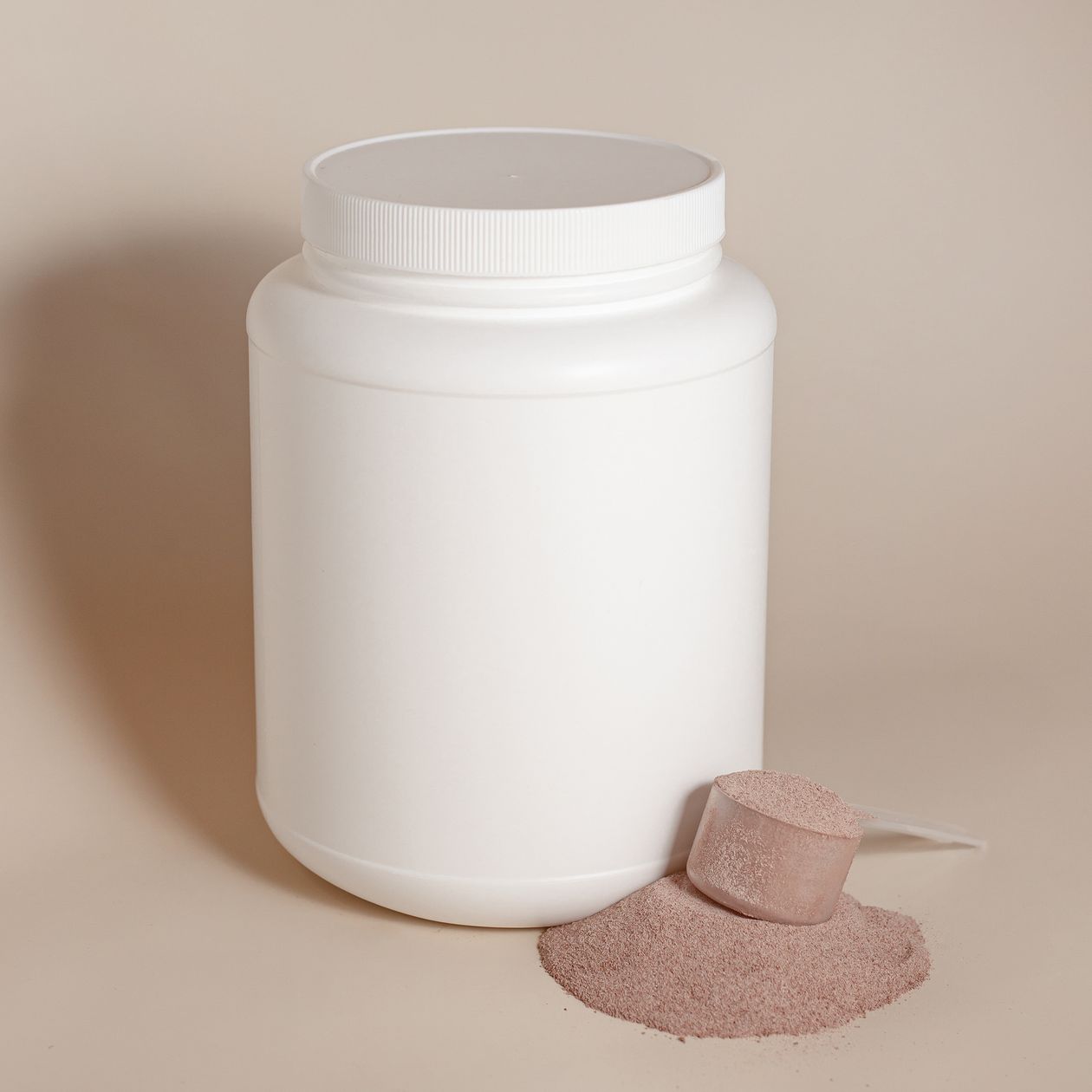
Build Your Foundation With Elemental Edge
Creatine Monohydrate, Magnesium Glycinate, and Vitamin D3 — third-party tested, made in the USA, and built for adults over 40. Free U.S. shipping on every order.
Shop the Full Range →Does Whey Protein Block Creatine Absorption? (Myth vs Fact)
This is the fear that keeps people taking their creatine and protein hours apart, and it is not supported by the physiology. Whey protein does not block creatine absorption.
Creatine is pulled into muscle cells by a dedicated sodium-dependent transporter (CreaT). The single biggest lever on how much creatine your muscles take up is not whether protein is present — it is insulin. And here is the part that turns the myth on its head: protein and carbohydrate both raise insulin. So co-ingesting creatine with a whey shake, if anything, creates a slightly more favorable environment for creatine uptake, not a worse one.
The "competition" idea comes from a vague sense that two supplements in one glass must fight for absorption. They do not — whey is absorbed through amino acid transporters in the small intestine while creatine rides its own transporter into muscle. Different pathways, no traffic jam. Mixing 5g of creatine monohydrate directly into your whey shake is completely fine; creatine is stable in liquid over the minutes it takes to drink.
The verdict: the myth is fiction. Split them up if that helps you remember both — but one shake is easier to stay consistent with, and consistency is what drives results.
Pure Monohydrate. No Gimmicks.
Micronized Creatine Monohydrate — 5g per scoop, unflavored, third-party tested, no fillers or "absorption hack" marketing. Stir it straight into your protein shake.
🛒 Shop Micronized Creatine →Post-Workout Timing: Why Combining Them Works Better After 40
For a 25-year-old, timing barely matters — total daily intake is what counts. After 40, the picture shifts because of a phenomenon called anabolic resistance: aging muscle responds less efficiently to protein, so you need a larger per-meal dose — and more leucine — to trigger the same building response you used to get for free.
That is where the post-workout window earns its keep. After training, blood flow to muscle is elevated and cells are primed to take up nutrients. Delivering a fast-digesting whey isolate at that moment helps you clear the higher leucine threshold aging muscle demands, while creatine tops off the phosphocreatine you just spent. You are refilling the energy system and supplying the building blocks in the same motion.
There is also a human reason the combination wins after 40: friction kills consistency. One shake that covers both your protein and your creatine is a routine you will actually keep for years — and years of consistency, not perfect timing, is what protects muscle as you age.
Our 90-Day Baseline Protocol — how creatine, magnesium, and D3 compound over a full quarter.
Micro-Filtered Whey Isolate vs Standard Concentrate: Why Digestion Matters
If you are going to build a daily shake habit, the form of whey you choose matters more after 40 than at any other point in your life — because of what happens to digestion with age.
Two things change. First, lactase — the enzyme that breaks down milk sugar — declines, which is why so many adults who tolerated dairy in their 20s feel bloated after a shake now. Second, the aging gut is simply less forgiving of the residual fat and carbohydrate found in cheaper powders.
This is the practical difference between the two dominant forms of whey:
| Micro-Filtered Whey Isolate ✓ | Standard Whey Concentrate | |
|---|---|---|
| Protein density | 90%+ by weight (raw isolate) | 70–80% |
| Lactose & fat | Micro-filtered out — trace amounts | Higher — common bloat trigger |
| Digestive comfort after 40 | Gentle on a sensitive gut | Can cause gas and bloating |
| Best paired with creatine? | Yes — clean, fast, low-residue | Workable, but heavier |
Because creatine monohydrate is itself lactose-free and flavorless, stirring it into a clean isolate keeps the entire shake light and low-residue — exactly what an over-40 digestive system wants. Pair a bloat-inducing concentrate with your creatine instead, and it is the lactose in the concentrate, not the creatine, that leaves you uncomfortable. For a deeper breakdown, see our guide to whey isolate vs concentrate vs plant protein.
How to Protocol Your Daily Dosage: 5g Creatine + Your Protein Scoop
Here is the simple, evidence-based way to run the two together. No loading phases, no gimmicks.
Creatine: 5g daily, every day
Take 5g of creatine monohydrate per day, consistently. A loading phase is optional and not required — a flat 5g daily saturates your muscle stores within a few weeks. The most important rule is that you take it every day, including rest days, because the benefit comes from keeping your stores saturated over time, not from a pre-workout jolt.
Protein: hit your per-meal threshold
After 40, aim for roughly 30–40g of quality protein per serving to clear the leucine threshold aging muscle needs. A single scoop of Pure3 isolate provides 19g of protein, so a practical post-workout shake is about 1.5–2 scoops — or one scoop blended with milk or paired with a protein-containing meal — to reach that target. Total daily protein (roughly 0.7–1.0g per pound of target bodyweight) still matters most; the shake is there to close the gap on the days real food does not.
Putting it in one glass
Stir your 5g of unflavored creatine directly into your whey shake, add 8–12 oz of water or milk, and drink it within an hour of training on workout days. On rest days, take the same shake whenever it fits your routine. That is the entire protocol: one glass, thirty seconds, done. If you want the science on which does what, our companion guide on creatine vs protein after 40 covers it in depth.
Build the Whole Foundation
The 90-Day Foundation Protocol pairs the daily essentials that compound over a full baseline cycle — creatine, magnesium, and D3 — so strength, recovery, and resilience are covered in one system.
🛒 Explore the 90-Day Foundation →
Watch: A Researcher's Take on Creatine
For an expert, evidence-based perspective on creatine dosing and its benefits for strength, brain, and longevity, here is creatine researcher Dr. Darren Candow:
Frequently Asked Questions
Can you mix creatine and whey protein in the same shake?
Yes. Creatine and whey work on completely different systems and do not interfere with each other, so stirring 5g of unflavored creatine monohydrate straight into your whey isolate shake is perfectly fine. Creatine is stable in liquid over the few minutes it takes to drink, so there is no meaningful breakdown. One shake also makes the habit easier to keep.
Does whey protein reduce creatine absorption?
No. Creatine is taken into muscle by its own transporter, and the biggest driver of that uptake is insulin — which protein actually helps raise. Whey does not compete with creatine or block it. If anything, taking them together provides a slightly more favorable environment for creatine uptake, not a worse one.
Should I take creatine and whey before or after a workout?
After training is a strong default: blood flow and nutrient uptake are elevated, and a fast whey isolate helps clear the higher leucine threshold aging muscle needs while creatine refills what you just spent. That said, total daily protein and daily creatine consistency matter most — so the best time is the one you will actually stick to every day.
How much creatine and protein should someone over 40 take daily?
A flat 5g of creatine monohydrate daily, every day, with no loading phase required. For protein, aim for roughly 30–40g per serving to clear the leucine threshold after 40, within a daily total of about 0.7–1.0g per pound of target bodyweight. A scoop of whey isolate provides about 19g, so 1.5–2 scoops, or one scoop with food, gets you to a solid post-workout dose.
This article is for educational purposes and is not medical advice. These statements have not been evaluated by the Food and Drug Administration. This product is not intended to diagnose, treat, cure, or prevent any disease. Talk with your healthcare provider before starting any supplement, especially if you have a medical condition or take medication.
About the Author
Kim Brissett-Lier is the founder of Elemental Edge Health. After losing 100+ lbs in his 40s and rebuilding his strength, energy, and mental clarity through targeted supplementation and consistent daily habits, Kim created Elemental Edge to help other adults 40+ experience the same transformation — without the extremes. He writes about protein, creatine, magnesium, Vitamin D, and the fundamentals of long-term health and performance.
Whey's real advantage after 40 is hitting your leucine threshold fast. See our full guide to the leucine threshold and muscle protein synthesis after 40 for the exact per-meal target and why it rises with age.