

How to Balance Hormones Naturally Through Lifestyle Changes
If your energy, sleep, focus, and drive aren't what they were a decade ago, that isn't just "getting older." It is usually a hormonal system that has drifted off its baseline — and the fix is rarely a prescription. It is a set of consistent, unglamorous inputs: what you eat, how you move, how you sleep, and how you handle stress.
Your hormones are the chemical messengers that run everything from mood and metabolism to sleep and libido. When they are in sync, you feel sharp, strong, and steady. Modern life pulls them out of tune — chronic stress, processed food, blue light at midnight, and years of shortchanged recovery. The fatigue, the stubborn midsection, the flat mood: those are signals, not character flaws.
The good news is how much control you actually have. Restoring your baseline is less a sprint and more like tending a garden — consistent, deliberate care beats any single aggressive fix. This is the roadmap I use myself and hand to the adults over 40 I work with: the nutrition, movement, sleep, and targeted supplementation that move the needle.
The Foundation of Natural Hormone Harmony
Think of your hormones as the conductors of your body's orchestra. They are the chemical messengers that dictate mood, metabolism, and sleep cycles. When they play in sync, you feel vibrant, clear-headed, and resilient. When chronic stress, processed food, and poor sleep throw the system out of tune, you get hormonal chaos — and for adults over 40, that drift accelerates.
That persistent fatigue, stubborn weight gain, or rollercoaster mood is not "in your head." These are signals your body is sending you. Some studies suggest as many as 80% of women will face a hormonal imbalance at some point, and for men the age-related decline in testosterone and recovery capacity is just as real. It is an incredibly common struggle — and a fixable one.
Getting back into balance is not about drastic measures. This guide gives you a clear, actionable roadmap focused on the areas that matter most:
- Strategic Nutrition: Learning which foods build your hormones up and which ones tear them down.
- Mindful Movement: Using exercise to send the right signals to your endocrine system.
- Restorative Practices: Mastering sleep and stress to calm your entire system.
- Targeted Support: Understanding which supplements actually fill the gaps.
Consider this your starting point for reclaiming your vitality. By working with your body instead of against it, you can find your way back to a stable hormonal baseline, one practical step at a time.
Building Your Plate for Hormonal Health
What you eat is arguably the most powerful tool you have to influence your hormones day in and day out. The food on your plate provides the literal building blocks for hormone production, helps transport them through the body, and supports the clearance of their byproducts.
Think of your diet less like a set of restrictions and more like a direct line of communication with your entire endocrine system.
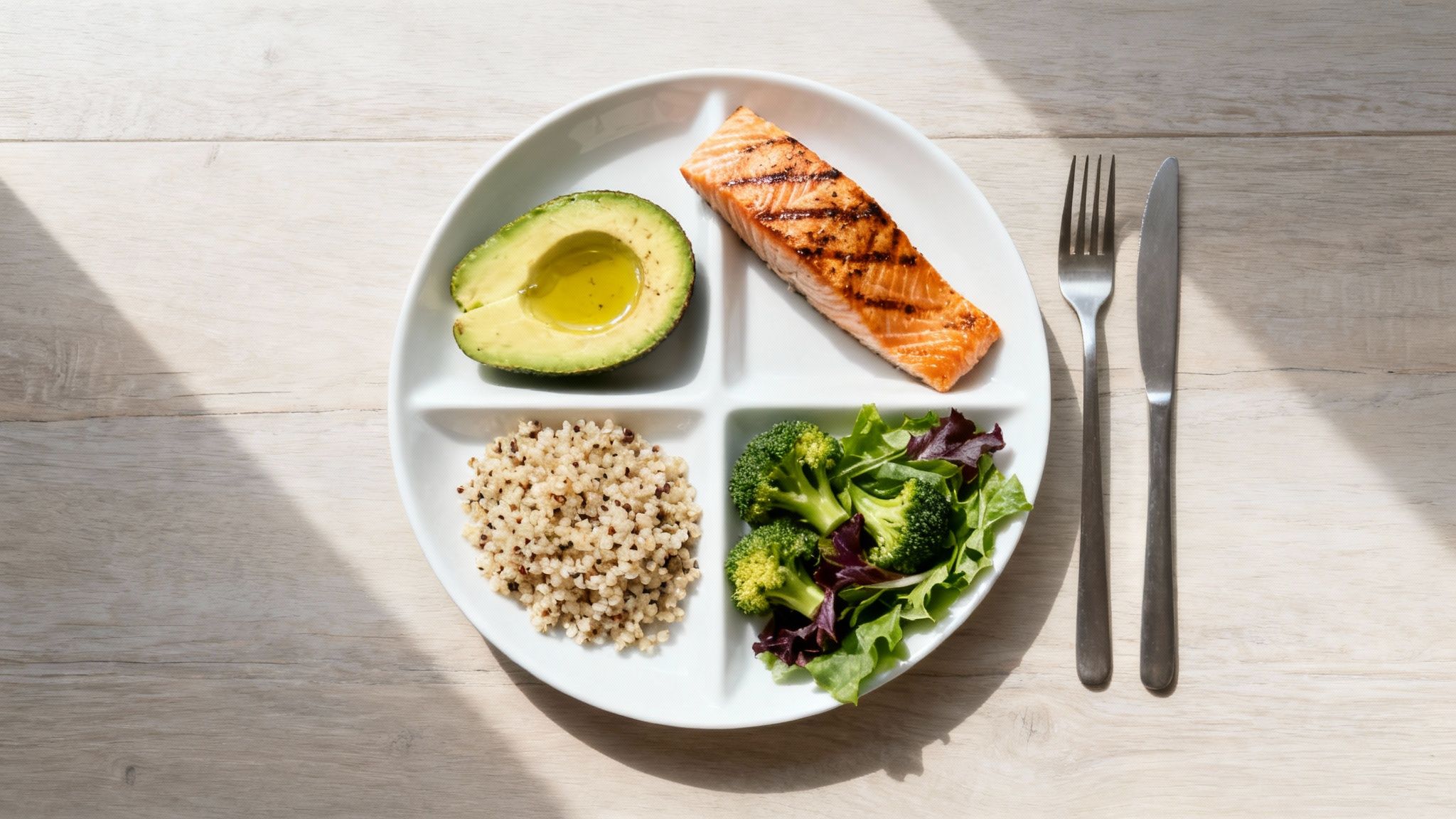
This starts by focusing on four nutritional cornerstones: clean protein, healthy fats, complex carbohydrates, and phytonutrient-rich greens. Each plays a distinct, vital role. The amino acids from high-quality protein are essential for creating peptide hormones like insulin and growth hormone. Without enough, your body simply cannot manufacture these chemical messengers.
The Power of Protein and Healthy Fats
Protein does more than build muscle — it is fundamental to stabilizing blood sugar. When blood sugar is on a rollercoaster, it creates a cascade of hormonal chaos, primarily involving insulin and cortisol.
Including a source of protein at every meal — pasture-raised eggs at breakfast, lentils in your salad, wild salmon at dinner — slows sugar absorption. This is your best defense against the energy slumps and cravings that go hand-in-hand with hormonal imbalance.
Healthy fats are just as non-negotiable. Your body needs cholesterol and specific fatty acids to produce steroid hormones like estrogen, progesterone, and testosterone. The membrane of every cell, which holds the receptors for these hormones, is also built from fat. Prioritizing sources like avocados, olive oil, nuts, and seeds keeps those communication lines strong.
For men over 40 specifically, vitamin D belongs in this steroid-hormone conversation — its active form is a secosteroid that supports the Leydig-cell machinery behind testosterone production. See our full 2026 breakdown on Vitamin D3, testosterone, and hormonal baseline for men 40+. And for the everyday maintenance dose and how to confirm your level, see how much Vitamin D3 to take daily.
Omega-3 fatty acids, found in fatty fish like wild salmon and sardines, are particularly crucial. They are potent anti-inflammatory agents, helping to cool the chronic inflammation that disrupts hormonal signaling.
Embracing Smart Carbs and Phytonutrients
Carbs are not the enemy, but the type of carb makes all the difference. Refined, processed carbs (white bread, pastries, sugary snacks) cause rapid blood sugar spikes and an insulin surge. Over time, this can lead to insulin resistance, a key driver of hormonal issues like Polycystic Ovary Syndrome (PCOS).
Instead, focus on complex carbohydrates packed with fiber — sweet potatoes, quinoa, berries, and beans. Fiber slows digestion, promotes a steady release of glucose, and feeds the beneficial bacteria in your gut. A healthy gut microbiome is essential for metabolizing hormones, especially estrogen.
Phytonutrient-rich vegetables, especially leafy and cruciferous greens, are your liver's best friend. Your liver is the primary detox organ, responsible for breaking down and clearing excess hormones.
Cruciferous vegetables like broccoli, cauliflower, and kale contain a compound called Indole-3-Carbinol (I3C), which specifically supports the healthy metabolism of estrogen. Adding a serving of these veggies daily is a simple, effective way to help your body's natural detoxification.
Foods That Disrupt Hormonal Balance
Just as some foods build hormonal health, others actively work against you. The main culprits are typically refined sugar, processed industrial seed oils, and excessive alcohol.
These drive inflammation and place a huge burden on your liver and blood sugar regulation. A high intake of refined sugar can directly contribute to insulin resistance, forcing your pancreas to work overtime and throwing other hormones out of sync. Excessive alcohol impairs liver function, making it harder to clear used hormones, and it spikes cortisol — pushing you further into chronic stress.
Your Hormone-Balancing Meal Builder
Putting this together on your plate does not need to be complicated. Use this framework to build meals that naturally support your hormones. The goal is consistency, not perfection.
| Food Group | What It Does | Examples to Include |
|---|---|---|
| Clean Protein | Provides amino acids for hormone production and stabilizes blood sugar | Grass-fed beef, wild salmon, pasture-raised eggs, chicken, lentils, chickpeas |
| Healthy Fats | Building blocks for steroid hormones and cell membranes | Avocado, olive oil, walnuts, almonds, chia, flaxseed, coconut oil |
| Fiber-Rich Carbs | Stable energy, gut health, and hormone metabolism | Sweet potatoes, quinoa, berries, apples, beans, whole oats |
| Phytonutrients | Supports liver detoxification and supplies key vitamins and minerals | Broccoli, kale, spinach, cauliflower, bell peppers, Brussels sprouts |
Hormonal balance starts on your plate. Build meals around these four pillars while cutting back on excess sugar, and you give the endocrine system — which controls sleep, metabolism, and mood — the raw materials it needs.
Restore Your Endocrine Baseline
Diet, sleep, and stress work do the heavy lifting — but three nutrients close the loop on hormonal recovery after 40: Vitamin D3, Magnesium Glycinate, and Creatine. The 90-Day Foundation puts all three on autopilot for a full quarter.
Get the Complete 90-Day Foundation System →How Strategic Movement Resets Your Hormones
Exercise is much more than a way to burn calories. Think of it as a conversation with your entire endocrine system. The right movement dials up insulin sensitivity, dials down stress hormones, and keeps your metabolism humming. But not all exercise is equal when the goal is hormonal balance.

The key is a sustainable rhythm that blends smart intensity with deep restoration. Instead of redlining every day — a strategy that backfires — the goal is to send consistent signals of strength and safety.
Strength Training for Insulin Sensitivity
Lifting weights is one of the most direct ways to improve hormonal communication. Resistance training builds lean muscle, and muscle tissue is a major consumer of glucose. More muscle means your body becomes more sensitive to insulin — better at pulling glucose out of your bloodstream and into cells, preventing the blood sugar roller coaster that creates hormonal chaos.
You do not need to live in the gym. Just 2-3 focused strength sessions a week make a huge difference.
- Focus on Compound Moves: Exercises that hit multiple muscle groups at once — squats, deadlifts, push-ups.
- Embrace Progressive Overload: Gradually make things a little harder over time — more weight, one more rep, shorter rest. That is the signal that tells your body to adapt.
Restorative Movement to Tame Cortisol
While intensity matters, constant grueling workouts crank up cortisol, your main stress hormone. Chronically high cortisol wrecks sleep, encourages belly-fat storage, and knocks other hormones out of whack. This is where restorative movement becomes non-negotiable.
Gentle activity sends a "calm down" signal to your nervous system, putting the brakes on cortisol. It shifts you out of "fight-or-flight" and into the "rest-and-digest" mode essential for healing and balance.
Strength training is like a direct deposit into your metabolic bank account, while restorative movement is like balancing the checkbook and preventing overdraft fees. Both are essential for long-term hormonal health.
Weave these into your week:
- Yoga: Gentle movement plus breathwork directly activates your calming parasympathetic nervous system.
- Tai Chi: Slow, mindful practice that reduces stress and improves balance.
- Daily Walks: Getting outside, especially in nature, is a simple way to lower cortisol, improve circulation, and boost mood.
The Pitfall of Over-Exercising
It is easy to fall into the "more is better" trap. But when the goal is hormonal harmony, over-exercising can be your worst enemy. Pushing through exhaustion, skipping rest days, and chaining relentless high-intensity workouts strains your adrenal glands.
That leads to burnout, where cortisol patterns become dysfunctional and eventually impact your thyroid and reproductive hormones. The solution is to listen to your body. If you feel drained instead of energized after workouts, dial back the intensity and schedule more recovery. True balance is not found at the extremes — it is the intelligent blend of smart stress and deep restoration.
Mastering Sleep and Stress for Lasting Balance
You can have the perfect diet and a dialed-in training routine, but if you are chronically stressed and sleep-deprived, you will always fight uphill. Sleep and stress management are not "nice-to-haves." They are the foundation of hormonal health. Everything else is built on top of them.
When your body senses stress — a work deadline, a hard conversation, a bad night — it releases cortisol. This "fight-or-flight" hormone is a lifesaver in short bursts. But stuck in the "on" position, it triggers a domino effect: suppressed thyroid function, disrupted progesterone, and the road to insulin resistance. It forces your body into a constant state of emergency, stealing resources from metabolism and reproduction.
The Cortisol-Sleep Connection
The relationship between cortisol and sleep is a two-way street, and when it breaks down, things get messy fast. Cortisol is supposed to peak in the morning (your natural wake-up signal) and bottom out at night so you can fall asleep. Chronic stress flips this rhythm on its head.
High evening cortisol leaves you wired, anxious, and staring at the ceiling. Your body then registers that lost sleep as another stressor and pumps out even more cortisol the next day — in fact, a single night of sleep loss elevates cortisol the following evening. It is a vicious cycle that sabotages your best efforts.
Poor sleep also throws appetite hormones out of whack. Even one bad night can spike ghrelin (the "I'm hungry" hormone) and tank leptin (the "I'm full" hormone). The result is intense sugar cravings and overeating the next day. Breaking this cycle is non-negotiable.
Practical Strategies for Nervous System Regulation
Managing stress is not about eliminating it — that is a fantasy. The goal is a toolkit of practices that regulate your nervous system's response to stress.
- Box Breathing: My go-to for immediate calm. Inhale for four, hold for four, exhale for four, hold for four. Two to five minutes anytime you feel overwhelmed.
- Morning Sunlight: Let sunlight hit your eyes within the first hour of waking. This anchors your circadian rhythm, which regulates your daily cortisol curve.
- Mindful Movement: Gentle activities like yoga, tai chi, or a quiet walk are potent cortisol reducers. They signal to your body that you are safe.
The goal is not to avoid stress but to become more resilient to it. Your nervous system is like a muscle. The more you practice calming techniques, the stronger and more flexible it becomes at handling life's challenges without sending your hormones into a tailspin.
Creating a Sanctuary for Deep Sleep
Optimizing your sleep environment and wind-down routine is one of the highest-leverage things you can do for your hormonal health. It signals to your brain that it is time to shut down for deep, restorative rest.
Your wind-down does not need to be an elaborate ritual. About an hour before bed, dim the lights and put away screens. The blue light from your phone, tablet, and TV directly suppresses melatonin, the hormone you need to fall and stay asleep.
- Keep It Cool: To initiate sleep, body temperature needs to drop. The sweet spot for most people is 60-67°F (15-19°C).
- Make It Dark: Use blackout curtains or a quality eye mask. Even small amounts of ambient light disrupt sleep architecture.
- Establish Consistency: Go to bed and wake up at the same time every day — even on weekends. If you are struggling, our guide on how to fix your sleep schedule has detailed strategies, and our sleep-cycle protocol for adults over 40 lays out the full timeline.
Mastering sleep and stress is not a luxury. It is the foundational pillar for resilient, lasting hormonal balance.
The Baseline Protocol: Stressors vs Fixes
Before we get to specific supplements, here is the map. Most hormonal drift after 40 traces back to a handful of repeating stressors. This is how each one shows up, and the targeted fix and realistic timeframe for each.
| Hormonal Stressor | What It Disrupts | Baseline Protocol Fix | Typical Timeframe |
|---|---|---|---|
| Elevated cortisol | Suppresses testosterone and progesterone, blocks deep sleep, drives belly fat | Magnesium Glycinate at night, box breathing, restorative movement | 2-4 weeks to calmer evenings |
| Low Vitamin D3 | Weakens the secosteroid signal behind LH and free-testosterone synthesis | Daily Vitamin D3 with a fat-containing meal | 8-12 weeks to rebuild serum levels |
| Poor sleep architecture | Cuts growth-hormone release and next-day cortisol control | Magnesium Glycinate, cool dark room, fixed wake time | 1-2 weeks for sleep quality |
| Cellular energy (ATP) depletion | Saps physical output, recovery, and executive focus under stress | Micronized Creatine Monohydrate, 5 g daily | 3-4 weeks to saturate |
| All three at once | Compounding endocrine and cellular drift | The 90-Day Foundation Protocol (all three pillars) | A full quarter to reset baseline |
Targeted Supplements for Hormonal Support
Nutrition, movement, and stress management are the non-negotiable foundations. But sometimes your body needs extra, targeted support. Think of supplements not as a magic pill, but as allies that fill specific gaps and nudge your body back toward balance. Food-first is always the philosophy — the right supplements provide a concentrated boost where you need it most.
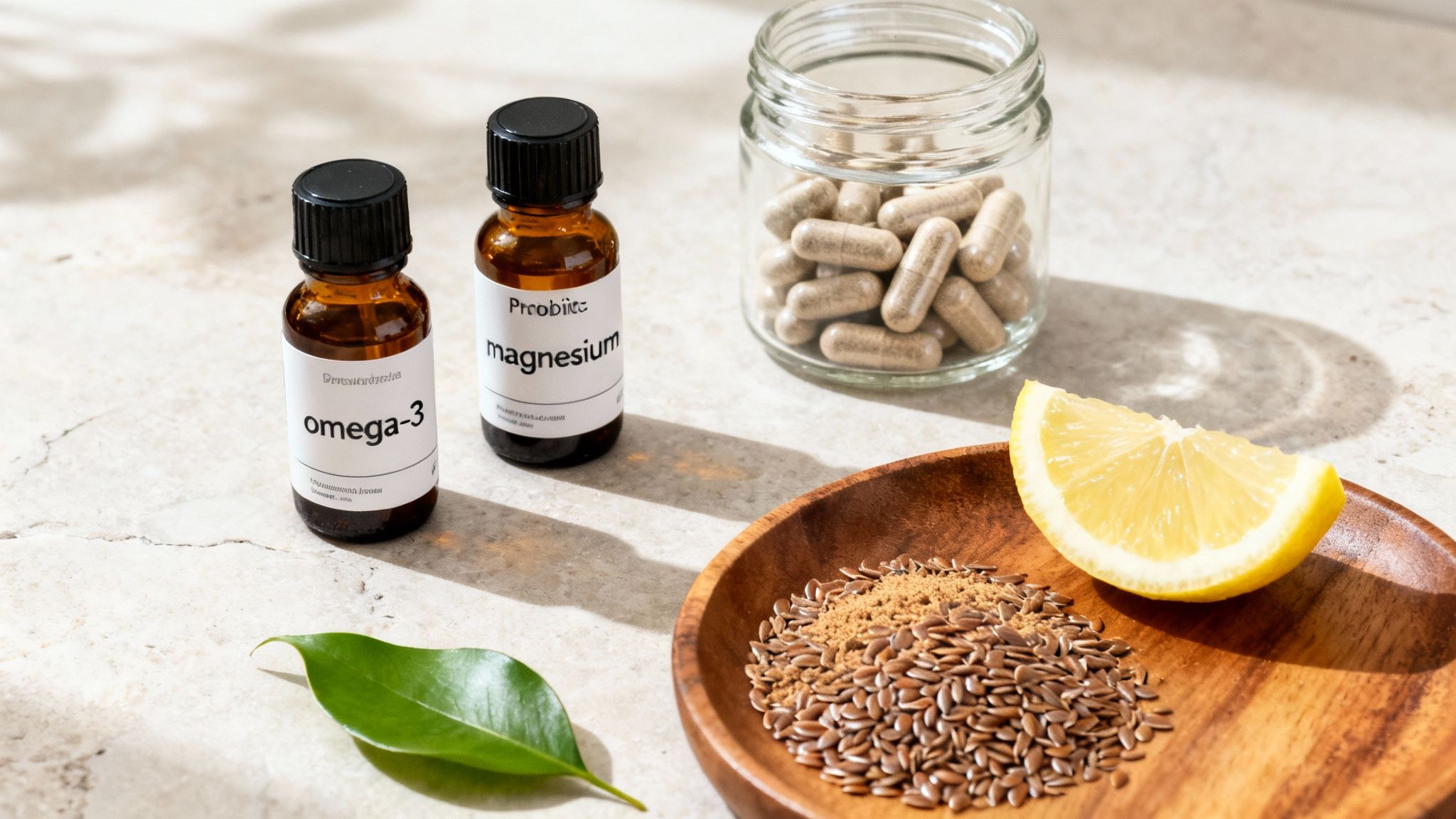
Approach supplementation with intention, and always consult a healthcare provider before starting anything new. For endocrine recovery after 40, three nutrients do the most work — each addressing a different failure point. These are the three I never skip.
Vitamin D3: The Secosteroid Hormone Precursor
Vitamin D3 is not really a vitamin. Its active form, calcitriol, is a secosteroid hormone that binds vitamin D nuclear receptors on tissues throughout the body — including the Leydig cells of the testes, where it supports LH signaling and the machinery behind free-testosterone synthesis in men over 40. A randomized controlled trial found that men supplementing vitamin D raised their testosterone levels compared with placebo.
For adults who spend most of the day indoors, a consistent daily dose taken with a fat-containing meal is the simplest way to rebuild a deficient baseline — many practitioners target roughly 5,000 IU per day for deficient adults over 40. Our full breakdown covers the endocrine mechanism in depth: Vitamin D3, testosterone, and hormonal baseline for men 40+. Explore Elemental Edge Vitamin D3.
Magnesium Glycinate: Nocturnal Cortisol and Deep-Sleep Architecture
Magnesium glycinate is the pillar that governs your nervous system after dark. The glycine it is bound to activates GABA receptors — the brain's primary "off switch" — which quiets the fight-or-flight signaling that keeps cortisol elevated at night. Lower nocturnal cortisol means the deep, slow-wave sleep where growth hormone is released and your endocrine system actually recovers. Since sleep loss itself drives cortisol higher the next evening, protecting sleep protects your entire hormonal cascade.
It is highly bioavailable and gentle on digestion, which is why I take it every night. More detail here: how magnesium glycinate supports deep sleep. Explore Elemental Edge Magnesium Glycinate.
Micronized Creatine Monohydrate: Cellular ATP and the Cortisol Buffer
Creatine is not just for the gym. It recharges ATP — the energy currency every cell runs on — which supports steadier physical output, better cortisol regulation under physical stress, and the executive cognitive focus that fades when hormones are off. For adults over 40, that cellular-energy buffer is one of the most under-rated levers for feeling capable again.
See the cognitive side in detail: creatine and brain health for adults over 40. Explore Elemental Edge Creatine Monohydrate.
The System: The 90-Day Foundation Protocol
These three are not a random stack. They cover three different failure points in the endocrine picture: the hormone precursor (D3), the recovery switch (magnesium), and the cellular-energy buffer (creatine). The 90-Day Foundation Protocol unites all three in one system, dosed for a full quarter — the exact window where hormonal and cellular recovery compounds.
Other Targeted Allies
Omega-3 Fatty Acids. Chronic, low-grade inflammation interferes with how your cells "hear" hormonal signals and is a key factor in conditions like PCOS. High-quality omega-3s (EPA and DHA) are powerful anti-inflammatory agents that build healthy, fluid cell membranes so your hormone receptors function correctly. They can also help lower cortisol and support progesterone production. Look for a high-potency, third-party-tested fish oil, or algae-based DHA/EPA for a plant-based option.
Probiotics. Your gut is a control center for metabolizing estrogen. An unhealthy microbiome can recirculate estrogen that should have been cleared, contributing to estrogen dominance. A multi-strain probiotic with Lactobacillus and Bifidobacterium supports the "estrobolome," the gut bacteria that process estrogen. Pair it with a fiber-rich diet.
Inositol. For anyone struggling with blood sugar regulation or PCOS, inositol is worth a look. This B-vitamin-like compound plays a vital role in insulin signaling, and research shows a specific combination of Myo-Inositol and D-Chiro-Inositol can meaningfully improve insulin sensitivity — a real lever for the 8-13% of reproductive-age women worldwide dealing with PCOS.
Key Supplements for Natural Hormone Balance
| Supplement | Primary Hormonal Benefit | Best For |
|---|---|---|
| Vitamin D3 | Secosteroid precursor supporting LH signaling and free-testosterone synthesis | Men 40+, indoor lifestyles, low winter sun |
| Magnesium Glycinate | Activates GABA, lowers nocturnal cortisol, restores deep sleep | Stress, poor sleep, anxiety, PMS |
| Creatine Monohydrate | Recharges cellular ATP, buffers cortisol under stress, supports focus | Low energy, recovery, cognitive fog after 40 |
| Omega-3 Fatty Acids | Lowers inflammation, supports cell-receptor health, reduces cortisol | Inflammatory conditions, painful periods |
| Probiotics | Supports healthy estrogen metabolism in the gut | Estrogen dominance, digestive issues |
| Inositol | Improves insulin sensitivity, supports ovarian function | PCOS, insulin resistance, irregular cycles |
Used wisely alongside a healthy lifestyle, these can be highly effective. If daily pressure is your main battle, our guide on magnesium glycinate for sleep and stress recovery is a useful next read.
Using Plant-Based Allies for Gentle Support
Let's talk about phytoestrogens. These plant compounds are a powerful, often misunderstood tool. Understood correctly, they are gentle, supportive allies for your hormonal system.
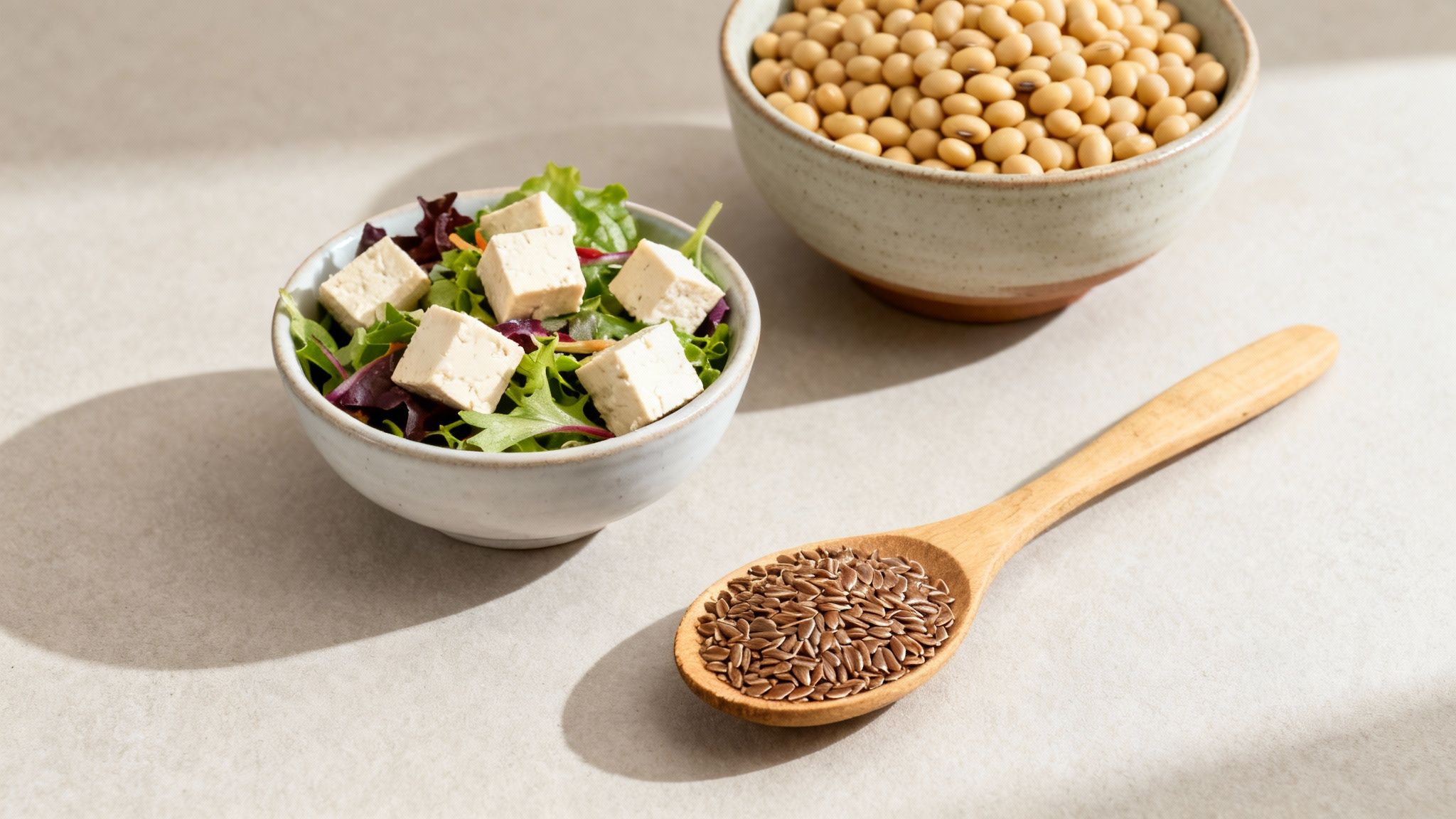
Think of phytoestrogens as nature's hormonal modulators. Their chemical structure is just similar enough to your body's own estrogen that they can bind the same receptors. The key difference is that their effect is significantly weaker — and that is precisely where the benefit lies.
Understanding the Buffering Effect
When your natural estrogen levels are high, phytoestrogens can occupy some receptor sites like a placeholder, blocking your stronger estrogen from binding and buffering the effects of excess. During times of low estrogen, like perimenopause, they provide a very mild estrogenic effect — just enough to help ease symptoms like hot flashes.
Foods rich in phytoestrogens include:
- Flaxseeds: One of the best sources of lignans. Add a tablespoon of ground flax to a morning smoothie or oatmeal.
- Organic Soy: High-quality, non-GMO tofu, tempeh, and edamame. Fermented soy like tempeh also supports gut health.
Their impact is highly individual, depending on your hormonal landscape and the health of your gut microbiome, which activates these plant compounds.
Instead of a quick fix, view these foods as one part of a plant-forward strategy. Their gentle action makes them valuable allies, not aggressive interventions, for managing symptoms and promoting long-term balance.
For context, soy isoflavones have an estrogenic effect thousands of times weaker than human estradiol. Research, like this study on phytoestrogens, shows how cultures with higher soy intake often experience different hormonal outcomes.
Your Top Questions About Hormone Balancing, Answered
When you start digging into natural hormone balancing, questions come up. How long will this take? Can I just focus on food? When is it time to call a professional? Let's clear up the most common ones.
How Long Does It Take to Balance Hormones Naturally?
The honest answer: it is different for everyone. Many people start to feel a real difference — more consistent energy, brighter mood, better sleep — within the first 4 to 6 weeks of consistent changes. For bigger shifts like regulating a menstrual cycle or rebuilding a deficient vitamin D level, give your body more time — closer to 3 to 6 months. Hormonal systems respond to consistency, not quick fixes.
Can I Balance My Hormones With Diet Alone?
Food is the cornerstone — it provides the building blocks to make hormones and the nutrients to break them down. You can make incredible progress by changing your plate. But for the most resilient results, you need the whole picture. Think of it as a table with four legs: diet (fuel and raw material), movement (signals to metabolism and stress), sleep (repair and reset), and stress management (the master controller). If one leg is wobbly, the whole thing is unstable.
When Should I See a Doctor?
These strategies are powerful, but they are not a replacement for professional medical advice. Book an appointment if you have severe symptoms — sudden or unexplained weight changes, significant hair loss, debilitating fatigue — or if you suspect an underlying condition like PCOS, endometriosis, or a thyroid disorder. A doctor can run the right lab tests, give you a clear diagnosis, and help you build a plan that is safe and effective.
At Elemental Edge Health, we support your baseline with clean, research-backed essentials that work with your body, not against it. Build your foundation with the 90-Day Protocol and reset your hormonal baseline for a full quarter.
About the Author
Kim Brissett-Lier is the founder of Elemental Edge Health. After losing 100+ lbs in his 40s and rebuilding his strength, energy, and mental clarity through targeted supplementation and consistent daily habits, Kim created Elemental Edge to help other adults 40+ experience the same transformation — without the extremes. He writes about magnesium, creatine, Vitamin D, sleep, stress resilience, and the fundamentals of long-term health and performance.
These statements have not been evaluated by the Food and Drug Administration. This product is not intended to diagnose, treat, cure, or prevent any disease. This article is for educational purposes only and is not a substitute for advice from a qualified healthcare provider.