

How to Fix Your Sleep Schedule Gradually (Without Pulling an All-Nighter)
If you've ever tried to force an early bedtime only to lie awake staring at the ceiling, you weren't failing a test of willpower. You were fighting your own biology.
Trying to fix your sleep schedule really comes down to one core idea: anchoring your wake-up time. This one move, when you pair it with smart morning light exposure and a solid evening routine, sends the most powerful signals your body needs to reset its internal clock.
Whether you're trying to adjust your sleep schedule gradually or wondering if pulling an all-nighter is the quick fix you need (spoiler: it's not), this guide will walk you through the exact steps to get your circadian rhythm back on track — without destroying yourself in the process.
Understanding why your schedule went off track starts with understanding the biological system behind it. Your sleep schedule is governed by your circadian rhythm — the 24-hour master clock that controls when you feel alert and when you feel tired. If you want a science-backed, step-by-step protocol for resetting this clock, read our complete guide on how to reset your circadian rhythm.
The Real Reason It's So Hard to Fix Your Sleep
The root of a broken sleep schedule is almost always a misaligned circadian rhythm — your body's internal 24-hour master clock that tells you when to feel alert and when to feel sleepy. When your internal clock gets out of sync with the actual day-night cycle, everything feels off.
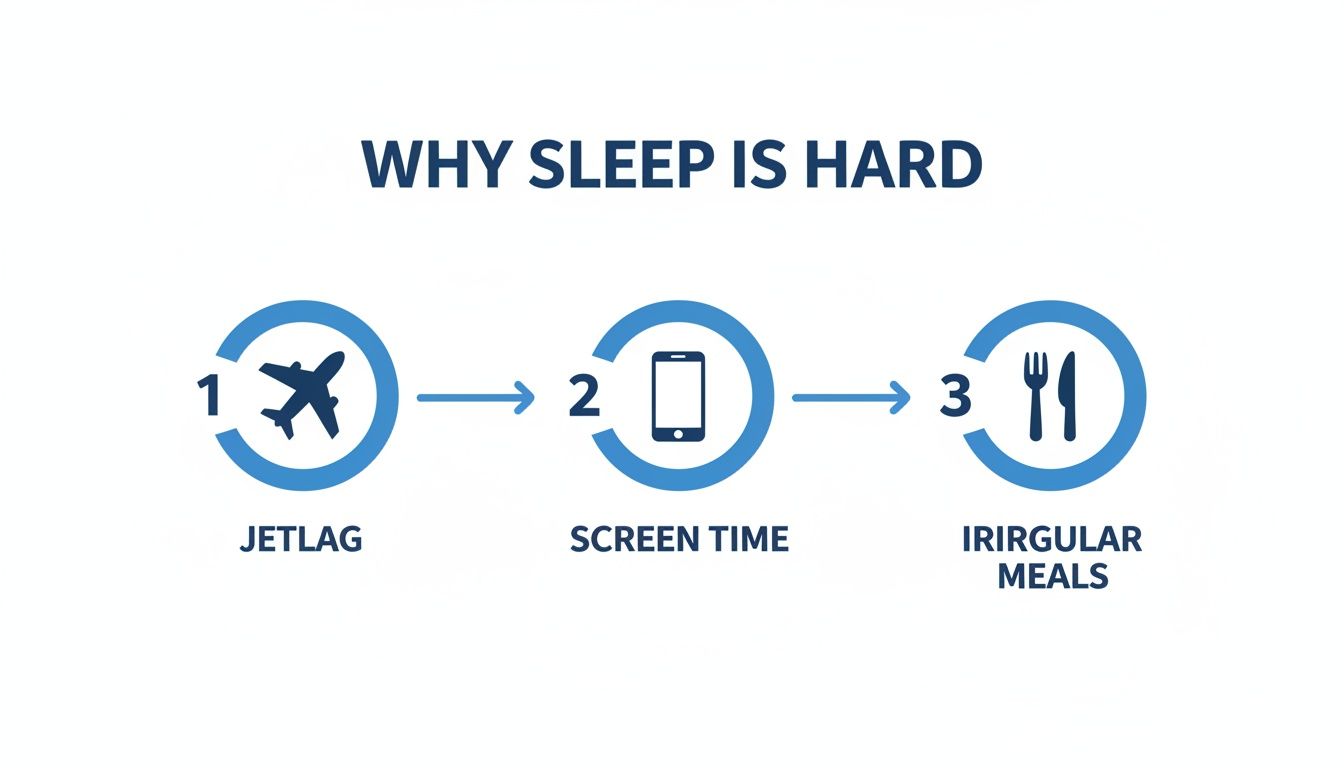
Common Culprits That Wreck Your Internal Clock
Social Jetlag: Staying up late and sleeping in on weekends constantly destabilizes your internal clock.
Late-Night Screen Time: Blue light directly suppresses melatonin production.
Erratic Meal Times: Your digestive system has its own clock. Late meals force your body to focus on digestion when it should be powering down.
"A misaligned circadian rhythm is like having a watch that's always a few hours off. You can still tell time, but you'll constantly be late for some things and early for others."
Why "Just Go to Bed Earlier" Fails
Your internal clock is still running on its old schedule. Melatonin levels haven't risen and core body temperature hasn't dropped — the two biological triggers you need to fall asleep. The real solution is methodically retraining your internal clock with consistent, predictable cues every single day.
The "All-Nighter" Myth
- It Creates a Massive Sleep Debt — depriving your brain of essential restorative sleep.
- The "Crash" is Unpredictable — your body overcompensates, putting you right back where you started.
- It Spikes Cortisol — making it harder to fall asleep when your target bedtime arrives.
Your Action Plan for a Full Circadian Reset
Anchor Your Wake-Up Time
Wake up at the same time every single day. This non-negotiable wake-up time is the primary anchor for your entire circadian rhythm. Your body learns to anticipate it, releasing cortisol at the right moment and setting a timer for when to release melatonin that evening.
Use Light Strategically
Morning Light: Within 30 minutes of waking, get 15-20 minutes of natural sunlight. This also has a big impact on vitamin D levels — learn more by unlocking the health benefits of Vitamin D3 supplementation.
Evening Darkness: Dim the lights and avoid blue light from screens in the 60-90 minutes before bed.
Create a Wind-Down Ritual and Mind Your Nutrition
Steer clear of large, heavy meals and caffeine within a few hours of bed. Magnesium Glycinate taken 30–60 minutes before bed supports the natural transition into sleep.
How to Master Your Morning to Win the Day

Get 15–20 minutes of direct, natural sunlight within the first 30–60 minutes of waking up. Exposure to morning light within 30 minutes of waking can realign your schedule in just 3–5 days for 70% of people, cutting daytime fatigue by 35%.
If natural light isn't available, a 10,000-lux light therapy box for 15–30 minutes works as an effective substitute.
Pair morning light with a protein-forward breakfast and light movement to reinforce the "it's time to be active" signal.
Crafting a Wind-Down Routine You'll Actually Do

Put away all screens 60–90 minutes before your target bedtime. Take a warm bath 90 minutes before bed — the rapid cooling afterward sends a powerful sleep signal. Journal for 5–10 minutes to offload mental chatter.
Using Supplements and Tools the Smart Way
Magnesium Glycinate: The Missing Piece in Most Sleep Resets
Magnesium glycinate binds to GABA receptors — the brain's primary "off" switches — helping to quiet mental chatter and release physical tension. Learn more in our complete guide to magnesium glycinate for sleep.
Shop our Elemental Edge Magnesium Glycinate — formulated for clean, effective nightly support.
Melatonin for Short-Term Resets Only
Use a very low dose — 0.5 to 3 milligrams — taken about 90 minutes before your new target bedtime. It's a temporary aid, not a long-term solution.
Bright Light Therapy
A 10,000-lux light therapy box for 15–30 minutes right after waking sends a clear "wake up" message to your brain's master clock.
Troubleshooting Your Sleep Reset: FAQ
How Long Does It Really Take to Fix a Sleep Schedule?
Give it a solid 1 to 2 weeks of dedicated effort. If your schedule has been out of sync for months, it might take closer to a month. Consistency beats perfection.
Can I Still Sleep In on Weekends?
Sleeping in for more than 60–90 minutes on weekends can undo a week's worth of hard work. A short 20–30 minute early-afternoon nap is a much better option.
If fragmented sleep or persistent 3am waking is your primary issue, the problem may go deeper than your schedule. The 3am wake is a specific symptom of an advancing cortisol curve — a biological change common after 40. Our guide on how to restore your sleep cycle after 40 covers the root causes and targeted interventions.
What Should I Do If I Wake Up in the Middle of the Night?
Don't look at the clock. If you can't drift back off within about 20 minutes, get out of bed, go to a dim room, and do something calm until you feel sleepy again.
How to Adjust Your Sleep Schedule Gradually
Move your target times earlier by 15–30 minutes, hold that schedule for two or three days, then shift again. Take Magnesium Glycinate 30–60 minutes before your new target bedtime to ease the transition.
At Elemental Edge Health, we believe foundational wellness starts with restorative sleep. Explore our collection.
Complete Your Daily Foundation
For adults over 40, the most effective daily stack combines creatine for strength and cognitive support, magnesium glycinate for recovery and sleep, and vitamin D3 for immune and bone health. Get all three together and save $15 with the Essential Edge Stack — one daily habit, full foundation covered.
About the Author
Kim Brissett-Lier is the founder of Elemental Edge Health. After losing 100+ lbs in his 40s and rebuilding his strength, energy, and mental clarity through targeted supplementation and consistent daily habits, Kim created Elemental Edge to help other adults 40+ experience the same transformation — without the extremes. He writes about magnesium, creatine, Vitamin D, sleep, stress resilience, and the fundamentals of long-term health and performance.