

Let's get right to it. If you're looking for the heavy hitters in immune support, the science points to a core group: Vitamin D, Vitamin C, the mineral Zinc, and foundational gut support from Probiotics. These four form the foundation of any smart immune strategy, giving your body the essential resources it needs to stay resilient.
Your Essential Guide to Immune Support Vitamins
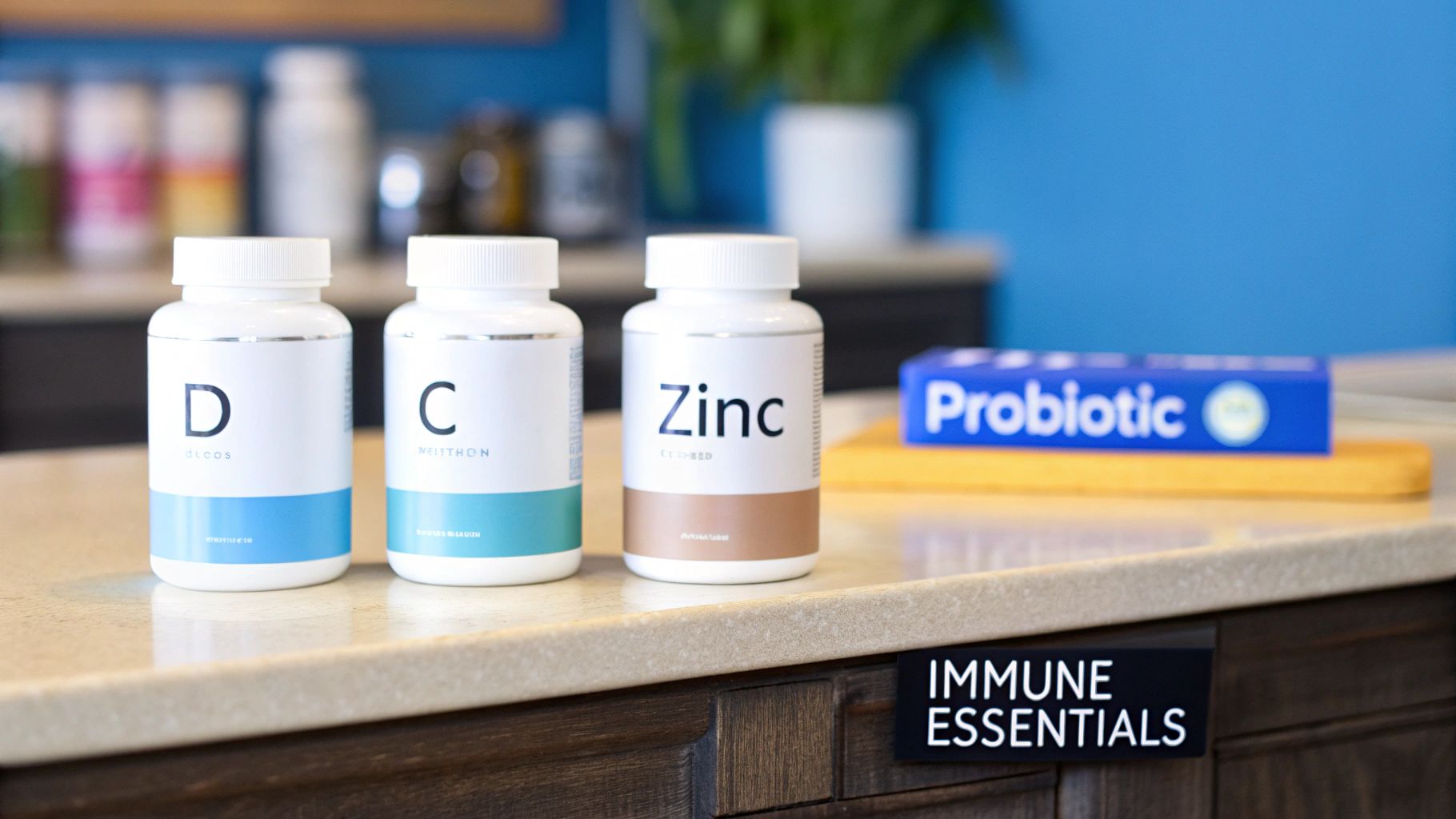
Think of your immune system as a highly trained security detail, constantly on patrol. A healthy diet provides the basic training, but targeted supplementation acts like the advanced gear and communication systems—the stuff that allows your team to perform at an elite level. While a nutrient-rich diet is non-negotiable, it isn't always enough to keep you fully protected.
Why Food Alone Might Not Be Sufficient
Even the most dedicated healthy eaters run into modern-day hurdles that can make supplementation a smart, proactive move for immune resilience.
- Soil Depletion: Decades of intensive farming have stripped many vital minerals from the soil. This means the fruits and vegetables on your plate today often don't pack the same nutritional punch they did generations ago.
- Lifestyle Stressors: Chronic stress from work, poor sleep, and just the general pace of life can burn through key nutrients like Vitamin C and B vitamins faster than your diet can possibly replace them.
- Limited Sun Exposure: Vitamin D, a powerhouse for immune regulation, is nicknamed the "sunshine vitamin" for a reason. If you live in a northern climate or spend most of your time indoors, a deficiency is incredibly common.
Your diet is the foundation, but supplementation is the reinforcement. It’s the strategic advantage that ensures your immune team is never short on critical supplies, especially when facing seasonal challenges or periods of high stress.
To give you a clearer picture, we've put together a quick-reference guide to the most important nutrients for your body's defense system. This table provides a snapshot of what each nutrient does and the best places to find it in your diet.
Top Vitamins and Minerals for Immune Health at a Glance
| Nutrient | Key Immune Function | Primary Food Sources |
|---|---|---|
| Vitamin D | Acts as a commander, directing immune cells and helping to regulate immune responses. | Fatty fish (salmon, mackerel), fortified milk, sunlight exposure. |
| Vitamin C | Functions as a rapid-response antioxidant, protecting cells from damage and supporting immune cell production. | Citrus fruits, bell peppers, strawberries, broccoli. |
| Zinc | Serves as a communications officer, essential for immune cell development and signaling. | Oysters, red meat, beans, nuts, whole grains. |
| Probiotics | Act as border patrol, maintaining a healthy gut where over 70% of your immune system resides. | Yogurt, kefir, sauerkraut, kimchi, fermented foods. |
This overview is just the beginning. In the sections that follow, we'll dive deeper into each of these essentials, explaining exactly how they work together to build a truly robust immune system. Understanding their individual and collective roles is the key to moving beyond guesswork and toward a proactive, science-backed approach to your health.
How Your Immune System Actually Works
Before we get into the vitamins and minerals that can supercharge your immune response, it’s helpful to know what you’re actually supporting. Think of your body as a high-tech fortress, constantly defending itself against invaders like bacteria, viruses, and other pathogens. This fortress doesn’t rely on a single wall; it's a brilliant, multi-layered defense network with two main branches.
This whole system is designed to do three things: tell friend from foe, neutralize threats, and remember every battle to get stronger for the next one. Nutrients are the raw materials for this entire operation—they’re the steel for the armor, the fuel for the soldiers, and the code for the communication systems. Without them, the fortress defenses start to crumble.
The Innate Immune System: Your First Responders
The first branch of your defense is the innate immune system. This is your fortress’s frontline security—the guards at the gate and the formidable outer walls. It’s your body’s immediate, all-purpose line of defense, ready to jump into action the second an alarm is tripped.
This system doesn't need to know the specific identity of an enemy; it just attacks anything that looks foreign or out of place. Its toolkit includes:
- Physical Barriers: Your skin is the most obvious one, a massive wall keeping things out. But you also have mucous membranes in your nose and throat that act like sticky traps for airborne invaders.
- Cellular Guards: Specialized white blood cells, like neutrophils and macrophages, are the foot soldiers. They constantly patrol your body, literally engulfing and digesting any trespassers they find on sight.
- Inflammation: Ever get a cut? That redness and swelling is your innate system triggering an inflammatory response. It’s a smart move—it rushes blood and more immune cells to the site to contain the threat and start repairs, almost like a crew sealing a breach in the castle wall.
This rapid-response team is amazing at handling everyday threats quickly. Its only downside? It has no long-term memory of the enemies it fights.
The Adaptive Immune System: Your Elite Special Forces
When a particularly clever invader gets past the first line of defense, your adaptive immune system gets the call. This is the fortress’s elite special forces unit—highly trained, strategic, and incredibly intelligent. It takes a bit longer to mobilize, sometimes a few days, but its attack is far more powerful and specifically targeted.
This system is built around two types of elite soldiers, known as lymphocytes:
- B-cells: Think of these as the intelligence officers and weaponsmiths. They produce powerful proteins called antibodies, which are custom-designed to lock onto one specific type of invader, tagging it for destruction.
- T-cells: These are the direct combat specialists. Some, called "killer" T-cells, hunt down and destroy your own cells that have been infected. Others, known as "helper" T-cells, act as field commanders, coordinating the entire immune attack.
The most incredible part of the adaptive system is its memory. After it fights off a pathogen, it creates "memory cells" that stick around for years, sometimes a lifetime. If that same enemy dares to show up again, these cells launch a response so fast and strong that you often neutralize the threat before you even feel sick.
Vitamins and minerals are absolutely critical for every single one of these processes. They're needed to build the physical barriers, produce the soldier cells, manufacture the antibody weapons, and keep the communication lines clear between all the units. When you supplement with the right immune-support nutrients, you’re not just taking a pill—you’re strategically resupplying your entire defense force.
The Core Four Nutrients for Peak Immunity
Now that we have a clearer picture of the incredible defense network your body runs 24/7, we can get into the specific resources it needs to operate at its best. While dozens of nutrients play a role, four stand out in the research as the non-negotiable pillars of a truly resilient immune system.
Think of them as the elite leadership team for your body's security detail. These aren't just random supplements; they're the strategic assets that fuel, direct, and coordinate both your innate and adaptive immune responses. By ensuring you have optimal levels of these core four, you're giving your body the fundamental tools it needs for robust, year-round protection.
This visual map shows how your body's defenses work in layers, from physical barriers to the highly specialized adaptive immune response.
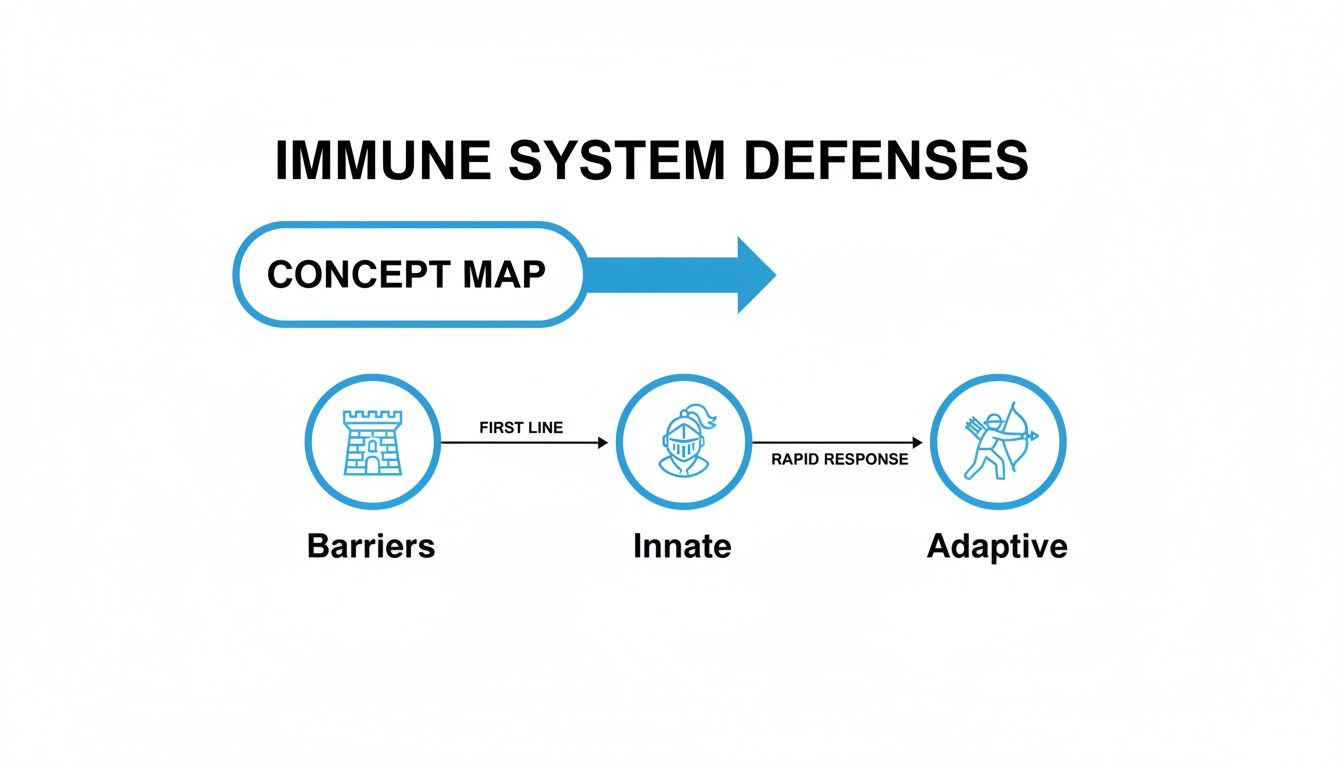
Each stage of this defense requires specific nutrients to function correctly, which is why a comprehensive approach to immune support is so much more effective than focusing on just one or two.
Vitamin C: The Rapid-Response Medic
Vitamin C is probably the most famous immune-support nutrient out there, and for good reason. It acts as your system's rapid-response medic and frontline antioxidant. When your immune cells are in the heat of battle, they generate a lot of metabolic exhaust—what scientists call oxidative stress—which can damage the cells themselves.
Vitamin C rushes to the scene to neutralize this damage, protecting your immune soldiers so they can keep fighting. It's also critical for the growth and repair of all body tissues, including producing the collagen that reinforces your physical barriers like skin.
Because it's water-soluble, your body doesn't store Vitamin C for very long. This means a consistent daily intake is crucial, especially during times of high physical or emotional stress when your body's demand for it skyrockets.
Vitamin D: The Intelligent Commander
If Vitamin C is the medic on the ground, then Vitamin D is the intelligent commander directing your immune forces. This fat-soluble vitamin is actually a potent hormone that plays a master-regulator role, helping both the innate and adaptive systems identify true threats and respond appropriately.
One of Vitamin D's most important jobs is to prevent an overzealous immune reaction. It helps keep your defense forces disciplined, stopping them from causing excessive inflammation or attacking your body's own tissues—a key factor in autoimmune conditions.
A Vitamin D deficiency is like having a confused commander leading your troops. The soldiers might be there, but they lack clear direction, leading to disorganized and ineffective responses. This is why maintaining optimal levels is a cornerstone of modern immune strategy.
Given that so many people have insufficient levels due to limited sun exposure, supplementation is often a smart move. You can dive deeper into its benefits in our detailed guide on unlocking the health benefits of Vitamin D3 supplementation.
Zinc: The Vital Communications Officer
Imagine an army where the radios don't work. That's what an immune system without enough zinc looks like. This essential trace mineral is the vital communications officer, responsible for ensuring clear signaling between all your immune cells.
Zinc is required for hundreds of enzyme reactions, including those that are absolutely critical for developing and activating T-cells—the special forces of your adaptive immune system. Without enough zinc, your body struggles to produce these elite defenders and coordinate a targeted attack against specific pathogens.
Even a mild deficiency can throw a wrench in the works, weakening your frontline defenses. This makes zinc one of the most important minerals for both preventing infections and shortening their duration if you do get sick.
Probiotics: The Border Patrol
Finally, we have probiotics, which are fundamentally different but every bit as crucial. Probiotics are the beneficial bacteria that act as your gut's border patrol. And since over 70% of your immune system is located in your gut, the health of this internal ecosystem is directly tied to your overall resilience.
A healthy gut microbiome, supported by probiotics, reinforces the gut wall and prevents harmful pathogens from crossing into your bloodstream. These "good" bacteria also help train your immune cells, teaching them to distinguish between harmful invaders and harmless substances like food. This gut-immune connection is one of the most exciting frontiers in health research today.
Comparing the Core Four Immune Supporters
To help you see how these power players work together, this table breaks down their primary roles and key supplementation details. It really helps clarify why a balanced, team-based approach is so much better than just loading up on a single nutrient.
| Nutrient | Primary Role in Immunity | Recommended Daily Allowance (RDA) | Best Time to Take |
|---|---|---|---|
| Vitamin C | Acts as an antioxidant, protecting immune cells and supporting their production. | 90 mg for men, 75 mg for women. | Can be taken anytime, but splitting doses may improve absorption. |
| Vitamin D | Regulates immune cell function and prevents excessive inflammatory responses. | 600 IU (15 mcg) for most adults. | Best taken with a meal containing healthy fats to enhance absorption. |
| Zinc | Essential for immune cell development, communication, and function. | 11 mg for men, 8 mg for women. | Best taken with food to avoid stomach upset. Avoid taking with iron/calcium. |
| Probiotics | Maintains gut barrier integrity and "trains" the gut-based immune system. | No RDA; measured in CFUs. Aim for 1-20 billion CFUs. | Often recommended on an empty stomach, but consistency is most important. |
Together, these four powerhouses form a complete support system. They ensure your body has the medics, commanders, communications, and border security it needs to stay ready and defend your health from every angle.
Unsung Heroes That Support Your Immune System
While Vitamin C, Vitamin D, and Zinc tend to get all the credit, a truly resilient immune system is more like a well-coached team than a few star players. Several other key nutrients work behind the scenes, patching up vulnerabilities and making sure your defenses are running smoothly from every possible angle.
Think of it this way: focusing only on the big names is like building a fortress but forgetting to maintain the walls or train the crew responsible for making new weapons. For a complete strategy, you need to support the entire operation. This is exactly where vitamins A, E, and the B-complex family come in—each has a unique and vital job to do.
Vitamin A: The Fortress Architect
Your body’s first line of defense isn't a cell; it’s a physical wall. Vitamin A is the fortress architect, responsible for building and maintaining the integrity of your skin and the mucous membranes lining your respiratory and digestive tracts. These surfaces are your literal barriers against invading pathogens.
If you don’t have enough Vitamin A, these barriers can weaken, developing microscopic cracks that allow germs to slip right through. This vitamin is also critical for the development of both your innate and adaptive immune cells, ensuring you have enough "guards" to patrol the fortress once it's built.
A strong wall is the best defense. Vitamin A ensures your body’s physical barriers are robust and impenetrable, stopping threats before they even trigger an immune response. It’s proactive defense at its most fundamental level.
Vitamin E: The Cellular Bodyguard
Every battle creates collateral damage. As your immune cells fight off pathogens, they generate a huge amount of oxidative stress, which can actually harm the very cells trying to protect you. Vitamin E steps in as the cellular bodyguard. It's a powerful fat-soluble antioxidant that specializes in protecting cell membranes from this friendly fire.
By neutralizing harmful free radicals, Vitamin E keeps your immune cells healthy and functional, helping them last longer and work more effectively. This is especially important for delicate immune cells like T-cells, which are essential for mounting a targeted, adaptive response. It’s like giving your elite soldiers armor so they can stay in the fight longer.
B Vitamins: The Factory Workers
If your immune system is a defense factory, then B vitamins—especially Vitamin B6—are the indispensable factory workers. They are the energy and production crew, vital for manufacturing new immune cells and the antibodies that tag invaders for destruction.
When your body detects a threat, it needs to rapidly ramp up the production of white blood cells. This process is incredibly energy-intensive and depends on B vitamins to convert food into cellular fuel. A shortage of B6, B9 (folate), or B12 can bring this production line to a grinding halt, leaving your defenses understaffed and slow to respond.
- Vitamin B6 (Pyridoxine): Directly supports the production of key lymphocytes (T-cells and B-cells) and helps keep inflammation in check.
- Vitamin B9 (Folate): Absolutely crucial for synthesizing new cells, including the rapid multiplication of immune cells needed during an infection.
- Vitamin B12 (Cobalamin): Plays a key role in the function of natural killer cells, a vital part of your innate, first-responder immune system.
These vitamins are also deeply connected to gut health, which is where a huge portion of your immune system actually lives. To learn more, check out our guide on unlocking the power of a healthy gut for a stronger immune foundation. Together, these unsung heroes create a synergistic effect, ensuring your immune system isn't just strong, but also well-rounded, resilient, and ready for anything.
How to Choose High-Quality Immune Supplements
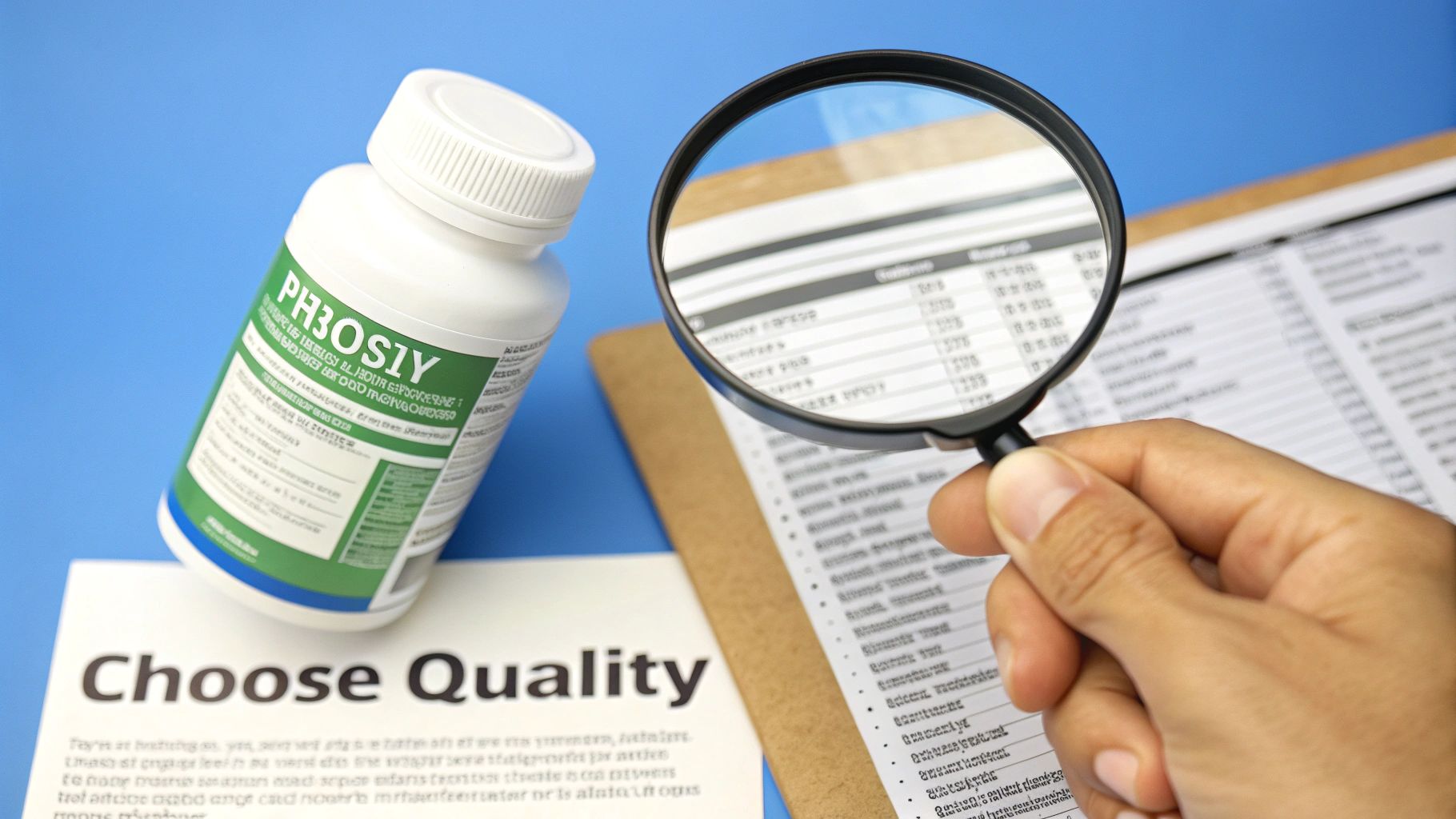
Walking down the supplement aisle can feel overwhelming. With so many brands making bold promises, how do you know which products are genuinely effective and which are just marketing hype? The trick is to start thinking like an engineer caring for a high-performance engine: what matters most is purity, quality, and bioavailability.
When you invest in your health, you deserve products that actually deliver. That means looking past the flashy labels and learning to spot the markers of a truly high-quality formula—one that’s packed with clean, active ingredients and free of the unnecessary fillers, binders, or artificial junk that does nothing for you.
The demand for transparent, effective supplements is booming. In 2023, the global immune health supplements market was valued at an incredible $24.38 billion, with vitamins and minerals leading the charge. This isn't just a trend; it's a clear signal that people are actively seeking out formulations backed by real science. You can discover more insights about the immune supplement market on Future Market Insights.
Look for Third-Party Testing Seals
Because the supplement industry isn't regulated with the same rigor as pharmaceuticals, independent verification is your best friend. Think of it as getting a certified inspection before buying a car—it’s an unbiased check that confirms you're getting what you paid for.
The best brands voluntarily send their products to independent labs for tough testing. These third parties confirm that the bottle contains exactly what the label claims, in the right amounts, and is free from any harmful contaminants.
- NSF International: This seal means the product meets strict public health and safety standards.
- U.S. Pharmacopeia (USP): Verifies the identity, purity, and potency of the ingredients.
- Informed-Choice / Informed-Sport: A critical seal for athletes, as it tests for substances banned in sports.
Spotting one of these seals gives you a powerful layer of trust. It’s proof that the company stands behind its product.
A third-party testing seal is a brand’s commitment to transparency. It means they have nothing to hide and are confident that their product meets the highest standards of quality and purity.
Prioritize Bioavailability for Maximum Impact
Beyond purity, the next crucial piece of the puzzle is bioavailability. It's a scientific-sounding word, but the concept is simple: it measures how well your body can actually absorb and use a nutrient. You can swallow a high-dose supplement, but if it's in a form your body can't process, it’s literally money down the drain.
For instance, minerals like zinc and magnesium are often "chelated," meaning they are bound to an amino acid. This simple trick makes them far easier for your digestive system to recognize and absorb. In the same way, some vitamins are more effective in their "active" forms, which saves your body the work of having to convert them first.
When choosing the best vitamins for immune support, always look for ingredients in their most bioavailable forms. This guarantees you’re getting the most bang for your buck with every single dose. It’s the core principle behind comprehensive formulas like our Complete Multivitamin designed for optimal absorption, which provides a solid foundation for your entire wellness routine. By making these smart choices, you ensure your investment in your health delivers real, tangible results.
Tailoring Immune Support to Your Lifestyle
Your immune needs aren’t static; they shift and adapt right alongside your daily life. A generic, one-size-fits-all approach to immune health often falls short because the demands you place on your body are unique to you. The real key to building effective immune resilience is aligning your strategy with your specific goals and daily stressors.
An elite athlete’s immune system, for example, faces a completely different set of challenges than that of a busy professional. One is dealing with intense physical stress and recovery, while the other is navigating chronic mental and emotional strain. Each scenario requires its own nutritional game plan.
Support for the Driven Athlete
Intense physical training is a double-edged sword. While it forges a stronger, more capable body, prolonged and strenuous exercise can temporarily suppress immune function. This creates what's known as an "open window" of vulnerability right after a hard workout.
This is where targeted nutrients become crucial. Athletes can benefit hugely from antioxidants like Vitamin C and Vitamin E, which help manage the exercise-induced oxidative stress that can wear down immune cells. On top of that, ensuring adequate zinc levels is vital for repairing tissues and supporting the production of T-cells—the frontline soldiers of your immune response post-workout.
Strategies for the Busy Professional
Chronic work-related stress is a silent drain on your immune resources. The constant drip of elevated cortisol can suppress the activity of your immune cells, leaving you more susceptible to whatever bug is going around the office. For professionals juggling deadlines and long hours, B vitamins are non-negotiable.
Think of B vitamins, especially B6, as your stress-mitigation crew. They are essential for producing neurotransmitters and managing energy, helping to counterbalance the immune-suppressing effects of a high-pressure lifestyle.
Immunity for Radiant Skin
A vibrant, clear complexion is often one of the most visible signs of strong internal health. Your skin is your body’s first and most critical immune barrier, and its vitality is directly tied to specific nutrients. Vitamins A and C are the foundational players for skin immunity.
- Vitamin A is the architect, crucial for healthy skin cell production and turnover. It keeps that primary barrier strong and intact.
- Vitamin C is the builder, absolutely essential for producing collagen, the protein that gives skin its structure, firmness, and strength.
This personalized approach moves you beyond just popping a random supplement and toward building a smart, responsive immune support system. And it’s not just for flu season anymore. While many people still ramp up their intake during certain times of the year, recent data shows a growing trend toward year-round strategies for foundational wellness. This shift shows a wider recognition that consistent, daily support—not just seasonal intervention—is the smarter play. You can read the full research about seasonal supplement trends to learn more.
Your Questions, Answered
Starting any new health routine brings up questions, and that’s a good thing. It means you’re thinking critically about what you put in your body. Let's tackle some of the most common ones we hear about immune supplements so you can move forward with total confidence.
Can I Just Get Everything I Need from Food?
In a perfect world, yes. But we don't live in a perfect world. While a whole-foods, nutrient-rich diet is absolutely the foundation of good health, it's getting harder to rely on food alone.
Modern farming has led to soil depletion, meaning the fruits and vegetables we eat today often have lower mineral content than they did generations ago. On top of that, the chronic stress of daily life taxes our bodies, increasing our demand for key nutrients. Trying to fill that gap with diet alone can feel like an uphill battle.
Think of smart supplementation as your nutritional insurance policy. It guarantees your immune system has a steady, optimal supply of its most critical resources—especially harder-to-get nutrients like Vitamin D—so it’s always ready to perform.
Is It Possible to Overdo It with Vitamins?
Absolutely. When it comes to supplements, more is definitely not always better. It’s crucial to understand the difference between the two main types of vitamins:
- Water-Soluble Vitamins: This group includes Vitamin C and the B vitamins. Your body is pretty smart about handling these—it uses what it needs and simply flushes out any excess through urine. This makes them generally safe, even at higher doses.
- Fat-Soluble Vitamins: This group includes Vitamins A, D, and E, plus minerals like zinc. Unlike their water-soluble cousins, these can build up in your body’s fat tissues over time. Taking too much for too long can potentially lead to toxicity.
Stick to the recommended dose on the product label or chat with your healthcare provider. This simple step ensures you’re getting all the benefits without any of the risks.
How Long Does It Take for Immune Supplements to Work?
Building a truly resilient immune system is a marathon, not a sprint. You're not looking for an overnight fix; you're making a long-term investment in your health.
It generally takes several weeks of consistent daily use to fully replenish your body’s nutrient levels and strengthen all the complex machinery of your immune response. Think of it as methodically training your body's defense team day after day, not just calling in reinforcements when you’re already feeling run down.
Proactive, consistent support is what builds a strong, adaptable immune system that’s ready for whatever comes its way.
Ready to build a resilient, high-performing immune system with clean, effective support? Elemental Edge Health provides research-backed formulas designed for optimal absorption and real results.
Explore our complete collection of wellness essentials today.