

From cognitive sharpness and joint comfort to faster athletic recovery, the benefits of omega-3 fatty acids are incredibly far-reaching. These aren't just another supplement; they're foundational fats that are essential for cellular health, touching nearly every system in your body.
Why Omega 3s Are Essential for Peak Performance
Think of your body as a high-performance engine. For that engine to run smoothly, every moving part needs the right kind of lubrication. Omega-3 fatty acids act as that critical lubricant, forming the flexible, intelligent outer layer of every single cell membrane. They're what allows messages to be sent and received cleanly, ensuring smooth operation from your brain to your muscles.
When you're running low on omega-3s, that engine starts to sputter. Signals get crossed, friction increases, and you start seeing system-wide issues—chronic inflammation, foggy thinking, slow recovery after a workout, and even dry, irritated skin. Giving your body a steady supply of these fats is like giving that engine a premium oil change. Everything just works better.
A Foundation for Every Wellness Goal
It doesn't matter if you're an elite athlete chasing a new personal record, a busy professional navigating a high-stakes career, or someone simply focused on aging with vitality. Optimizing your omega-3 intake is one of the most fundamental things you can do. These fats don't just patch up one problem; they provide systemic support that makes all your other health efforts more effective.
- For Athletes: Omega-3s help manage the inflammation that comes from hard training, reduce that dreaded delayed onset muscle soreness (DOMS), and support quicker muscle repair.
- For Professionals: They play a vital role in maintaining sharp cognitive function, focus, and mood balance, especially during periods of high stress.
- For Beauty and Longevity: They strengthen the skin's natural moisture barrier from the inside out and help protect your cells from the stressors that accelerate aging.
The real power of omega-3s is their ability to build more resilient cells. When your cells are healthy, your entire body is better equipped to handle stress, bounce back from challenges, and perform at its best, day in and day out.
This growing understanding is clearly reflected in the market. The global omega-3 fatty acids market was recently valued at around $3.2 billion USD, and it's projected to grow significantly. This signals a major shift toward using these powerful fats as a core part of any smart, preventive health strategy. You can discover more insights about the omega 3 market and its growth trajectory.
This guide will give you a practical, science-backed look at how you can put these fats to work to achieve your own wellness goals.
To give you a quick snapshot of what we'll cover, here’s a high-level look at the key benefits of omega-3s and who they help the most.
Omega 3 Benefits At a Glance
| Area of Impact | Primary Benefit | Who It Helps Most |
|---|---|---|
| Heart Health | Supports healthy triglyceride levels and blood pressure. | Anyone focused on cardiovascular wellness and longevity. |
| Brain Function | Maintains cognitive sharpness, focus, and mood balance. | Busy professionals, students, and aging adults. |
| Inflammation | Helps manage systemic and exercise-induced inflammation. | Athletes and individuals with joint discomfort. |
| Athletic Performance | Reduces muscle soreness (DOMS) and aids muscle repair. | Athletes, fitness enthusiasts, and weekend warriors. |
| Skin & Beauty | Strengthens the skin's moisture barrier for a hydrated glow. | Beauty-minded consumers and those with dry skin. |
As you can see, the applications are broad. Now, let's dive deeper into the science behind each of these benefits.
Decoding the Three Types of Omega-3s
When you hear the term “omega-3,” it’s easy to think of it as a single nutrient. In reality, it’s a family of essential fats, each with a very different job description. Think of them as a highly specialized construction crew for your body, working together to build, repair, and maintain your health from the cellular level up.
These fats are called essential for one simple reason: your body can’t make them on its own. You have to get them from food or supplements, making them a non-negotiable part of a healthy lifestyle. Let’s meet the three main players on the team.
ALA: The Plant-Based Foundation
Alpha-linolenic acid, or ALA, is the most common omega-3 in most Western diets. This is the plant-based member of the crew, found in foods like flaxseeds, chia seeds, walnuts, and hemp seeds.
Think of ALA as the raw material supplier. It provides the basic building blocks your body can try to convert into the other, more powerful omega-3s. The catch? This conversion process is notoriously inefficient. Studies suggest only a tiny fraction—often less than 10%—is successfully turned into EPA and DHA.
EPA: The Inflammation Manager
Eicosapentaenoic acid, or EPA, is the crew's inflammation and repair specialist. Found mainly in fatty fish like salmon, mackerel, and sardines, as well as krill and algal oil, EPA’s primary role is to help your body manage its inflammatory response.
- For Athletes: EPA helps quiet the exercise-induced inflammation that causes muscle soreness, paving the way for a faster, more comfortable recovery.
- For Joint Health: It's crucial for keeping joints moving smoothly by helping to balance inflammatory processes.
- For Mood: A growing body of research also points to EPA’s importance in supporting a stable, positive mood.
By producing molecules that help resolve inflammation, EPA makes sure your body's healing processes run smoothly and effectively.
DHA: The Master Architect
Docosahexaenoic acid, or DHA, is the master architect of the team. This is the omega-3 that physically builds critical structures, especially in your brain and the retinas of your eyes. In fact, DHA is a primary structural component of the human brain itself.
Your brain is nearly 60% fat, and a huge chunk of that is DHA. This fatty acid is vital for keeping your brain cell membranes fluid, which is critical for sharp nerve communication, memory, and overall cognitive function.
Just like EPA, DHA is found in fatty fish and algae. Its job is less about managing day-to-day inflammation and more about building and maintaining the long-term integrity of your body’s most complex systems.
This map shows just how central these fats are to cognitive sharpness, joint comfort, and overall system integrity.
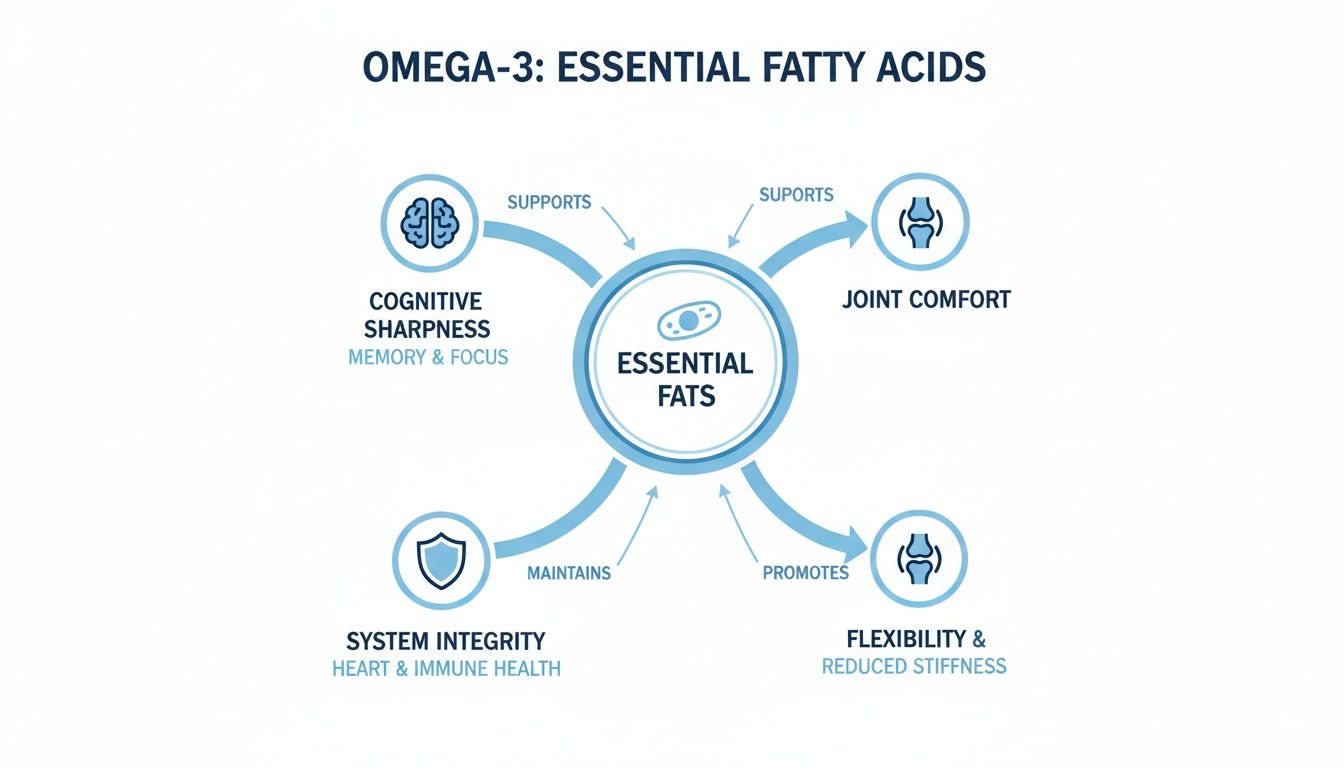
The image really connects the dots between these essential fats and major health outcomes, highlighting why a steady supply is so important. While ALA provides the starting material, getting EPA and DHA directly from marine sources is what delivers the most potent and reliable benefits for your body's most critical functions.
The Five Core Health Benefits of Omega 3s
Now that we've met the key players on the omega-3 team—ALA, EPA, and DHA—let's get into the results they actually deliver on the ground. The real power of omega-3s comes from their ability to support your health at the cellular level, working from the inside out.
Think of these fats less like a temporary fix and more like a long-term investment in building a more resilient, high-performing body and mind. Whether it's sharpening your focus for a big meeting or helping your muscles bounce back after a tough workout, the applications are incredibly practical.
Let’s break down the five most significant, science-backed benefits you can expect when you get your omega-3 intake right.

Supporting Cardiovascular Health
One of the most heavily researched benefits of omega-3s is their profound impact on heart health. These essential fats act like a skilled maintenance crew, working in several ways to keep your body's most critical engine running smoothly.
A key part of their job is helping to maintain healthy triglyceride levels. Triglycerides are a type of fat circulating in your blood; while some are necessary, consistently high levels can be a major concern for long-term heart health. Omega-3s, especially EPA, have proven to be highly effective at helping the body keep these levels in a healthy range.
They also contribute to overall circulatory wellness and help support blood pressure that’s already within a normal range. This multi-pronged support makes omega-3s a cornerstone of any proactive strategy for cardiovascular longevity.
Enhancing Brain Function and Mood
Your brain is surprisingly fatty—it’s composed of nearly 60% fat, and a huge chunk of that is DHA. This makes DHA a non-negotiable structural component for your brain's cell membranes. Think of your brain cells as a massive, complex communication grid; DHA ensures the wiring is flexible so signals can fire quickly and efficiently.
When your DHA levels are where they should be, this entire network operates at peak performance. This translates to real-world cognitive benefits you can actually feel:
- Improved Memory: DHA is crucial for the brain's ability to form, store, and recall memories.
- Sharper Focus: By keeping nerve communication fluid, it helps you lock in and maintain concentration during demanding tasks.
- Mood Balance: Omega-3s, particularly EPA, play a role in the neurotransmitter pathways that influence mood, helping foster a greater sense of emotional well-being.
The connection between omega-3s and cognition is so strong that maintaining adequate levels is considered a key factor in supporting brain health throughout all stages of life.
For anyone looking to keep their mental edge, a steady supply of DHA is a must. If you want to dig deeper, our guide on how to enhance your cognitive function with supplements offers some great insights.
Managing Inflammation and Joint Comfort
Inflammation isn't always the bad guy; it's a natural and vital process for healing. The problem starts when it becomes chronic or just doesn't know when to quit, leading to discomfort, stiffness, and reduced mobility. This is where EPA shines as a powerful manager of your body's inflammatory response.
EPA helps the body produce molecules called pro-resolving mediators. Instead of just blocking inflammation, these sophisticated compounds actively help the body "resolve" the inflammatory cycle once the job is done. It's less like an anti-inflammatory and more like a recovery signal, telling your body it's time to clean up, repair, and restore balance.
This is especially helpful for joint health. By promoting a balanced inflammatory response, EPA can help:
- Reduce Morning Stiffness: Many people report feeling more fluid and less creaky when they wake up.
- Improve Joint Mobility: Easing discomfort allows for a greater range of motion and makes daily movement feel better.
- Soothe Overworked Joints: It provides crucial support for anyone whose joints are under constant stress from athletics or a demanding job.
Promoting Healthy Skin
Your skin is your body's first line of defense, and its health is directly tied to the strength of its natural moisture barrier. Omega-3 fatty acids are fundamental building blocks of this barrier, working from within to keep your skin hydrated, resilient, and smooth.
These healthy fats get integrated directly into your skin cell membranes, fortifying them against moisture loss and environmental stressors. A strong skin barrier means your skin can hang onto hydration much more effectively, leading to a plumper, more radiant look.
Getting enough omega-3s can help with several common skin complaints:
- Dryness and Flakiness: By sealing in moisture, they help put a stop to water loss through the skin.
- Redness and Irritation: Their inflammation-managing properties can help calm sensitive or reactive skin.
- Overall Radiance: Well-hydrated skin simply reflects light better, giving you that healthy glow.
Boosting Athletic Performance and Recovery
For athletes and anyone who trains hard, recovery is just as important as the workout itself. The benefits of omega-3s for performance are tied directly to their ability to manage exercise-induced inflammation and speed up muscle repair.
Intense exercise creates microscopic tears in muscle fibers, which kicks off an inflammatory response. While this is a normal part of getting stronger, too much inflammation can lead to serious muscle soreness and a longer recovery window.
This is where omega-3s give you a clear advantage. By supporting a healthy inflammatory response, they can reduce the severity of Delayed Onset Muscle Soreness (DOMS)—that all-too-familiar ache you feel a day or two after a tough session. This means you can get back to training sooner and with less misery.
Even better, by helping to resolve inflammation, omega-3s create the ideal environment for your muscle cells to repair and rebuild, ultimately supporting a faster, more effective recovery.
Choosing Your Best Source: Foods Versus Supplements
So, how should you get your omega-3s? It really boils down to a classic question: food or supplements? Both are great paths, but they offer different routes to the same destination. The right choice for you is all about your diet, your lifestyle, and what you’re trying to achieve.
Think of the "food-first" approach as building a strong foundation. This means consistently eating whole foods that are naturally loaded with these essential fats. When you eat the source, you're not just getting omega-3s; you're getting a whole package of protein, vitamins, and minerals that all work together.
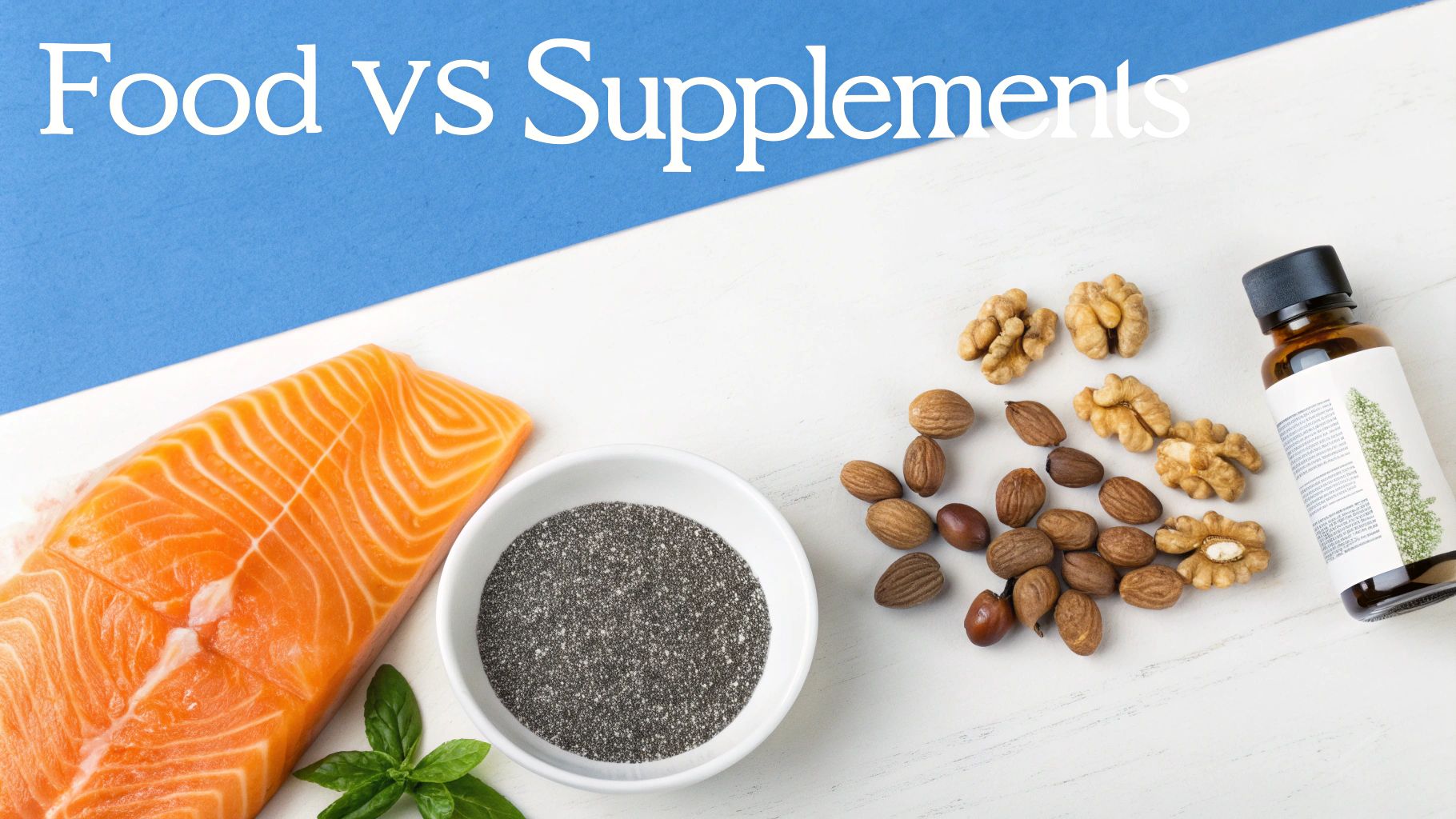
But let’s be realistic. Hitting those higher, therapeutic doses of EPA and DHA—the kind you need for serious athletic recovery or major inflammation support—can be tough with food alone. That’s where supplements step in, offering a reliable, potent, and incredibly convenient alternative.
Getting Omega 3s From Your Diet
Making omega-3-rich foods a staple in your diet is a fantastic strategy for your overall health. The key is to eat a variety of sources to make sure you’re getting a good mix of ALA, EPA, and DHA.
Top Food Sources for Omega 3s:
- Fatty Fish: This is the undisputed king for EPA and DHA. A single 3.5-ounce serving of salmon can pack over 1,500 mg of omega-3s. Mackerel, herring, sardines, and anchovies are also stellar choices.
- Plant-Based Seeds: Flaxseeds, chia seeds, and hemp seeds are ALA powerhouses. Just one tablespoon of ground flaxseed delivers more than 2,300 mg of this foundational fat.
- Walnuts: Another plant-based giant for ALA, walnuts are an easy, crunchy way to boost your daily intake.
The biggest hurdle with a food-only plan is consistency and dosage. You’d have to eat fatty fish several times a week to reach optimal EPA and DHA levels, and that’s just not practical for everyone. Cost, availability, and personal taste can all get in the way.
Why Supplements Are a Practical Choice
While a food-first philosophy is the ideal starting point, supplements are the practical bridge to make sure you’re getting enough of the right fats—especially EPA and DHA. For most of us, they aren't a replacement for a healthy diet but a powerful partner to it.
A high-quality supplement gives you a concentrated, pre-measured dose of omega-3s without the extra calories or potential contaminants like mercury that can be a concern with eating a lot of fish. This makes them an incredibly reliable tool for hitting specific health targets.
Supplements become almost essential for certain groups:
- Athletes who need high doses for recovery and performance.
- People with dietary restrictions, like vegetarians and vegans.
- Anyone who simply doesn't like eating fish.
Comparing Your Supplement Options
When you walk down the supplement aisle, you'll see a few different options. Each has its own unique profile, and understanding them helps you pick the perfect one for your goals.
I've put together a simple table to break down the most common types of omega-3 supplements.
Comparing Omega 3 Supplement Sources
| Source | Key Features | Primary Omega 3s | Best For |
|---|---|---|---|
| Fish Oil | The most common and well-researched source, from fatty fish like salmon, anchovies, and sardines. | EPA & DHA | General wellness, heart health, and anyone seeking a cost-effective, proven option. |
| Krill Oil | From tiny crustaceans. The omega-3s are bound to phospholipids, which may improve absorption. | EPA & DHA | People who get an upset stomach from fish oil or are looking for potentially better bioavailability. |
| Algal Oil | Made from marine algae—the original source of omega-3s for fish. It’s a 100% plant-based option. | EPA & DHA | Vegans, vegetarians, and anyone with a fish or shellfish allergy who wants a direct source of EPA and DHA. |
At the end of the day, the best source of omega-3s is the one you’ll actually stick with. Whether that’s enjoying salmon twice a week, tossing flaxseeds in your smoothie, or taking a daily supplement, consistency is the real secret to unlocking the long-term benefits for your body and mind.
How to Select a High Quality Omega-3 Supplement
Walking down the supplement aisle can be completely overwhelming. You're faced with dozens of omega-3 options, and every single bottle claims to be the best. The hard truth is, not all fish oil is created equal, and the gap between a high-quality product and a useless one is massive. To actually get the benefits you're paying for, you need to know what you're looking for on the label.
Think of it like buying fresh produce. You instinctively skip the bruised, sad-looking apple and go for the crisp, vibrant one. You should apply that same mindset to your omega-3 supplement. Four key markers separate the premium products from the rest: potency, form, purity, and freshness.
Nailing these four factors ensures you're investing in a supplement that’s safe, effective, and will actually deliver results for your body and brain.
Check the EPA and DHA Potency
This is the number one mistake people make. They glance at the front of the bottle, see 1,000 mg of fish oil, and assume it's potent. But the total oil content doesn't tell you the whole story. The only numbers that truly matter are the amounts of EPA and DHA inside. These are the specific fatty acids that do all the heavy lifting for your heart, brain, and joints.
Always flip the bottle over and read the "Supplement Facts" panel. Look for the specific milligram count for EPA and DHA, then add them together. A high-quality brand will be completely transparent about these numbers. For example, our Elemental Edge Health Omega-3 clearly states the EPA and DHA content right on the label so you know exactly what you’re getting in every serving.
Understand Bioavailability and Form
How well your body actually absorbs and uses omega-3s comes down to their molecular form. It's a bit technical, but it makes a huge difference. You'll generally see two main types listed:
- Triglyceride (TG): This is the natural form of fat found in fish. Your body recognizes it as food, which leads to far better absorption—sometimes by as much as 70% more than other forms.
- Ethyl Ester (EE): This is a concentrated, processed form. While it can pack high doses of EPA and DHA, your body has to convert it back into a triglyceride before it can be used. That extra step can significantly reduce how much actually gets into your system.
For the best results, look for supplements that specify they are in the triglyceride form.
Choosing a supplement in the natural triglyceride form is like giving your body a key that fits the lock perfectly. It minimizes the work your digestive system has to do and maximizes the amount of omega-3s that actually get into your cells.
Demand Purity and Third-Party Verification
Since omega-3s come from marine sources, there's always a risk of contamination from environmental toxins like heavy metals (mercury, lead) and PCBs. Reputable brands take this risk very seriously and go to great lengths to purify their oil.
The best way to know a product is clean is to look for proof of third-party testing. Seals from organizations like the International Fish Oil Standards (IFOS) program or NSF International are your guarantee that an independent lab has verified the product for:
- Purity: It’s free from harmful levels of contaminants.
- Potency: It actually contains the amount of EPA and DHA stated on the label.
- Freshness: The oil hasn't oxidized or gone rancid.
This independent verification is your ultimate quality assurance.
Ensure Freshness and Prevent Oxidation
Omega-3s are polyunsaturated fats, which means they are chemically fragile. When exposed to heat, light, or air, they can easily oxidize—basically, go rancid. A rancid fish oil supplement isn't just ineffective; it can actually be harmful.
Top-tier manufacturers protect their oil by adding antioxidants like vitamin E (often listed as mixed tocopherols) to the formula to keep it stable. You can also do a simple check yourself. A high-quality fish oil should have a clean, mild taste, not a strong, sour, or overly "fishy" one. Storing your supplements in a cool, dark place (like the fridge) is also a great way to maintain their integrity.
Getting Your Dosage Right and Making It a Habit

Knowing omega-3s are good for you is the easy part. The real challenge is weaving them into your daily life so consistently that it becomes second nature. It's about finding the right dose for your specific goals and building a simple, unbreakable routine. This is how you move from just trying a supplement to making a long-term investment in your cellular health.
There's no single "magic number" that fits everyone, but we do have solid guidelines to get you started. Think of these as a launchpad, and always chat with your healthcare provider before starting any new supplement, especially if you have existing health conditions or are on other medications.
General Dosage Guidelines
The right amount of omega-3s really depends on what you're trying to achieve. Are you aiming for general wellness, targeted heart support, or faster recovery from tough workouts? Each goal has a different therapeutic window for EPA and DHA.
-
For General Health: Most health organizations suggest a baseline of 250–500 mg of combined EPA and DHA per day for healthy adults. This is your foundational dose for maintaining cellular balance and supporting overall well-being.
-
For Heart Health: If your focus is squarely on cardiovascular support, the research points toward a higher intake. A daily dose of around 1,000 mg of combined EPA and DHA is a common target.
-
For Athletic Recovery & Inflammation: Athletes or anyone dealing with significant inflammation often benefit from more firepower. Doses in the 2,000–3,000 mg range of combined EPA and DHA can help manage post-exercise muscle soreness and support the body's natural repair processes.
Crucial Takeaway: Don't just look at the total fish oil number on the front of the bottle. Flip it over and check the supplement facts for the combined EPA and DHA total—that's the active payload that delivers the results.
How to Make It Stick
Consistency is everything. The long-term benefits of omega-3s only kick in when these essential fats have time to build up in your cell membranes. A hit-or-miss approach just won’t cut it. Here are a few dead-simple tips to make it a non-negotiable part of your day.
1. Take It with a Meal
Swallowing your omega-3 supplement with food, especially a meal that contains some fat, can boost absorption. Bonus: it’s the single best way to avoid those unpleasant "fish burps."
2. Look for Enteric-Coated Softgels
If you have a sensitive stomach, enteric-coated softgels are a game-changer. This special coating ensures the capsule survives the acidic environment of your stomach and breaks down in the small intestine instead, minimizing any potential for digestive upset.
3. Piggyback on an Existing Habit
This is the oldest trick in the book because it works. Place your omega-3 bottle right next to something you already do every day without fail—your coffee maker, your toothbrush, or in that daily pill organizer on your counter. A simple visual cue is often all you need.
It’s also smart to think about how omega-3s play with other key nutrients. For instance, maintaining solid vitamin D levels is crucial for overall wellness, and many people take these two supplements together. You can dive deeper by unlocking the health benefits of vitamin D3 supplementation in our detailed guide.
One final, important note: if you take any blood-thinning medications, be sure to speak with your doctor. High doses of omega-3s can have a mild blood-thinning effect, so professional medical guidance is absolutely essential in this case.
Your Omega-3 Questions, Answered
Even after you've got the science down, practical questions always come up. Here are some quick, straightforward answers to the most common queries we hear, designed to help you dial in your routine and get the most from your omega-3s.
We’ve cut through the noise to give you the details you need for a smart, effective strategy.
When Is the Best Time to Take Omega-3s?
Honestly, the single most important thing is just taking them consistently. But if you want to optimize, timing can definitely help.
Taking your omega-3 supplement with a meal that contains some healthy fat is the best way to go. This simple tweak dramatically improves how well your body absorbs the fatty acids and practically eliminates any chance of annoying side effects like “fish burps.” Most people find that taking their softgels with breakfast or dinner is the easiest way to make it a habit.
Can I Get Enough Omega-3s on a Vegan Diet?
You can get some omega-3s from a vegan diet, but there’s a major catch. Plant sources like flaxseeds, walnuts, and chia seeds are loaded with ALA, which is great, but your body is notoriously bad at converting it into the heavy hitters, EPA and DHA.
For anyone on a plant-based diet, just relying on ALA sources probably isn't enough to hit the levels needed for serious brain and heart benefits. That’s why a direct source of EPA and DHA is so important for closing that nutritional gap.
This is exactly why high-quality algal oil supplements are such a game-changer. They’re made directly from marine algae—which is where fish get their omega-3s in the first place—giving you a potent, sustainable, and 100% vegan source of both EPA and DHA.
How Long Until I Notice the Benefits?
How quickly you feel a difference really depends on what you're looking for. Some effects, like less muscle soreness after a tough workout, can show up within a few weeks of consistent use.
But for the bigger, more systemic benefits—like those for your brain, heart, and the health of every cell in your body—patience is the name of the game. It generally takes about 3-6 months of daily use to really build up enough of these essential fats in your tissues. The main takeaway here is that sticking with it over the long haul is what unlocks the most profound, lasting results.
Ready to feel the difference a high-quality omega-3 supplement can make? Elemental Edge Health offers a pure, potent formula designed for maximum absorption and effectiveness. Explore our premium supplements and start building your foundation for a sharper mind and a more resilient body. Shop now at Elemental Edge Health.