

When you’re looking for a supplement to help take the edge off, three science-backed options consistently rise to the top: Ashwagandha, Magnesium Glycinate, and L-Theanine. These aren't just random herbs and minerals; they’re powerful natural compounds that work with your body to regulate stress hormones, calm your nervous system, and foster a feeling of focused relaxation.
Your Quick Guide to the Best Supplements for Stress
When life feels like a constant barrage, your body’s “fight or flight” response can get stuck in the "on" position. Think of the right supplements as a dimmer switch, helping you dial down that intensity without leaving you feeling groggy or checked out. They don't just mask the symptoms—they get to the root of the issue by targeting the biological pathways that stress throws out of whack, helping you find your way back to balance.
This search for natural, effective solutions has ignited a massive industry. The global market for stress relief supplements is on track to hit USD 1,084 million by 2035—a huge jump from its USD 576.8 million valuation in 2023. This isn't just a fad; it’s a clear sign of a collective move toward taking proactive control of our mental wellness, especially for busy professionals juggling endless demands.
Top Choices for Natural Calm
So, where do you start? The best choice really depends on what your stress feels like. Each of the top contenders brings something different to the table.
- Ashwagandha: An incredible adaptogenic herb that helps your body become more resilient to stress by balancing cortisol levels. It's the perfect ally for anyone feeling chronically fried and worn down.
- Magnesium Glycinate: Often called the "relaxation mineral," this specific form of magnesium is a superstar at calming the nervous system and easing physical tension in your muscles. It’s ideal for winding down at night.
- L-Theanine: This is an amino acid, famously found in green tea, that’s known for creating a state of "alert calm." It helps you feel focused and sharp while quieting the jitters, making it a game-changer for high-pressure workdays. It's worth noting that when stress is high, many people also find that certain supplements can enhance their cognitive function.
Think of these three as your personal stress management toolkit. Ashwagandha builds your resilience for the long haul, Magnesium Glycinate brings physical calm to your body, and L-Theanine gives you mental clarity when you’re under the gun.
To help you decide, let's break it down even further.
Top Stress Relief Supplements at a Glance
This quick table summarizes the heavy hitters for stress relief, what they do best, and who they’re a great fit for.
| Supplement | Primary Stress Benefit | Ideal For |
|---|---|---|
| Ashwagandha | Balances cortisol and builds long-term resilience | Busy professionals and athletes feeling run-down |
| Magnesium Glycinate | Relaxes muscles and calms the nervous system | Anyone with tension, anxiety, and sleep issues |
| L-Theanine | Promotes calm focus without drowsiness | Students and workers needing mental clarity |
Choosing the right supplement is about matching the benefit to your specific need, whether that's building long-term resilience or finding immediate, focused calm.
How Chronic Stress Rewires Your Body and Mind
To really get why the best stress supplements work, we first need to look at what’s happening under the hood when stress becomes chronic. Think of your body’s stress response as a highly sensitive smoke alarm. It’s designed to jolt you into action when there’s a real, immediate danger—like a car swerving into your lane.
This emergency system is run by the HPA axis (Hypothalamic-Pituitary-Adrenal axis), which unleashes a cascade of hormones at the first sign of a threat. The most famous one at the end of that chain is cortisol, the “stress hormone.” In short bursts, cortisol is a lifesaver. It sharpens your focus, floods your muscles with energy, and gets you ready to move.
The problem is, modern life has turned that emergency broadcast into constant background noise. Work deadlines, endless notifications, traffic jams—these aren't life-or-death threats, but our bodies don't always know the difference. When the alarm keeps getting triggered all day long, the system never gets the "all-clear" signal to stand down.
The Problem with Persistent Cortisol
This constant state of high alert is where the real damage starts. Instead of being a helpful ally, cortisol begins to act like a saboteur, disrupting the very systems it’s meant to protect. It’s like leaving a fire hose on full blast long after the fire is out. Eventually, the water damage becomes a much bigger problem than the original spark.
This hormonal imbalance creates a domino effect across your entire body:
- Sleep Disruption: Cortisol has a natural rhythm—it peaks in the morning to wake you up and drops at night so you can sleep. Chronic stress flips this on its head, leaving you feeling wired and anxious right when you need to be winding down.
- Immune Weakness: High cortisol suppresses your immune system. This is why you always seem to catch a cold right after a super stressful week at work.
- Cognitive Fog: The same hormone that sharpens focus in a crisis can wreck your memory and concentration when it’s always hanging around. It’s the reason you feel that frustrating brain fog when you're overwhelmed.
- Metabolic Changes: Cortisol cranks up your appetite, especially for sugary, fatty foods, and tells your body to store fat right around your midsection.
When your body is stuck in this high-alert state, you're not just mentally tired—you are biologically depleted. This is the root cause of burnout, where fatigue, anxiety, and a sense of being completely overwhelmed become your new normal.
Targeting the Root Cause
Understanding this internal chaos is key. Trying to mask the symptoms with another cup of coffee or other temporary fixes won't solve the underlying problem. The most effective strategies, including smart supplementation, work by helping to recalibrate this overactive stress response.
By supporting your body's ability to lower cortisol, calm the nervous system, and restore a healthier hormonal balance, you can finally start to turn off the alarm. This is how you move from just coping with stress to building true, lasting resilience.
Adaptogens: The Body's Stress Thermostat
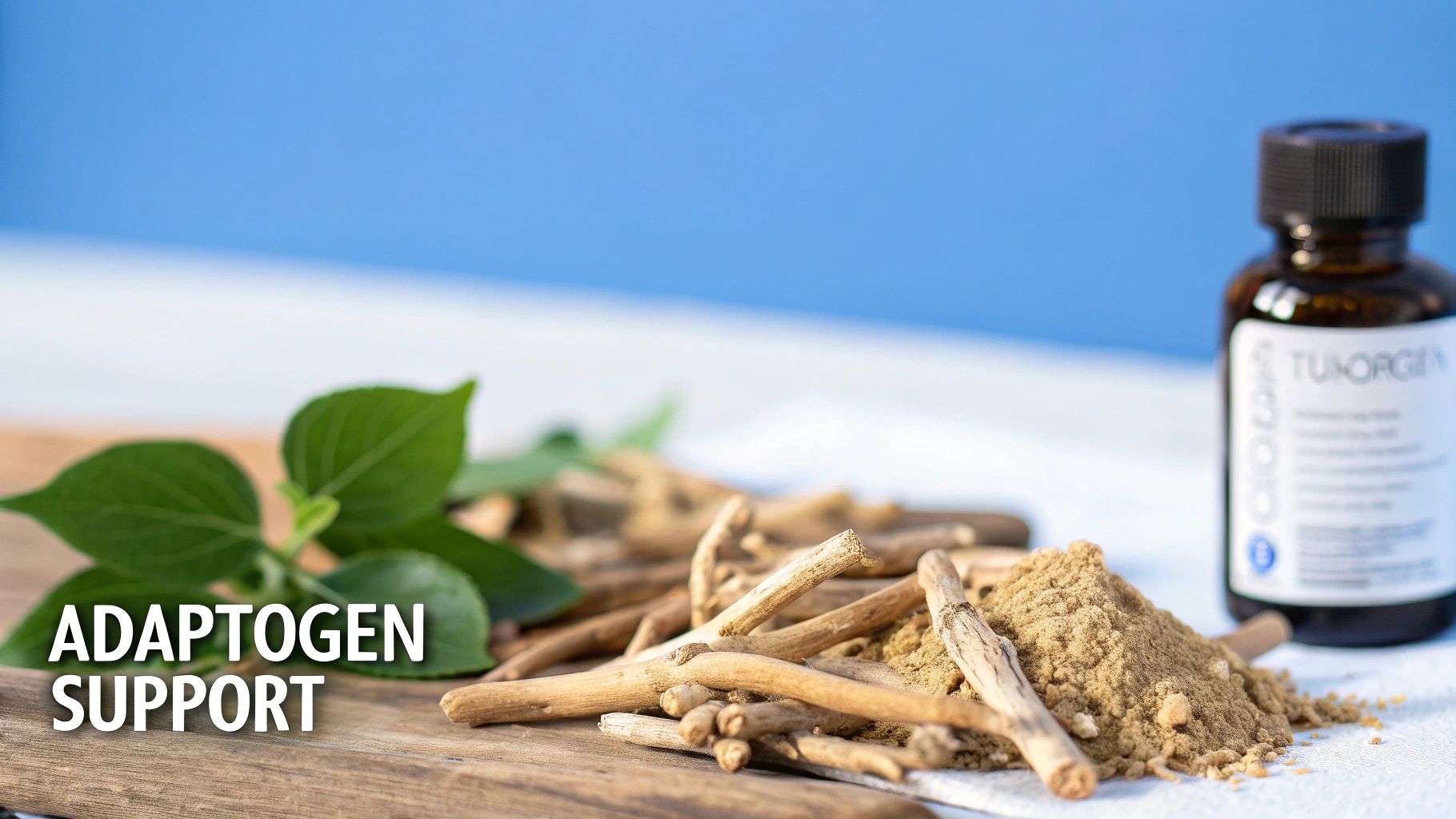
Imagine your body has a smart thermostat for stress. When a looming deadline or an intense workout cranks up the heat, it automatically adjusts to bring you back to a comfortable temperature. When you’re feeling drained and sluggish, it nudges the dial up just enough to restore your energy. That’s a pretty good picture of how adaptogens work.
These are remarkable herbs and roots that don’t force your body into a specific state—think of the jitters from a stimulant or the grogginess from a sedative. Instead, they help your system adapt to whatever stressors it’s facing, gently nudging you back toward balanced resilience. They are intelligent modulators, supporting your body’s innate ability to resist physical, chemical, and biological stressors.
It’s this non-specific, normalizing effect that makes adaptogens one of the best supplements for stress relief. They work with your body’s natural rhythms, particularly the HPA axis, to smooth out the hormonal peaks and valleys that chronic stress creates.
Ashwagandha: The Premier Stress Modulator
Among the dozens of adaptogens out there, Ashwagandha (Withania somnifera) stands out as a true powerhouse for navigating the demands of modern life. With deep roots in ancient Ayurvedic medicine, this herb has been used for centuries to boost vitality, ease anxiety, and promote a sense of calm well-being. Its secret lies in its ability to help regulate cortisol.
When your body is constantly pumping out cortisol, you feel perpetually on edge, exhausted, and foggy. Ashwagandha steps in to help dial down that overproduction, preventing your stress response from running wild. This doesn’t just make you feel calmer; the benefits ripple through your entire system, from improving sleep quality to shoring up immune function.
Think of Ashwagandha as a skilled negotiator for your nervous system. It intervenes during stressful moments, convincing your adrenal glands that they don't need to sound the alarm quite so loudly. This allows your body and mind to return to a state of peace more quickly.
This balancing act is why it’s prized by high-performing professionals and dedicated athletes alike. For the executive facing constant pressure, it fosters clear-headed focus without the anxiety. For the athlete, it helps with physical recovery by tempering the stress that intense training puts on the body.
The science backs this up. A landmark 2019 clinical trial showed that adults taking 300mg of ashwagandha root extract twice daily saw their stress scores plummet by 44% and their cortisol levels drop by 28% in just eight weeks. It’s no surprise that this powerful herb now features in 25% of new stress-relief formulas—you can learn more about the market trends for these powerful ingredients.
Choosing a High-Quality Ashwagandha Supplement
Not all Ashwagandha supplements are created equal. To get the calming effects you’re looking for, the potency and purity of the extract are everything.
Here’s what to look for to make sure you’re getting a top-tier product:
- Root-Only Extract: The highest concentration of active compounds, called withanolides, is found in the plant's root. Steer clear of products that use leaves, as they have a different chemical profile and don’t have the same robust research behind them.
- Standardized for Withanolides: A quality supplement will clearly state the percentage of withanolides on the label, typically between 1.5% and 5%. This standardization ensures you get a consistent and effective dose every time.
- Clinically Studied Extracts: Look for patented, trademarked forms like KSM-66® or Sensoril®. These specific extracts have been the subject of numerous human clinical trials, verifying their safety and effectiveness for stress and cognitive support. KSM-66, for example, is a highly concentrated, full-spectrum extract made exclusively from the root.
- Third-Party Testing: Always choose brands that voluntarily send their products for third-party testing. This independent verification confirms that the supplement is free from contaminants like heavy metals and pesticides and actually contains what the label says it does.
By prioritizing these quality markers, you can be confident you’re investing in an Ashwagandha supplement that will deliver on its promise of promoting calm resilience and helping your body master the art of adaptation.
Nutrients That Settle a Frazzled Nervous System
While adaptogens act like a thermostat for your stress hormones, some nutrients work more like a skilled technician fine-tuning your body’s internal wiring. This is a crucial distinction. Chronic stress doesn’t just wear you down mentally; it actively burns through the very minerals and amino acids your nervous system relies on to stay calm and balanced.
This constant depletion can leave you feeling physically tense, mentally scattered, and emotionally raw. Restoring these essential building blocks is a foundational step toward getting your sense of peace back. Two of the most effective and well-researched nutrients for the job are Magnesium Glycinate and L-Theanine, each offering a unique pathway back to tranquility.
Magnesium Glycinate: The Relaxation Mineral
If your stress shows up as tight shoulders, a clenched jaw, or restless nights, magnesium might be exactly what you’re missing. It’s often called the "relaxation mineral" for a good reason. Magnesium is a vital player in over 300 biochemical reactions, many of which directly govern your nervous system and muscle function. Think of it as your body's natural brake pedal.
Here’s the problem: a huge portion of the population doesn't get enough. Some estimates suggest that as many as half of all Americans are deficient, partly because modern farming has stripped so much magnesium from the soil. A deficiency can amplify the physical symptoms of stress, creating a vicious cycle of tension and anxiety.
A revealing 2021 meta-analysis of 18 separate studies confirmed just how impactful this mineral can be. It found that magnesium supplementation can lower anxiety by 20-30% in deficient individuals, improve sleep quality by 15% by regulating calming neurotransmitters, and even reduce muscle cramps in athletes by 25% after a workout. Discover more insights about these market-defining findings and their implications for stress relief.
But not all forms of magnesium are created equal. For stress and relaxation, magnesium glycinate is the undisputed gold standard. In this form, magnesium is bound to the amino acid glycine, which has its own calming effect on the brain. This smart combination makes it highly absorbable and gentle on the stomach—a big advantage over other forms known for their laxative effects. You can explore the specific benefits of supplementing with magnesium glycinate in our detailed guide.
L-Theanine for Alert Calm
Ever noticed how a good cup of green tea can make you feel both relaxed and focused? You can thank L-Theanine for that. This unique amino acid is famous for its ability to create a state of "alert calm," making it one of the best supplements for stress relief when you still need to get things done. It dials down the mental chatter without making you drowsy.
L-Theanine works its magic by increasing the activity of alpha brain waves. Picture these brain waves as your mind's serene, creative "idle" state—the same focused rhythm you'd experience during meditation. Stress, on the other hand, is dominated by frantic beta waves. By boosting alpha waves, L-Theanine helps you shift out of that anxious mental overdrive and into a state of clear-headed composure.
This makes it an ideal choice for:
- Busy Professionals: Helps you stay centered and focused during high-pressure meetings or while digging into complex projects.
- Students: Supports concentration and learning without the jitters and eventual crash from too much caffeine.
- Anyone Prone to Jitters: It’s fantastic for taking the edge off stimulants like coffee, smoothing out the energy boost for a cleaner feel.
Comparing Key Nutrients for Stress Management
Choosing between these two powerful nutrients often comes down to your primary symptoms and goals. While both promote calm, they work in different ways and are best suited for different situations. Here’s a quick comparison to help you decide.
| Feature | Magnesium Glycinate | L-Theanine |
|---|---|---|
| Primary Effect | Physical Relaxation: Eases muscle tension, supports sleep, calms the body. | Mental Calm: Quiets anxious thoughts, promotes focus, reduces mental chatter. |
| Best For | Evening use, winding down before bed, releasing physical stress and tension. | Daytime use, high-pressure work, studying, taking the edge off caffeine. |
| Mechanism of Action | Acts as a "brake" on the nervous system and supports over 300+ enzymatic reactions. | Increases alpha brain wave activity, promoting a state of "alert relaxation." |
| Feeling | A sense of full-body ease and release. | A feeling of focused, clear-headed composure without drowsiness. |
| Can I Take Both? | Yes. They complement each other well for comprehensive stress management. | Yes. L-Theanine for daytime focus and magnesium for nighttime recovery. |
Ultimately, magnesium glycinate is your go-to for unwinding the body, while L-Theanine excels at calming a busy mind. Many people find that using L-Theanine during the day and magnesium glycinate in the evening provides the perfect 24/7 support for navigating a high-stress lifestyle with greater ease.
How to Choose High-Quality Supplements That Work
Stepping into the supplement aisle can feel overwhelming. With so many brands making big promises and labels loaded with confusing terms, it’s tough to know what’s what. The good news is, you don’t need a science degree to become a smart shopper—you just need to know what to look for.
Think of a supplement label like a resume. A great one has clear, verifiable qualifications, while a weak one is vague and full of fluff. Your job is to spot the difference so you can invest in a pure, potent, and safe product that actually does what you need it to do.
The first thing to look for is third-party testing. This is a non-negotiable. Because the supplement industry isn’t regulated as strictly as pharmaceuticals, reputable brands voluntarily send their products to an independent lab for an unbiased review.
Third-party testing is like hiring an independent fact-checker. It verifies that what’s on the label is actually in the bottle, in the right amounts. It also confirms the product is clean and free from harmful contaminants like heavy metals, pesticides, and microbes. A seal from a trusted organization like NSF, USP, or ConsumerLab is a clear signal that a brand is serious about quality and transparency.
Decoding the Supplement Facts Panel
After you’ve checked for a third-party seal, the "Supplement Facts" panel holds the rest of the clues. This is where you can separate the truly effective formulas from the low-quality products packed with fillers. Pay close attention to the "Other Ingredients" list—it often tells you everything you need to know.
A clean, high-quality formula will have a very short list of other ingredients. Keep an eye out for these common red flags:
- Proprietary Blends: These are smoke and mirrors. A brand will group several ingredients under a single trademarked name, hiding the exact dose of each one. This makes it impossible to know if you're getting enough of the key compounds to see any real benefit.
- Artificial Colors and Flavors: Additives like FD&C Red No. 40 or artificial sweeteners add zero health value and can sometimes trigger unwanted reactions. They have no place in a high-quality health supplement.
- Unnecessary Fillers and Binders: Ingredients like magnesium stearate, titanium dioxide, and hydrogenated oils are often used to bulk up capsules or make manufacturing cheaper. While not always harmful, their presence can be a sign of a less-than-pure formula.
Your Quality Checklist for Stress Relief Supplements
To make it even simpler, here's a quick checklist to use when you're looking at supplements for stress. A product worth your money should tick every one of these boxes.
- Is It Third-Party Tested? Look for that seal from a recognized independent lab, either on the bottle or on the brand's website. This is your number one guarantee of purity and potency.
- Does It Use Clinically-Backed Ingredients? The label should be specific. You want to see Magnesium Glycinate (not the poorly absorbed oxide) or KSM-66® Ashwagandha—forms that have been proven effective in human studies.
- Are the Dosages Effective? The formula should provide ingredient amounts that match the doses used in clinical trials. A tiny, ineffective "sprinkle" of an ingredient won't get you the results you're after.
- Is the "Other Ingredients" List Clean? The best supplements skip the artificial colors, junk fillers, and proprietary blends. The shorter and more recognizable this list is, the better.
By following these simple steps, you can cut right through the noise in the supplement market. You'll be able to confidently pick high-quality products that actually support your well-being, making sure your investment leads to real, tangible results on your path to a calmer mind.
Building Your Personal Stress Management Toolkit
Supplements can be a game-changer, but they work best when they’re part of a bigger picture. Think of them like high-octane fuel for your car—they won't get you very far if the engine is shot and the tires are flat. Real, lasting stress resilience comes from pairing targeted supplements with supportive lifestyle habits. Together, they work to bring your whole system back into balance.
This approach flips the script from being reactive (only dealing with stress once you're overwhelmed) to proactive. By building a daily routine that supports your mind and body, you create a foundation of calm that makes it much harder for stress to take hold in the first place. The goal is to build a personal toolkit that actually works for your unique needs and challenges.
Strategies for the Busy Professional
If you're juggling deadlines and constant pings, your biggest battles are likely mental fatigue and the inability to "switch off." The right supplement and lifestyle combo can bring back daytime clarity and help you truly rest at night.
- Your Supplement Ally: L-Theanine. Take this in the morning or before a big meeting to sharpen your focus and quiet that anxious mental chatter that kills productivity. It delivers a smooth, alert calm without making you drowsy, helping you move through a packed day with more composure.
- Your Lifestyle Practice: Box Breathing. This simple technique is a secret weapon you can use anywhere, even right at your desk. Inhale for four seconds, hold for four, exhale for four, and hold for four. Just a few rounds can hit the reset button on your nervous system and pull you out of a stressful thought loop.
Strategies for the Dedicated Athlete
Athletes put immense physical stress on their bodies, which can spike cortisol and get in the way of recovery if it's not managed. The focus here is on deep restoration so your body can repair, adapt, and come back stronger.
- Your Supplement Ally: Magnesium Glycinate. Taken about an hour before bed, this highly absorbable form of magnesium is incredible for relaxing tense muscles and calming the nervous system. Better sleep equals better recovery, which means you actually get the full benefit from all that hard work in the gym.
- Your Lifestyle Practice: Sleep Hygiene. Create a non-negotiable wind-down routine. Dim the lights, ditch the screens for an hour before bed, and make sure your room is cool and dark. This sends a powerful signal to your body that it’s time to produce melatonin and prepare for deep, restorative sleep.
Your personal stress toolkit should feel supportive, not like another chore on your to-do list. The key is to match the right supplement with a simple, sustainable habit that complements its effects, creating a powerful synergy for lasting balance.
This decision tree gives you a simple framework for vetting supplements, putting the focus on third-party testing, clean ingredients, and effective dosing before anything else.
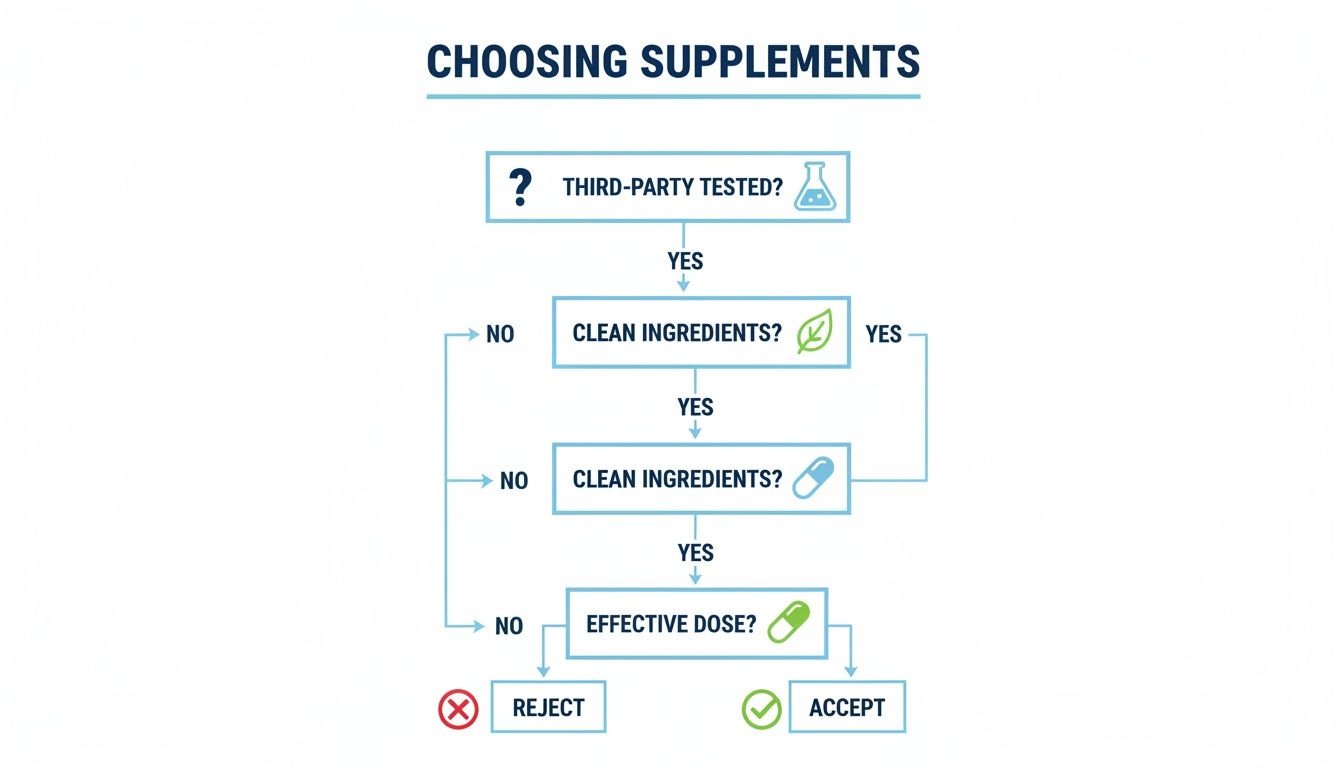
Following this sequence ensures you’re choosing products based on objective quality and purity, which should always be the first step.
Creating Your Sustainable Routine
The best supplements become even more powerful when you weave them into the fabric of your daily life. This isn't about making huge, drastic changes overnight. It’s about small, consistent actions that add up. You can learn more about building a supportive routine by exploring these 5 daily habits for mental health.
Start small. Pick one supplement and one corresponding lifestyle practice that targets your biggest stress-related challenge. Once that feels like second nature, you can layer in another. This gradual, personalized approach is the secret to building a robust stress management system that actually lasts.
Common Questions About Stress Supplements
Getting started with stress supplements usually brings up a few practical questions. You know what they can do and how to find a quality product, but the day-to-day details are what matter most. Let's clear up some of the most common questions so you can feel confident in your routine.
One of the first things people want to know is: how long until I feel something? The answer really depends on the supplement you’re taking and your own unique body chemistry. Some work quickly, while others build up their benefits over time.
How Quickly Will I Feel the Effects?
The timeline for results varies quite a bit because these supplements work on completely different pathways in your body.
- Fast-Acting Support (Within an Hour): L-Theanine is known for its quick onset. Many people feel a sense of alert calm and quieter mental chatter within 30 to 60 minutes, which is why it's great for those in-the-moment stressful situations.
- Gradual Adaptation (Weeks to Months): Adaptogens like Ashwagandha are all about building resilience. Think of it as training your stress response system. While you might feel subtle shifts sooner, the most noticeable benefits—like lower cortisol and a more balanced mood—usually show up after four to eight weeks of consistent daily use.
- Nutrient Repletion (Varies): With minerals like Magnesium Glycinate, how fast you feel it depends on your starting point. If you're deficient, you could notice better sleep and less muscle tension within just a few days to a week.
Can I Take These Supplements Together?
Yes, stacking certain supplements can be a very effective strategy. The key is to choose compounds that complement each other rather than competing. For example, taking L-Theanine for daytime focus and Magnesium Glycinate for nighttime relaxation creates a powerful 24-hour cycle of stress management.
Just be smart about it. Avoid combining supplements with similar actions, like taking two stimulating adaptogens at once, which could leave you feeling wired. It’s always best to start with one new supplement at a time to see how your body responds before you add another one to the mix.
Important Safety Note: Always talk to your healthcare provider before starting any new supplement, especially if you are pregnant, nursing, or on prescription medication. Some supplements, like Ashwagandha, can interact with things like thyroid medications or sedatives. Getting professional guidance ensures your plan is both safe and effective for you.
Understanding these practical details helps you set the right expectations and build a routine that actually works. This is the key to using supplements to restore balance and find a lasting sense of calm.
At Elemental Edge Health, we provide clean, research-backed supplements to support your journey toward a calmer, more resilient you. Our formulas are crafted with pure, effective ingredients to help you manage stress and perform at your best. Explore our collection to find your perfect match. https://www.elementaledgehealth.com