

That bloated, gassy, or irregular feeling? It’s incredibly common, but it definitely doesn't have to be your normal. Natural supplements for digestion can be a powerful way to reclaim your comfort by supporting the core pillars of gut health—probiotics, digestive enzymes, and key herbal allies—and bringing your entire system back into balance.
Your Path to Better Digestion Starts Here
Navigating the world of digestive wellness can feel overwhelming. It's an endless scroll of confusing jargon and countless options. But the good news is, understanding the fundamentals is much simpler than you think.
Picture your digestive system as a complex internal ecosystem. When it’s in harmony, you feel light and energized. But when things get out of sync, discomfort like bloating, gas, and indigestion can quickly become a daily reality.
This guide is your clear, straightforward roadmap. We’ll explore how specific natural supplements act as targeted tools to support different parts of this ecosystem. Instead of a one-size-fits-all approach, you'll learn how to identify what your body truly needs, empowering you to make choices that actually work.
The Core Pillars of Digestive Support
The journey to better gut health is built on several key players, and each one has a distinct job to do. We're going to focus on the most effective, evidence-backed options that work with your body's natural processes, not against them.
- Probiotics: These are the beneficial bacteria that call your gut home, forming the very foundation of a healthy microbiome. They help maintain balance, support nutrient absorption, and fortify your intestinal lining.
- Digestive Enzymes: Think of these as the "keys" that unlock nutrients from your food. They break down complex proteins, fats, and carbohydrates, making them easier for your body to absorb while reducing that heavy, sluggish feeling after a meal.
- Herbal Allies: Nature provides a potent toolkit of botanicals. For centuries, traditional remedies like ginger, peppermint, and bitters have been used to soothe the digestive tract, stimulate digestive juices, and calm discomfort.
Understanding how these elements function helps you see how they can fit together to create a comprehensive support system for your gut.
The goal isn't just to mask symptoms—it's to address the root cause of digestive imbalances. By giving your body the right natural tools, you build a foundation for long-term wellness, enhanced energy, and peak performance.
This guide will demystify these concepts, helping you move past temporary fixes and toward lasting digestive harmony. Forget overwhelming options and vague promises. Here, you'll find the practical knowledge you need to choose clean, research-backed supplements that align with your health goals.
Consider this your first step toward transforming your relationship with food and reclaiming your vitality from the inside out. Your path to feeling your best begins now.
To give you a quick snapshot, here’s a simple breakdown of the main players we'll be discussing. Think of this as your cheat sheet for understanding how each one contributes to better gut health.
Key Digestive Supplements at a Glance
| Supplement Type | Primary Function | Best For |
|---|---|---|
| Probiotics | Populating the gut with beneficial bacteria | General microbiome balance, post-antibiotic recovery, and immune support. |
| Digestive Enzymes | Breaking down macronutrients (proteins, fats, carbs) | Reducing post-meal bloating, gas, and feelings of fullness. |
| Prebiotics & Fiber | Fueling beneficial gut bacteria | Supporting a healthy microbiome and promoting regular bowel movements. |
| Herbal Remedies | Soothing the digestive tract and stimulating digestion | Calming occasional indigestion, nausea, and cramping (e.g., ginger, peppermint). |
This table provides a high-level view, but we're about to dive deep into what makes each of these components tick, how they work, and how to choose the right one for your specific needs.
Understanding Your Digestive System
To really get a handle on how natural supplements work, it helps to first appreciate the incredible system they’re designed to support. Your digestive tract is a finely tuned processing plant, stretching over 25 feet long, with one core mission: to turn the food you eat into the fuel your body needs to thrive. But this isn't just a simple tube—it’s a complex and coordinated dance of mechanical and chemical reactions.
The journey starts with your first bite, but the real work begins in the stomach. Here, powerful acids and enzymes create a churning, acidic environment to liquefy food and start breaking down proteins. This acid bath is non-negotiable; it's crucial for digestion and for zapping harmful bacteria that might have hitched a ride on your meal.
From there, the mixture moves into the small intestine, the main hub for absorbing nutrients. This is where the liver and pancreas get in on the action, releasing bile and a whole cocktail of digestive enzymes to dismantle fats, proteins, and carbs into molecules small enough to pass into your bloodstream.
The Key Players in Your Digestive Process
Three main components have to work together perfectly to keep this whole process running smoothly. When even one of them is out of sync, you feel it—think bloating, gas, fatigue, and general discomfort.
- Stomach Acid: Often misunderstood, hydrochloric acid (HCl) is your gut's first line of defense. It kickstarts protein digestion by activating enzymes like pepsin. If your stomach acid is too low, you’ll struggle to break down food properly, leading to that heavy, "food sitting like a rock" feeling.
- Digestive Enzymes: Think of these as the specialized workers on the disassembly line. Amylase tackles carbs, lipase handles fats, and protease goes after proteins. A shortage of any of these means food particles stay too large, leading to fermentation, gas, and poor nutrient absorption.
- Gut Microbiome: Your large intestine is home to trillions of microorganisms—your gut microbiome. This massive community of bacteria helps ferment indigestible fibers, produces essential vitamins, and maintains the health of your gut lining.
An imbalance in this delicate ecosystem, where "bad" bacteria outnumber the "good" guys, can throw everything from your digestion to your immune system out of whack. For a deeper dive, check out our guide to learn more about how to improve gut health naturally.
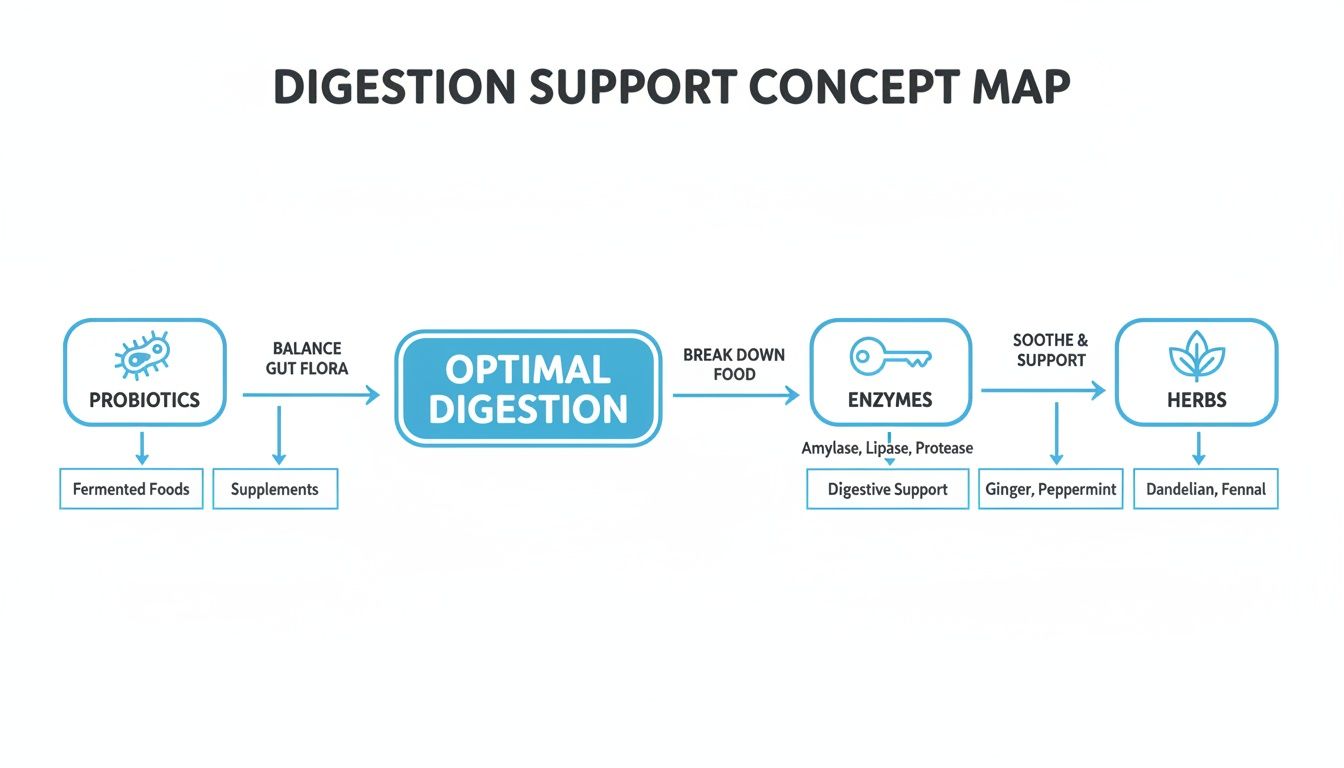
Each of these elements plays a distinct yet interconnected role. It’s all about creating an environment where you can get the absolute most out of every single meal.
When the System Falters
Those common digestive complaints like bloating, indigestion, and irregularity? They're often just signals that a part of this intricate system is struggling. If you feel bloated after a high-fat meal, it might point to a lack of bile or lipase enzymes. Persistent gas could be a sign that unhelpful bacteria in your gut are having a feast on undigested food.
Understanding the 'why' behind your digestive distress is the most empowering step you can take. It transforms you from a passive sufferer into an active participant in your own wellness journey.
By pinpointing where the breakdown is happening, you can see exactly how different natural supplements for digestion are designed to help. A probiotic isn’t just a random pill; it’s a tool to reinforce your gut's microbial army. A digestive enzyme supplement acts as a backup crew for your body's natural output, ensuring your food is broken down completely.
This foundational knowledge sets you up to make smarter, more effective choices. Instead of just guessing, you can start targeting your specific needs and giving your body the precise support it needs to get back in balance and work at its best.
Probiotics: The Foundation of a Healthy Gut
Think of your gut as a complex, thriving garden. Probiotics are the beneficial plants that keep the entire ecosystem in balance. They enrich the soil, crowd out weeds, and help everything flourish. These powerful microorganisms are the cornerstone of a healthy gut microbiome, playing a huge role in everything from how you absorb nutrients to how your immune system functions.
When this internal garden is in balance, friendly bacteria thrive. They help fortify the gut lining and keep potentially harmful microbes in check. That balance is absolutely crucial for smooth digestion and overall wellness. Without a robust population of these allies, your digestive system can become vulnerable to disruptions, leading to common issues like bloating and irregularity.
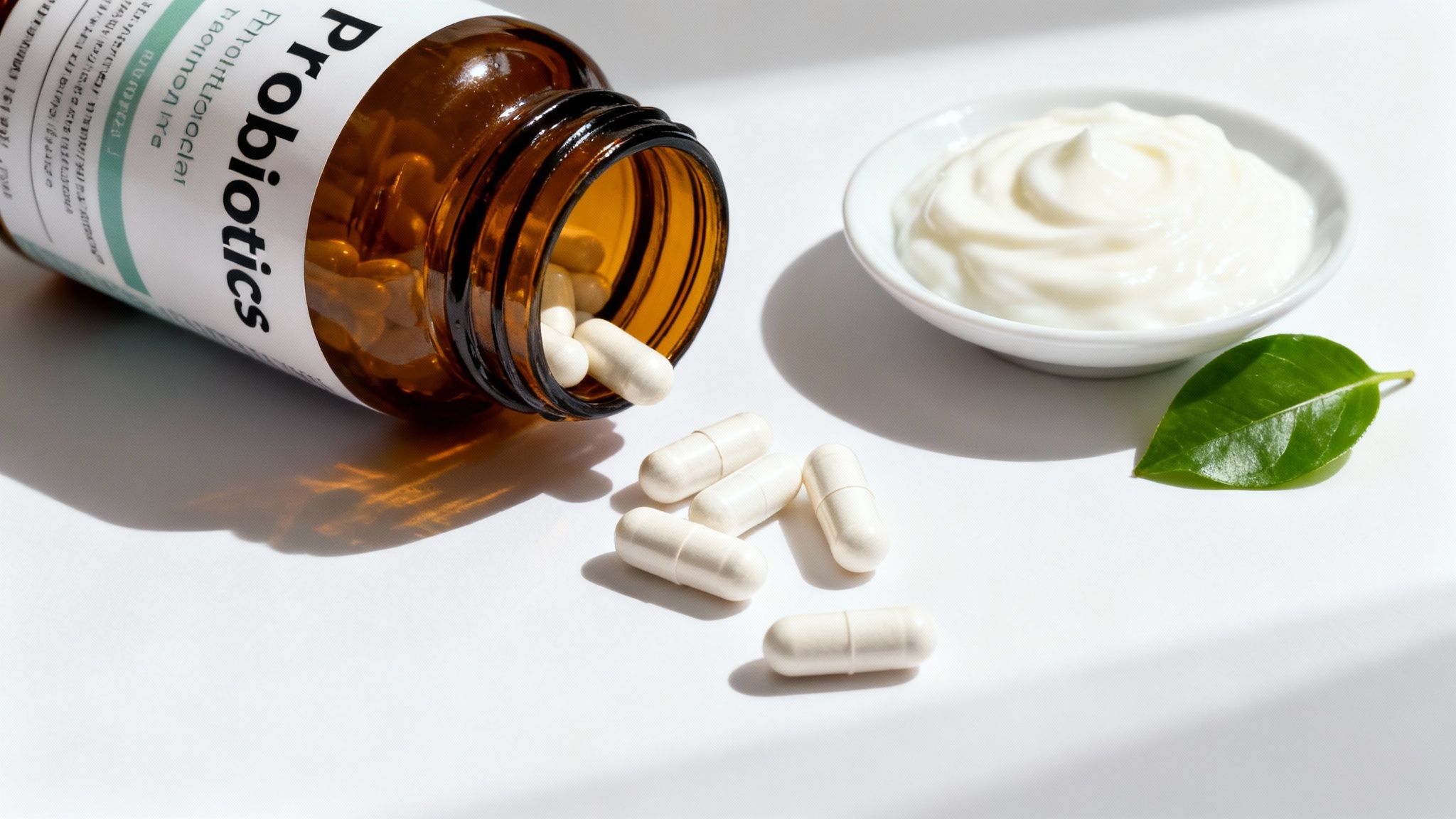
Probiotics have become undisputed champions in the world of natural supplements for digestion, and for good reason. They command a massive 42% market share in the global digestive health supplements market. Even more telling, clinical studies show that regular probiotic intake can reduce digestive discomfort by up to 30-50% for many people, making them a go-to for anyone looking to optimize their gut health. You can explore more on these market trends and their drivers by reading the full report on digestive health supplements.
Key Probiotic Strains and Their Benefits
Not all probiotics are created equal. Different strains of bacteria have different jobs, much like how a quarterback and a lineman have very different roles on a football team. Two of the most heavily researched and effective families are Lactobacillus and Bifidobacterium.
- Lactobacillus Strains: You'll often find these in fermented foods like yogurt and kefir. They are the workhorses of the small intestine, helping to break down lactose (milk sugar) and producing lactic acid to create an environment where bad bacteria can't thrive.
- Bifidobacterium Strains: These bacteria primarily set up shop in the large intestine. They're experts at digesting complex carbs and fibers your body can't handle on its own, producing beneficial compounds that nourish the gut lining and support a healthy immune response.
Within these families, specific strains like Lactobacillus acidophilus are known for supporting both digestion and vaginal health, while Bifidobacterium lactis is celebrated for its ability to improve bowel regularity and ease bloating.
Think of choosing a probiotic like assembling a skilled team. You want a diverse group of specialists who can cover all the bases, ensuring every part of your digestive tract gets the support it needs.
A supplement with multiple, well-studied strains simply provides a more comprehensive approach to gut health than one with a single type of bacteria.
Food Sources Versus High-Quality Supplements
You can absolutely get probiotics from your diet. Fermented foods like yogurt, kefir, sauerkraut, and kimchi are fantastic natural sources. However, if you're trying to address a specific digestive issue, relying on food alone has its limits.
The amount and type of probiotics in food can vary wildly from batch to batch, and it's nearly impossible to know which strains you're getting or in what dose. Plus, those bacteria have to survive the harsh, acidic journey through your stomach to even have a chance of reaching your intestines. Many don't make it.
This is where a high-quality supplement can be a game-changer.
- Targeted Strains: Supplements deliver specific, clinically studied strains known to help with issues like IBS symptoms, gas, or bloating.
- Potent Dosages: They give you a guaranteed, concentrated dose measured in Colony Forming Units (CFUs), ensuring you get a therapeutic amount.
- Enhanced Delivery: Many premium formulas use acid-resistant capsules or other tech to protect the delicate bacteria, ensuring they arrive alive where they're needed most.
For anyone serious about rebalancing their gut, a potent, multi-strain formula can provide a level of targeted support that food alone just can't match. Our Probiotic 40 Billion with Prebiotics was built on this very principle, delivering a powerful and diverse blend of beneficial bacteria to fortify your gut's foundation.
Choosing a Clean and Effective Probiotic
A probiotic is only as good as its quality. A supplement loaded with unnecessary binders, fillers, or artificial ingredients can actually introduce more unwanted junk into your system. When you're picking a probiotic, always prioritize clean, transparent formulations.
Look for products that are non-GMO and clearly list the specific strains and CFU count right on the label. That kind of transparency is the hallmark of a brand that stands behind its quality and effectiveness. By choosing a clean, well-formulated probiotic, you're making sure your body gets pure, powerful support for a truly resilient and balanced gut.
Digestive Enzymes and Herbal Allies
While probiotics get a lot of attention for building a healthy gut microbiome, they’re just one piece of the digestive puzzle. A truly balanced system also relies on a few other key players that help break down food and keep your digestive tract calm and happy. Think of them as the support crew: digestive enzymes and time-tested herbal remedies. Together, they help you get the most out of every meal and keep discomfort from crashing the party.
Imagine digestive enzymes as tiny, specialized scissors that snip your food apart into usable nutrients. Your body naturally makes these proteins to dismantle complex fats, carbs, and proteins into smaller molecules it can actually absorb. Without enough of them, even the healthiest meal can leave you with that heavy, bloated feeling as undigested food just sits there.
For many of us, our natural enzyme production gets the job done. But things like age, stress, or certain health conditions can cause a shortfall. This is where a quality digestive enzyme supplement can make a world of difference, acting as reinforcements to make sure your food is broken down efficiently.

Unlocking Nutrients with Key Enzymes
Different enzymes have very specific jobs. A comprehensive supplement will usually include a blend of the most important ones to cover all your bases.
- Protease: This is your protein-buster. It breaks down proteins from meat, fish, and legumes into amino acids—the essential building blocks for muscle and tissue repair.
- Lipase: Lipase goes to work on fats and oils, turning them into fatty acids your body uses for energy and making hormones. If you feel bloated or notice greasy stools after a fatty meal, low lipase could be a factor.
- Amylase: This enzyme, found in your saliva and pancreas, kicks off the breakdown of complex carbs like starches and grains into simple sugars for a quick energy boost.
Taking an enzyme supplement right before you eat can give your body immediate support, helping it process food more effectively and cut down on that post-meal slump. It's a great strategy for those times you know you’ll be eating a larger or richer meal than usual.
The Soothing Power of Herbal Remedies
Beyond enzymes, nature provides an incredible toolkit of botanicals that have been used for centuries to support digestion. These herbal allies work in different ways, from calming inflammation to gently nudging your body’s own digestive processes into gear.
Ginger, for example, is famous for its ability to quell nausea and help the stomach empty faster, which can bring serious relief from indigestion. Peppermint oil has been shown to relax the muscles of the digestive tract, easing the cramping and discomfort often linked with Irritable Bowel Syndrome (IBS).
Another traditional strategy involves using digestive bitters. These are herbal formulas made from bitter-tasting plants like dandelion or gentian root. That bitter taste on your tongue actually sends a signal to your brain to fire up digestion, triggering the release of stomach acid, enzymes, and bile before food even arrives.
Herbal remedies offer a gentle yet powerful way to work with your body's natural rhythms. They don't just put a bandage on symptoms; they help create a more balanced and resilient digestive system from the ground up.
The Modern Edge of Plant-Based Compounds
The search for effective natural supplements for digestion is also uncovering exciting science behind innovative, plant-based compounds. One ingredient that’s getting a lot of buzz is fulvic acid. This natural substance, sourced from nutrient-rich soil, plays a fascinating role in boosting nutrient absorption and supporting cellular health.
Think of fulvic acid as a delivery truck, helping minerals and other key nutrients pass more easily through cell walls. This means your body can get more out of the food you eat and the supplements you take. It also supports the body's natural detoxification pathways, helping to gently clear out unwanted compounds.
This boom in natural, plant-based supplements is reshaping digestive support, with this market segment expected to see the fastest growth at a 12.7% CAGR from 2025 to 2033. While fulvic acid was used in ancient Ayurvedic practices, modern research has shown it can boost enzyme activity by 25% and ease IBS symptoms in 70% of users, according to recent trials. You can discover more insights about the rise of plant-based digestive aids at Grand View Research.
By combining the timeless wisdom of herbal remedies with the targeted action of enzymes and forward-thinking compounds like fulvic acid, you can build a truly comprehensive approach to gut health. Elemental Edge Health's Gut Health Formula was designed to do just that, integrating many of these powerful ingredients into a complete solution for digestive harmony.
How to Choose High-Quality Supplements
Walking through the supplement aisle can feel overwhelming. With countless bottles making bold claims, how do you know what actually works? The secret is learning how to read a label like an expert, empowering you to make confident choices for your gut health.
A high-quality supplement is defined by what it contains—and, just as importantly, what it doesn't. Your first mission is to become a label detective. Ignore the flashy marketing on the front and turn the bottle around to the ingredient panel. That’s where the truth is.
A premium product will always have a clean, transparent ingredient list. You should be able to clearly identify the active ingredients, their specific forms, and the exact dosages. Just as crucial is the "other ingredients" section—it should be short and free of junk like artificial colors, flavors, sweeteners, and unnecessary fillers.
After all, when you’re investing in natural supplements for digestion, you want pure, potent support. Products loaded with binders and cheap fillers can dilute the effectiveness of the key ingredients and might even introduce substances that irritate a sensitive gut—defeating the entire purpose.
Decoding the Label
Getting familiar with a few key terms on a supplement label is the difference between buying an effective product and wasting your money.
For probiotics, the most important metric is Colony Forming Units (CFUs). This number tells you how many live, active bacteria are in each dose. You want to see a product that guarantees a potent CFU count—often in the billions—that remains stable through the expiration date, not just at the moment it was manufactured.
For digestive enzymes and herbal ingredients, the dosage will be listed in milligrams (mg). Make sure the product provides a meaningful amount of each active component, not just a tiny "dusting" added for label appeal. A transparent brand will be proud to show you exactly what’s inside.
Look for Third-Party Certifications
Because the supplement industry isn’t regulated as strictly as pharmaceuticals, third-party certifications are your best friend. These independent organizations test products to verify that they contain what the label says and are free from harmful contaminants.
Keep an eye out for these seals of approval:
- NSF International: Verifies that the product contains what's on the label and screens for contaminants.
- USP (U.S. Pharmacopeia): Confirms the supplement’s purity, potency, and that it was made according to clean, sanitary procedures.
- GMP (Good Manufacturing Practices): This certification ensures the product was made in a facility meeting strict quality standards for manufacturing, packaging, and labeling.
Think of these seals as an independent expert co-signing the product's quality. It's a powerful signal that the company is committed to transparency and isn't cutting corners.
Choosing supplements with these certifications dramatically reduces your risk of buying a low-quality or even contaminated product.
The Importance of Clean Sourcing
Finally, always consider where the ingredients come from. Reputable brands prioritize clean, non-GMO ingredients and are transparent about their sourcing. High-quality sourcing ensures you're getting the most potent and pure form of each ingredient, whether it's a specific probiotic strain or a carefully extracted herbal compound.
A brand committed to clean formulation will proudly state that its products are free from GMOs, gluten, soy, and other common allergens. This commitment is essential for anyone seeking genuine digestive support without unwanted additives. With this knowledge, you can cut through the noise and confidently choose a high-quality, research-backed supplement that truly works for your body.
Building Your Daily Wellness Routine
Think of natural supplements for digestion as powerful allies, not silver bullets. They work best when they’re part of a bigger picture—one that includes a balanced diet, mindful eating, and stress management. True digestive harmony is a team effort.
It's a bit like tuning a high-performance engine. Your diet provides the premium fuel. The supplements are the precision lubricants and coolants that keep every part running smoothly. Building a consistent routine is what creates a resilient, efficient system that lasts.
A Sample Daily Routine
Here’s a simple framework to show you how these pieces can fit together seamlessly:
-
Morning: Take your probiotic on an empty stomach right after waking up. This gives the beneficial bacteria a clear path to your gut with less interference from stomach acid.
-
With Meals: Pop a digestive enzyme supplement just before you sit down for your largest meal of the day. It provides immediate support for breaking down proteins, fats, and carbs, helping head off that post-meal bloating and heaviness.
-
Throughout the Day: Don’t forget the simple things, like chewing your food thoroughly. Chronic stress also directly impacts gut function, so even taking a few minutes for deep breathing can make a huge difference in how you feel.
Your body is always giving you feedback. The goal is to get better at listening to its signals and giving it the support it’s asking for. Lasting vitality isn’t about a quick fix; it’s about building a sustainable wellness routine that works for you.
Common Questions About Digestive Supplements
Even after you've done your research, it's normal to have a few questions before adding something new to your routine. Let's tackle some of the most common ones so you can move forward with confidence.
How Long Until I See Results?
This is probably the number one question we hear, and the honest answer is: it depends on what you’re taking.
- Digestive enzymes get to work almost immediately. If you take them with a meal, you should notice less bloating and that heavy, "stuffed" feeling right away. They are your meal-time problem solvers.
- Probiotics are more of a long-term investment in your gut health. It typically takes 2 to 4 weeks of consistent, daily use to help new colonies of good bacteria get established. That's when you'll start noticing real shifts in regularity and overall digestive comfort.
- Herbal remedies can vary. Something like ginger might ease a bit of nausea fairly quickly, but other calming herbs often take a few weeks to build up in your system and deliver their full soothing benefits.
No matter which supplement you choose, consistency is everything. Lasting benefits come from sticking with it.
Can I Combine Different Supplements?
Yes, and it's often a smart strategy. Taking different types of digestive aids together can be highly effective because they each do a different job. For example, a popular and effective stack is pairing a daily probiotic (for foundational microbiome support) with a digestive enzyme used only with those larger or richer meals that you know might give you trouble.
That said, it’s always best to introduce new supplements one at a time. Give each one a week or so to see how your body responds. This helps you pinpoint exactly what’s working for you. And, of course, if you have any health conditions or are on medication, a quick chat with your doctor before creating a new supplement stack is essential.
A layered approach is often the most effective. Think of probiotics as your daily foundation, enzymes as your on-the-spot troubleshooters, and herbals as targeted soothers for specific issues.
Are There Any Side Effects I Should Expect?
Most natural digestive supplements are very well-tolerated. When side effects do pop up, they’re usually minor and short-lived. A classic example is the brief period of mild gas or bloating some people feel when starting a new probiotic. This is just a sign that your gut microbiome is adjusting to the new arrivals, and it typically clears up within a few days.
To keep any potential issues to a minimum, always stick with high-quality products. Look for clean formulas that are free from common allergens, unnecessary fillers, and artificial junk. If you experience anything that feels severe or doesn't go away, stop taking the supplement and talk to a healthcare professional.
Is This a Lifelong Commitment?
Not necessarily. The goal is to use supplements as tools, and your toolbox can change as your diet, stress levels, and overall health evolve.
Some supplements are perfect for short-term situations—like using digestive enzymes to get you through the holidays or a vacation. Others, like a good probiotic, might offer powerful long-term benefits for maintaining gut balance, especially if you deal with chronic digestive sensitivities.
It’s a great practice to check in with yourself every few months and reassess your routine. Make sure what you’re taking still matches what your body needs right now.
Ready to build a routine with clean, effective support? Elemental Edge Health offers research-backed, non-GMO supplements designed to help you achieve digestive harmony and peak performance. Explore our complete collection.