

Feeling wrecked after a tough workout is the price of admission for getting stronger, but you shouldn't be sidelined for days on end. If you want to bounce back faster, you need to stop thinking of recovery as a passive waiting game and start treating it as an active part of your training. It all boils down to a simple framework: immediate post-workout nutrition, smart hydration, deep sleep, and targeted supplementation.
Your Blueprint For Faster Muscle Recovery
Let's be clear: optimizing your downtime is just as important as the time you spend under the bar. When you train hard, you're creating microscopic tears in your muscle fibers. That soreness you feel 24 to 48 hours later—what we call Delayed Onset Muscle Soreness (DOMS)—is the direct result of that breakdown and the inflammation that follows.
Real recovery, and the muscle growth that comes with it, only happens when your body repairs those fibers, building them back stronger and more resilient.
Too many people just wait for the soreness to fade. A much better approach is to actively give your body everything it needs to accelerate that repair process. An active recovery strategy helps you:
- Slash the duration and intensity of muscle soreness, getting you back to training sooner and feeling better.
- Maximize muscle growth and strength gains by providing the essential building blocks for repair right when they're needed most.
- Dramatically lower your risk of overtraining and injury by ensuring your body is fully rebuilt between sessions.
- Improve your overall performance because you're consistently operating from a state of readiness, not depletion.
Proactively managing your recovery isn't just about feeling less sore. It's a direct investment in your long-term athletic progress and a non-negotiable part of staying healthy.
The Four Pillars of Accelerated Recovery
Nailing your recovery is about building a consistent, multi-pronged routine that you can stick to. It's no surprise that the global muscle recovery market has exploded, with projections showing it will grow from US$5.6 billion in 2019 to US$8.3 billion by 2024. That growth is fueled by a growing understanding of how crucial post-workout nutrition really is. You can learn more about muscle recovery market trends on Fact.MR.
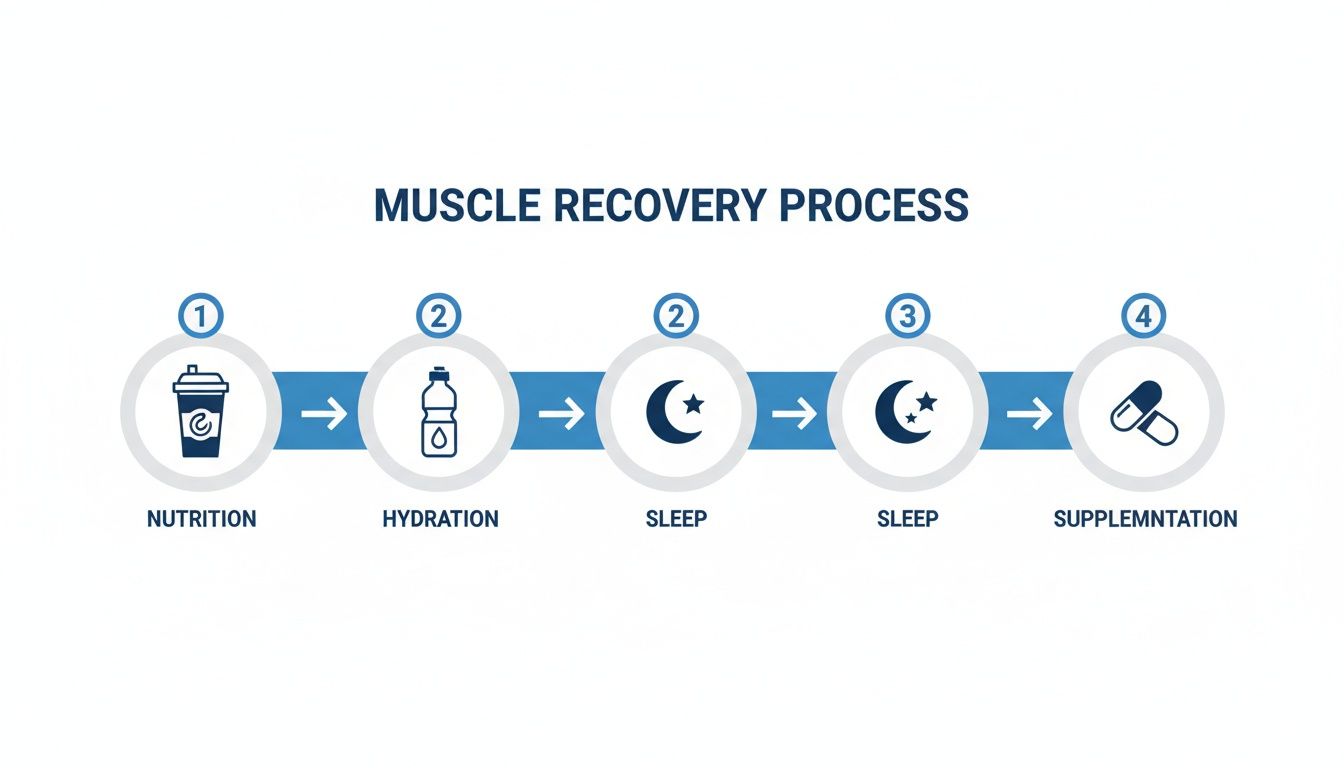
As this visual guide shows, recovery is a sequence of deliberate actions. Each step builds on the last, creating the ideal internal environment for your body to heal, adapt, and come back stronger than before.
To simplify this, I've broken down the most critical first steps into a simple checklist. If you do nothing else, nail these actions within the first hour of finishing your workout.
Your Post-Workout Recovery Checklist
This isn't complicated, but it is time-sensitive. The "anabolic window" might be a bit overhyped, but there's no denying that your body is primed for nutrients immediately after training. Hitting these three targets kickstarts the entire repair cycle.
| Action Item | Why It's Critical | Example Solution |
|---|---|---|
| Protein Intake | Your muscles are screaming for amino acids to begin repairing the microscopic tears you just created. Providing a fast-digesting protein source stops further muscle breakdown and flips the switch to "rebuild" mode. | A whey protein shake with 20-30g of protein. If you're plant-based, a pea and rice protein blend works great. |
| Carbohydrate Refuel | You just depleted your muscle glycogen (your primary fuel source). Replenishing it is non-negotiable for restoring energy, reducing the stress hormone cortisol, and shuttling protein into your muscle cells more efficiently. | A banana, a handful of dates, or 30-50g of a carb powder like maltodextrin or dextrose mixed into your protein shake. |
| Immediate Hydration | You lose significant fluid through sweat, which can impair nutrient transport, increase fatigue, and slow down recovery. Rehydrating immediately helps restore cellular function and flush out metabolic waste. | Drink 16-24 oz of water, preferably with electrolytes, for every pound of body weight lost during your workout. |
Think of this table as your go-to reference for that crucial first hour. Get these things right consistently, and you're already way ahead of the game.
Strategic Nutrition for Muscle Repair
That first hour after your workout? It’s a critical window to kickstart the repair process, no doubt. But what you eat and drink over the next 72 hours is what really builds the foundation for a full recovery.
Think of your post-workout shake as the emergency response team—fast and essential. But your daily nutrition is the skilled construction crew that meticulously rebuilds everything stronger than before. This long-term strategy is where the real magic happens for anyone looking to consistently improve and slash recovery time.
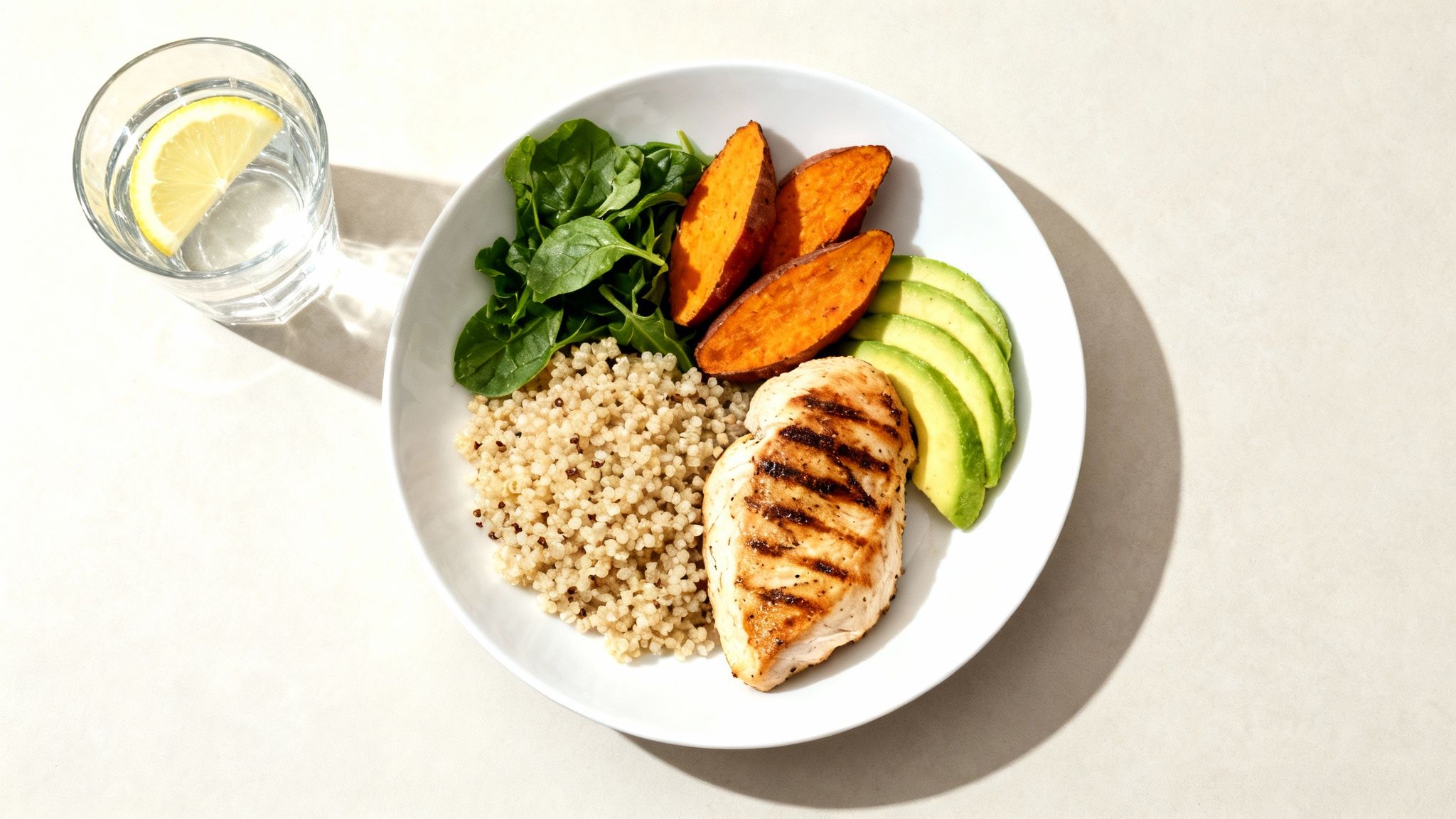
This whole process hinges on a steady supply of high-quality macronutrients. Each one plays a distinct yet interconnected role in repairing muscle and restoring energy. If you skimp on this fuel, recovery stalls, soreness sticks around, and your next workout will definitely suffer.
Fueling the Rebuild with Protein
Protein is the non-negotiable raw material for muscle repair. After a tough session, your body is in a state of muscle protein breakdown. Getting enough protein provides the amino acids needed to stop this breakdown and flip the switch to muscle protein synthesis—the actual process of rebuilding damaged muscle fibers.
The key is consistency. Don't just slam a shake and call it a day. Spreading your protein intake across three to five meals helps maintain a steady stream of amino acids in your system, creating the perfect environment for continuous repair. Our guide on https://www.elementaledgehealth.com/blogs/news/whey-protein-101-evidence-backed-benefits-how-to-use-it-and-who-it-s-for dives deeper into the evidence-backed benefits.
Excellent protein sources for recovery include:
- Lean Meats: Chicken breast, turkey, and lean cuts of beef are packed with complete protein.
- Fish: Salmon and tuna pull double duty with high-quality protein and anti-inflammatory omega-3 fatty acids.
- Dairy: Greek yogurt and cottage cheese offer slow-digesting casein protein, making them great for sustained release (especially before bed).
- Plant-Based Options: Lentils, chickpeas, tofu, and quinoa are fantastic choices for plant-based athletes.
Restocking Energy with Complex Carbohydrates
While protein handles the rebuilding, carbohydrates are all about refueling. Intense training drains your muscle glycogen, which is your body’s primary fuel tank. If you don't top off those tanks, you'll feel fatigued, your performance will drop, and the whole recovery process slows down.
Focus on complex carbohydrates that deliver sustained energy and key nutrients. Simple sugars have their place right after a workout, but your main meals should prioritize slower-digesting sources.
Smart carbohydrate sources include:
- Sweet potatoes
- Oats
- Brown rice
- Quinoa
- Whole-grain bread
- Fruits like bananas and berries
A classic mistake is fixating on protein while forgetting about carbs. Remember this: carbs are protein-sparing. When your body has enough glycogen to run on, it's far less likely to break down precious muscle tissue for energy.
Managing Inflammation with Healthy Fats
Healthy fats often get overlooked in the recovery conversation, but they’re crucial for managing inflammation and supporting hormonal health. Exercise naturally causes some inflammation—that’s a normal part of the healing process. The problem is when that inflammation becomes chronic or excessive, as it can seriously hinder recovery.
Omega-3 fatty acids, found in foods like fatty fish, flaxseeds, and walnuts, are particularly good at helping to regulate this inflammatory response. Making sure you get enough of these fats can help reduce that lingering muscle soreness and keep your joints happy.
The Critical Role of Hydration and Electrolytes
Think of proper hydration as the delivery system for all these vital nutrients. Even a little bit of dehydration can thicken your blood, which slows down the delivery of amino acids and glucose to your muscles. It also makes it harder to flush out metabolic waste products. The result? More soreness and a much longer recovery.
Electrolytes—especially sodium, potassium, and magnesium—are the unsung heroes here. They’re proven to help reduce cramps and fatigue, while dehydration can drag out your recovery time by a staggering 20-50%.
Here's a simple, practical trick: weigh yourself before and after a hard workout. For every pound of body weight you lose, aim to drink 16-24 ounces of fluid to get back to baseline. Adding an electrolyte powder or eating mineral-rich foods like leafy greens and bananas will help restore the balance your muscles need to function and repair at their best.
Unlocking Deeper Recovery Through Sleep
While nutrition and hydration lay the groundwork for recovery, the real architectural work of muscle repair happens when you're unconscious. Sleep isn't just downtime; it's your body's most powerful and non-negotiable recovery tool. This is when your system shifts from breaking down to building up. Skimping on sleep is like asking a construction crew to rebuild a skyscraper with half their tools missing.

During the deep stages of sleep, your body orchestrates a symphony of restorative processes. Blood flow to your muscles increases, delivering a fresh supply of oxygen and nutrients. More importantly, your pituitary gland releases a massive surge of Human Growth Hormone (HGH), a key player in tissue repair and muscle growth.
This hormonal cascade is essential for turning the amino acids from your food into new muscle tissue. At the same time, your body gets to work on cellular cleanup, clearing out the metabolic waste that accumulates during intense exercise and contributes to that all-too-familiar soreness.
The Science Behind Sleep and Muscle Repair
The link between sleep and recovery isn't just theory; it's a physiological reality. A recent US survey found that 35% of people rank a solid night's sleep as their top recovery method, and the science overwhelmingly supports this instinct.
Quality sleep can boost growth hormone release by an incredible 200-300% during deep sleep cycles, which in turn can accelerate muscle recovery by 20-25%. On the flip side, studies have linked poor sleep to recovery times that are up to 50% longer. This makes getting enough quality rest a critical, non-negotiable part of any serious fitness plan.
You can dig deeper into the most popular workout recovery methods on Statista.
Consistently poor sleep doesn't just slow you down; it actively works against your goals. It leads to elevated levels of cortisol, the stress hormone that promotes muscle breakdown—the exact opposite of what you want. It also tanks your cognitive function and reaction time, increasing your risk of injury during your next workout.
Creating Your Ultimate Sleep Sanctuary
You can't force yourself to sleep, but you can create an environment that makes quality rest almost inevitable. This is all about controlling your surroundings to send powerful signals to your brain that it's time to power down and begin the repair process.
-
Embrace Total Darkness: Your body produces the sleep hormone melatonin in response to darkness. Even tiny amounts of light from electronics or streetlights can disrupt this process. Use blackout curtains and cover any LED lights to make your room as dark as possible.
-
Keep It Cool: Your body's core temperature naturally drops as you fall asleep. A cool room, ideally between 60-67°F (15-19°C), helps this process along and promotes deeper, more restorative sleep cycles.
-
Silence the Noise: Unpredictable sounds can easily pull you out of deep sleep, even if you don't fully wake up. If you live in a noisy area, consider using a white noise machine or earplugs to create a consistent, peaceful soundscape.
Think of your bedroom as a recovery cave. Its only purposes should be sleep and intimacy. Keeping work, TVs, and other distractions out of the room helps your brain associate the space exclusively with rest.
The Wind-Down Routine for Better Recovery
Your body doesn't have an on/off switch. You need to ease into sleep with a consistent pre-bed routine that signals it's time to relax. This "wind-down" period is crucial for lowering cortisol and calming your nervous system after a long day.
A simple yet effective routine could look like this:
- Dim the Lights: About an hour before bed, lower the lights in your home to mimic the setting sun. This helps kickstart melatonin production.
- Disconnect from Screens: The blue light from phones, tablets, and TVs is a powerful melatonin blocker. Put them away at least 60 minutes before you plan to sleep.
- Incorporate Relaxation: Spend 10-15 minutes doing something calming. This could be light stretching, reading a physical book, meditating, or taking a warm bath or shower.
- Consider a Sleep-Supportive Supplement: Certain natural compounds can significantly improve sleep quality. Magnesium Glycinate is a standout, as it helps calm the nervous system without causing digestive issues, allowing for deeper and more uninterrupted rest.
This routine isn't about adding more tasks to your day. It's about strategically removing stimulation to prepare your body and mind for the most important recovery session you'll have. For more tips on getting your sleep cycle back on track, check out our guide on how to fix your sleep schedule.
By prioritizing these simple habits, you transform sleep from passive downtime into an active tool for muscle recovery.
Choosing Supplements That Actually Work
Navigating the supplement world can feel like a full-time job. With flashy labels and even bolder claims, it’s easy to get lost in the hype and waste money on products that don't actually move the needle.
The key to a smart supplement strategy is precision. Forget the kitchen sink approach. We're focusing only on the ingredients that have solid scientific backing to support real-world muscle recovery. A well-chosen supplement stack won't replace a foundation of good nutrition and sleep, but it can act as a powerful accelerator for your body's natural repair processes.
Let’s cut through the noise and look at what works.
The Cornerstones of a Recovery Stack
Think of supplements as targeted tools. You don't need a massive, complicated toolbox—just a few reliable instruments that do their job exceptionally well. For muscle repair, three supplements consistently stand out in research for their effectiveness and reliability.
These are the essentials. They provide the raw materials for rebuilding, help restore cellular energy, and manage the inflammatory response that causes lingering soreness.
- Protein Powder (Whey or Plant-Based): This is the most direct and efficient way to deliver the amino acids your muscles are craving post-workout. A fast-digesting protein source kickstarts muscle protein synthesis—the actual process of repairing and rebuilding tissue.
- Creatine Monohydrate: Known mostly for its performance-boosting effects, creatine is also a recovery powerhouse. It helps replenish ATP, your muscles' primary energy source, allowing you to recover faster not just between sets, but between workouts, too.
- Omega-3 Fatty Acids: These essential fats are potent anti-inflammatory agents. They help regulate the body's response to intense exercise, which can significantly reduce the severity and duration of delayed onset muscle soreness (DOMS).
This simple stack covers the most critical aspects of recovery: rebuilding, re-energizing, and reducing inflammation.
Understanding Protein Powders
The single most important supplement for muscle repair is protein. While you should absolutely get the majority from whole foods, a high-quality protein powder offers an unmatched level of convenience and speed of absorption right when your body needs it most.
Slamming 20-40 grams of protein within the first couple of hours after training can dramatically speed up the recovery process. For most people, whey protein is an excellent choice due to its complete amino acid profile and high concentration of leucine, the primary amino acid that pulls the trigger on muscle growth. If you're dairy-free or plant-based, a good blend of pea and rice protein can provide a comparable amino acid profile to support your goals.
The Proven Power of Creatine Monohydrate
Creatine is one of the most extensively studied supplements on the planet, with a rock-solid reputation for safety and effectiveness. Its main job is to help your body regenerate ATP, the energy currency of your cells. This means more power during your workouts, but just as importantly, it means your muscles recover their energy stores much more quickly afterward.
Studies have shown again and again that consistent creatine supplementation can reduce muscle cell damage and inflammation following strenuous exercise.
A standard daily dose of 3-5 grams of creatine monohydrate is all you need. Forget the complicated "loading" phases you might have heard about; just take it consistently—even on your rest days—to keep your muscle stores saturated and ready to go.
This simple addition can lead to noticeable improvements in both strength and how quickly you bounce back from tough sessions. If you want a deeper look at what to look for, you can learn more about the best supplements for athletic performance in our detailed guide.
Managing Inflammation with Omega-3s
Post-exercise inflammation is a necessary part of the healing process, but when it runs unchecked for too long, it hinders recovery and amps up soreness. Omega-3 fatty acids, particularly EPA and DHA found in fish oil, are fantastic for helping to keep this response in check.
By incorporating omega-3s, you're not trying to eliminate inflammation entirely—you're just helping your body manage it more effectively. This can lead to a significant reduction in muscle soreness, allowing you to feel ready to train again sooner and with less discomfort.
Look for a high-quality fish oil supplement that provides a combined daily dose of 1-2 grams of EPA and DHA. For plant-based athletes, an algae-based oil is an excellent alternative that delivers the same beneficial fatty acids. By building your supplement plan around these proven ingredients, you create a powerful, targeted system to speed up muscle recovery and get back to your training stronger than before.
Using Active Recovery to Your Advantage
True muscle recovery isn’t about just collapsing on the couch and waiting for the soreness to fade. While passive rest certainly has its place, intelligent, gentle movement—what we call active recovery—can seriously speed up the healing process.
Think of it this way: after a tough workout, your muscles are congested with metabolic byproducts that cause that all-too-familiar soreness and stiffness. Simply sitting still allows that "traffic jam" to linger. Active recovery, on the other hand, acts like a gentle street sweeper. It encourages circulation to flush out the debris and deliver a fresh supply of oxygen and nutrients your muscles are screaming for.
This doesn't mean you should go crush another workout. The key is low intensity. The goal is to get your body moving without adding any more stress or damage to those already fatigued muscle fibers.

Gentle Movement for Faster Healing
Slotting some light activity into your rest days can make a world of difference in how you feel and perform. Research shows that active recovery can significantly blunt the effects of delayed-onset muscle soreness (DOMS), helping you feel ready for your next session much sooner.
Here are a few of my go-to active recovery techniques:
- Low-Intensity Cardio: A 20–30 minute walk, a slow bike ride, or a light swim are all perfect. You’re just trying to get your heart rate up slightly—enough to stimulate blood flow without taxing your system.
- Dynamic Stretching: Unlike holding a static stretch, dynamic stretches involve moving fluidly through a full range of motion. Think leg swings, arm circles, and torso twists. These are fantastic for reducing stiffness and improving your mobility.
- Foam Rolling: This is essentially a deep tissue massage you can give yourself. By applying pressure to tight spots, or "knots," you can help release muscle tension and drive blood flow directly to the sore areas.
Active recovery is your secret weapon against prolonged stiffness. It bridges the gap between total rest and your next hard workout, ensuring your body stays mobile and primed for repair instead of locking up.
Advanced Modalities: Cold and Heat Therapy
Ready to take things up a notch? Two of the most accessible and well-studied methods for recovery are cold and heat therapy. They both offer unique benefits, but the key is knowing when to use each one. They work through different mechanisms and are definitely not interchangeable.
Cold Therapy for Acute Inflammation
Cold therapy—think cold showers, ice packs, or full-on ice baths—is your best friend in the immediate aftermath of a brutal workout. The cold triggers vasoconstriction, which is a narrowing of your blood vessels. This helps clamp down on acute inflammation, swelling, and the sensation of pain.
It’s the perfect way to calm the initial inflammatory storm that follows all that microscopic muscle damage. It might not be the most comfortable experience, but a 10–15 minute exposure to cold can seriously reduce muscle soreness in the 24 hours after your session.
Heat Therapy for Lingering Stiffness
Heat therapy, like a sauna, hot tub, or a simple heating pad, does the exact opposite. It promotes vasodilation, widening the blood vessels and cranking up blood flow to the area. This makes it a phenomenal tool for easing that lingering muscle tightness and joint stiffness 24–48 hours after your workout, once the first wave of acute inflammation has passed.
The increased circulation delivers more oxygen-rich blood and helps relax tight muscle fibers. It's an excellent move the day before your next workout to improve mobility and shake off any residual soreness.
The Role of Compression Garments
Another tool that’s become a staple for many athletes is compression gear. Wearing compression tights, socks, or sleeves after training applies gentle, graduated pressure to your limbs.
This external pressure can help reduce muscle swelling and may even improve circulation by helping your veins push deoxygenated blood back toward the heart. While they aren't a magic bullet, studies suggest that wearing compression gear right after exercise can help lessen the severity of DOMS and your perception of fatigue. It's another valuable edge in your quest to recover faster.
Your Top Muscle Recovery Questions, Answered
Even with the perfect plan, questions are going to come up. And when it comes to muscle recovery, the internet is flooded with misinformation. Let's clear the air and tackle some of the most common questions we hear, so you can bust a few myths and refine your strategy.
Getting these details right is often the difference between making steady progress and hitting a wall.
How Long Does Muscle Recovery Actually Take?
There's no magic number here. The real answer depends entirely on the workout's intensity, your current fitness level, and how dialed-in your nutrition and sleep are.
For mild soreness after a moderate session, you’ll probably feel back to 100% within 24-48 hours. But after a truly brutal leg day or hitting a new PR, your body might need 72 hours or even longer to fully repair those muscle fibers.
The key is learning to listen to your body. Normal delayed onset muscle soreness (DOMS) feels like a dull, widespread ache. Sharp, specific pain that doesn't go away could be a sign of injury, and that means you need serious rest, not another workout.
Should I Train a Muscle Group That Is Still Sore?
This is the classic dilemma every lifter faces. The answer isn't a simple yes or no.
Training with mild soreness is generally fine—it can even be helpful. Gentle, active recovery like a walk, a light bike ride, or some dynamic stretching can increase blood flow to the sore muscles. This helps shuttle nutrients in and clear out metabolic waste, which can ease stiffness and speed up the healing process.
However, if you're dealing with severe soreness that limits your range of motion, pushing through another intense session is a terrible idea. You're not being tough; you're just increasing your risk of injury and preventing the muscle from healing properly. It's far smarter to rest that muscle group or focus on training a different part of the body.
For Recovery, Is Protein More Important Than Carbs?
That's like asking if an engine is more important than fuel. You absolutely need both, and they do completely different jobs.
- Protein provides the amino acids—the literal building blocks—your body needs to repair and rebuild the muscle tissue you just broke down.
- Carbohydrates are your body’s go-to source for refilling muscle glycogen, which is the primary fuel tank you emptied during your workout.
Thinking you only need one is a rookie mistake. If you skip the carbs, your body might start breaking down protein for energy, which completely undermines the muscle repair process you're trying to support. An ideal recovery meal or shake has a solid serving of both.
Can Supplements Replace Good Nutrition and Sleep?
Absolutely not. If you take away one thing, let it be this. Supplements are designed to do exactly what their name says: supplement an already solid foundation.
While tools like whey protein and creatine can definitely give you an edge and speed things up, they are powerless against a bad diet or chronic sleep deprivation. Think of them as accelerators, not replacements. Nailing your meals and getting 7-9 hours of quality sleep will always, always deliver the biggest results.
At Elemental Edge Health, we believe in building that strong foundation first. Our clean, research-backed supplements are designed to enhance your efforts and help you achieve your recovery goals faster. Explore our collection of high-quality protein powders, essential minerals, and omega-3s to build a smart, effective recovery stack. Find your edge at https://www.elementaledgehealth.com.