

When it comes to the best supplements for athletic performance, the evidence keeps pointing back to a core group of heavy hitters. We're talking about creatine monohydrate for strength and power, whey or plant-based protein for muscle repair, beta-alanine for high-intensity endurance, and caffeine for a clean boost in energy and focus.
These four are backed by a mountain of research and form a powerful, reliable foundation for any serious athlete.
Your Blueprint For Peak Performance
Every athlete is looking for an edge. It’s that small advantage that helps you smash a personal record, grind out one more rep, or just feel ready to go again for tomorrow's session. Strategic supplementation can absolutely provide that edge, but let's get the mindset right from the start.
Think of supplements not as magic pills, but as powerful tools that amplify a solid foundation of consistent training, smart nutrition, and restorative rest. They are the final 10% that helps you capitalize on the 90% of hard work you’re already putting in.
This guide is your clear, evidence-based roadmap. We’re going to cut through the marketing hype and confusing claims to show you the most effective supplements for any goal, whether you're building raw strength or boosting long-distance stamina. You'll walk away knowing not just what works, but why it works.
Why Supplementation Matters in Modern Athletics
The interest in performance nutrition has absolutely exploded, moving from professional locker rooms right into our everyday lives. The global sports nutrition market was valued at around USD 66.27 billion in 2024 and is on track to nearly double by 2033. This isn't just a fad; it reflects a massive shift in how dedicated people approach their fitness. To see the numbers behind this trend, you can dig into the growth of the sports nutrition market.
Of course, this surge in popularity means more options, but it also brings a ton of confusion. Our goal is to arm you with the knowledge to build a supplement plan that truly supports your unique athletic journey, ensuring every choice you make is safe, effective, and aligned with your personal best.
Supplements are designed to fill specific gaps and provide targeted support that diet alone sometimes can't deliver, especially under the intense demands of athletic training. They work with your body's natural systems to optimize energy production, delay fatigue, and accelerate repair.
To give you a quick cheat sheet, we've organized the most effective, research-backed supplements for the most common athletic goals. Think of this as your starting point for building a smart, effective stack.
Top-Tier Supplements for Key Athletic Goals
| Athletic Goal | Primary Supplement | Key Benefit |
|---|---|---|
| Strength & Power | Creatine Monohydrate | Boosts ATP production for explosive energy & strength gains |
| Muscle Growth & Repair | Whey or Plant Protein | Provides essential amino acids to rebuild muscle tissue post-workout |
| High-Intensity Endurance | Beta-Alanine | Buffers acid in muscles to delay fatigue during intense efforts |
| Energy & Focus | Caffeine | Stimulates the central nervous system to increase alertness & reduce fatigue |
| Sustained Endurance | Electrolytes | Maintains hydration and prevents muscle cramping during long sessions |
| Recovery & Joint Health | Omega-3 Fatty Acids | Reduces inflammation and supports joint and cardiovascular health |
This table covers the proven winners. While many other supplements offer benefits, these are the ones with the strongest scientific consensus, making them the most reliable choices for seeing real results.
Building Strength and Power Brick by Brick
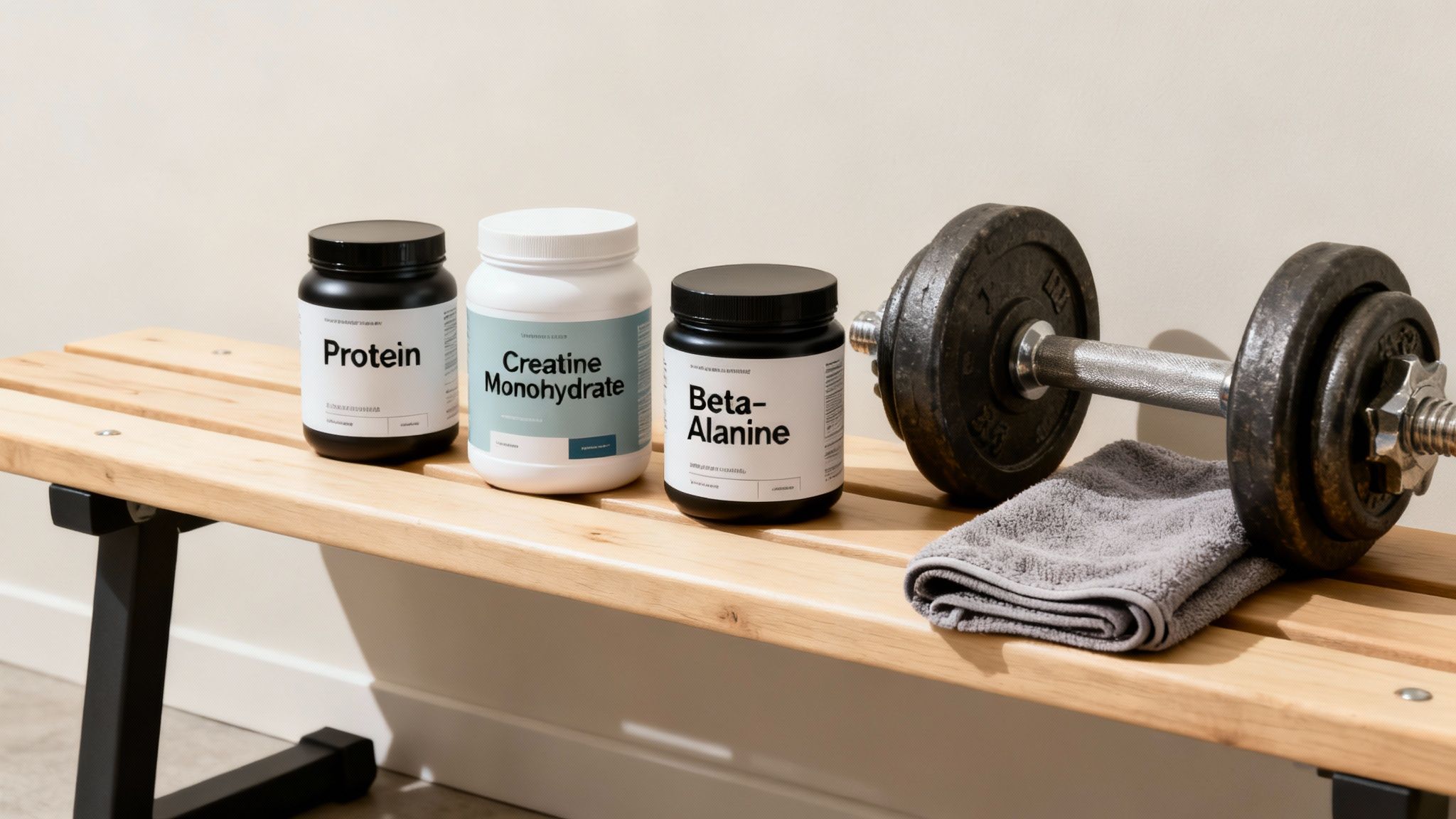
If you're serious about building strength and getting more powerful, you have to give your body the right raw materials to do the job. Think of it like constructing a skyscraper. You need steel beams to build the structure, but you also need heavy machinery to hoist them into place. For an athlete, the right supplements act as both the structural components and the high-octane fuel for your muscular engine.
Let's break down the three foundational supplements that deliver a knockout punch for muscle growth, strength gains, and the sheer grit to push harder in the gym. These aren’t just trendy ingredients; they're some of the most researched and validated tools in sports nutrition, each playing a distinct yet complementary role.
Protein: The Master Muscle Builder
Picture your muscles as buildings under construction. Every intense workout creates tiny micro-tears in their structure, like minor damage to the framework. Protein, which is made up of amino acids, provides the essential “building blocks”—the steel, concrete, and glass—your body needs to repair that damage. More importantly, it uses them to build the structure back even stronger than before.
This repair-and-grow process is called muscle protein synthesis. Simply put, without enough protein, your body can't execute the blueprint for muscle growth. Downing a protein shake, especially after a workout, floods your system with these amino acids right when your muscles are primed for repair.
Most active people should aim for 1.2 to 2.0 grams of protein per kilogram of body weight daily to support muscle growth and recovery. While whole foods are key, a high-quality whey or plant-based protein powder offers a super convenient and fast-absorbing way to kickstart that recovery process immediately.
Creatine: The Instant Energy Recharger
If protein provides the building blocks, creatine is the heavy-duty generator powering the construction site. It's easily one of the most studied and effective supplements for boosting strength, power output, and lean muscle mass.
Your muscles run on a high-energy molecule called adenosine triphosphate (ATP) for short, explosive movements like a heavy squat or a sprint. The catch? Your body only stores enough ATP for a few seconds of all-out effort. This is where creatine comes in. It acts as a “cellular battery recharger,” rapidly regenerating ATP so you can grind out more reps and lift heavier before hitting a wall.
By topping off the available energy for high-intensity work, creatine allows you to push your training volume and intensity further than you could otherwise. Over time, this directly translates to greater strength and muscle gains.
A standard, proven dose is 3-5 grams of creatine monohydrate per day. Just take it consistently. There's no need to cycle it on and off; its benefits build up as your muscles become saturated with it. For a deeper look at how it all works, check out our guide on what creatine is and how it works.
Beta-Alanine: The Muscle Burn Buffer
You know that deep, burning sensation you feel during the last few reps of a really tough set? That’s from a buildup of hydrogen ions, which makes your muscles more acidic and screams "fatigue!" to your brain. Beta-alanine is the tool that helps you fight back against that burn.
Think of beta-alanine as a “muscle burn buffer.” When you take it, your body converts it into a compound called carnosine, which gets stored in your muscles. Carnosine’s job is to soak up those excess hydrogen ions, effectively neutralizing the acid that causes you to fatigue.
This buffering effect allows you to push through the burn and sustain high-intensity effort for longer. The real-world benefits are pretty clear:
- More Reps: It helps you squeeze out one or two extra reps on sets in that crucial 8-15 rep range.
- Delayed Fatigue: You can maintain your performance longer during grueling workouts or high-intensity interval training.
- Improved Work Capacity: The ability to consistently do more work in the gym leads to better and faster training adaptations.
The clinically effective dose for beta-alanine is 3.2 to 6.4 grams per day. Many people split this into smaller doses to avoid a harmless but sometimes distracting tingling sensation called paresthesia. Just like creatine, its benefits kick in after your muscles become saturated over several weeks of consistent use.
Fueling Your Engine for Endurance and Stamina
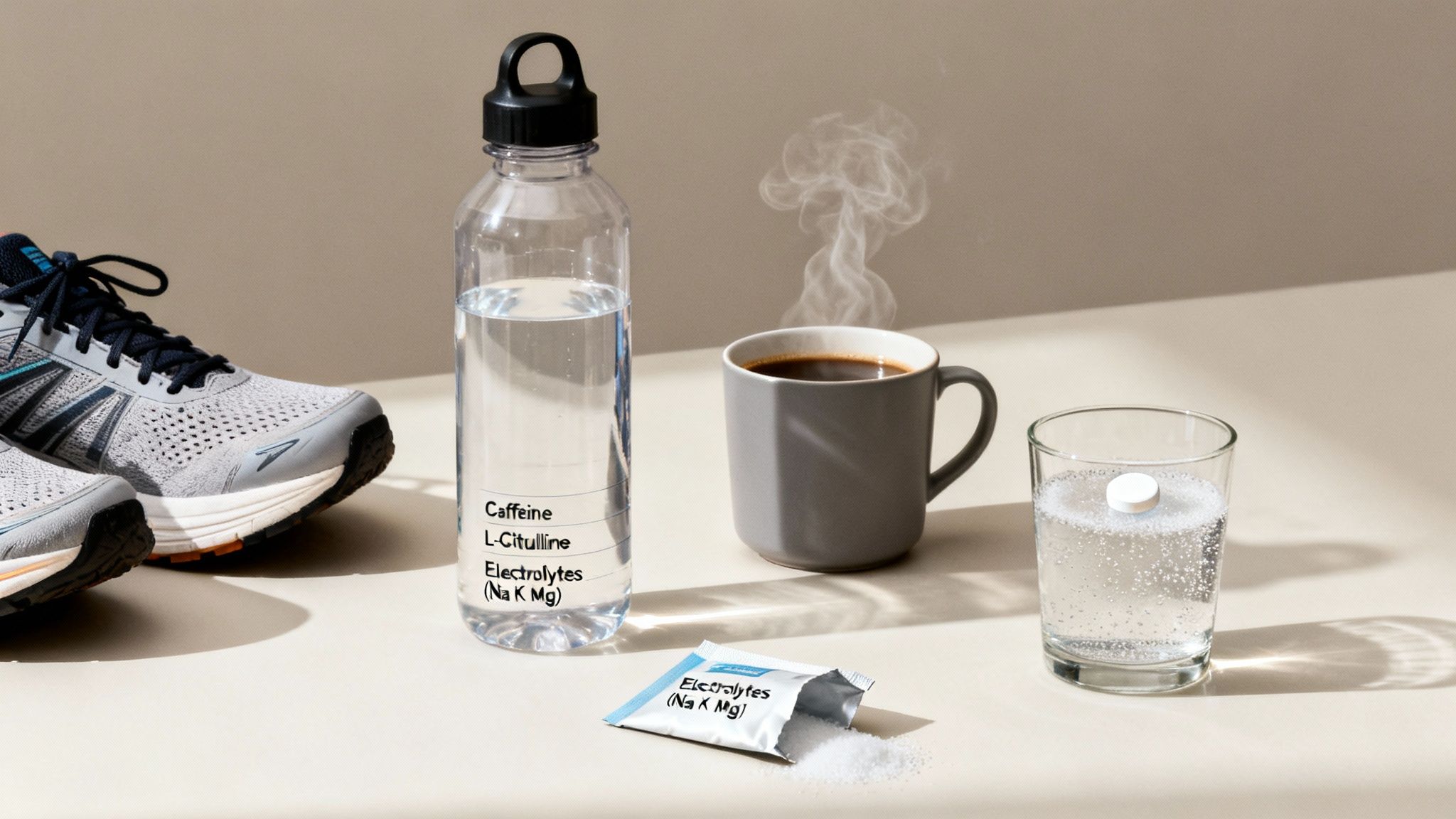
While explosive power is all about instant energy, endurance is a different beast entirely. It’s a game of sustained effort, delayed exhaustion, and keeping your body firing on all cylinders over the long haul. Building real stamina is less about raw force and much more about metabolic efficiency and mental grit.
The best supplements for endurance athletes work by fine-tuning the body’s systems for prolonged activity. They help you manage hydration, improve oxygen flow, and can even trick your brain into pushing just a little bit harder. Let’s break down the key players that keep your engine running strong from the first mile to the last.
Caffeine: Your Mental Edge for Tough Miles
We all know caffeine sharpens focus, but its benefits for endurance athletes go much deeper. It works directly on your central nervous system to lower your perception of effort. This is a huge deal. It means that grueling pace you’re holding can feel psychologically easier, allowing you to maintain a higher intensity for longer.
Think of it as turning down the volume on your brain's fatigue signals. Solid research shows a moderate dose can improve performance in endurance activities by 2-4%. For any competitive athlete, that’s a massive advantage over the course of a race.
A smart, effective strategy is to take 3-6 mg of caffeine per kilogram of body weight about 60 minutes before your event or key training session. This timing gives it enough space to hit peak concentration in your bloodstream right when you need it most.
Electrolytes: The Spark Plugs for Your Muscles
During long workouts, you lose a lot more than just water through sweat; you’re also losing critical minerals called electrolytes. Sodium, potassium, and magnesium are absolutely essential for nerve signaling, muscle contractions, and maintaining fluid balance. Ignoring them is a fast track to cramping, dehydration, and a serious drop in performance.
Imagine electrolytes as the 'spark plugs for your nervous system.' Without them, the electrical signals that tell your muscles to contract can misfire, leading to cramps and weakness. A well-formulated electrolyte drink doesn't just hydrate; it keeps your muscular and nervous systems communicating effectively.
This is exactly why chugging plain water during a marathon or triathlon just isn't enough. You have to actively replace these lost minerals to sustain your performance.
Nitric Oxide Boosters: The Highway Expanders
To perform for hours, your muscles need a constant, reliable supply of oxygen and nutrients. This is where nitric oxide (NO) boosters, like L-citrulline, come in. They are powerful supplements that make this delivery system far more efficient by signaling the smooth muscles in your blood vessels to relax.
This process is called vasodilation, and it effectively widens your circulatory pathways. A good way to think of these supplements is as 'highway expanders for your blood flow.' By opening up these pathways, your heart can pump oxygen-rich blood to your working muscles more easily, which improves your stamina and delays that feeling of fatigue.
To really dial this in, here are a couple of evidence-based approaches:
- L-Citrulline: A dose of 6-8 grams taken about an hour before exercise has been shown to ramp up nitric oxide production and improve endurance.
- Beetroot Juice/Extract: Beetroot is naturally high in nitrates, making it another fantastic way to boost NO levels and support cardiovascular efficiency during sustained effort.
By integrating these specific supplements, endurance athletes can build a more robust and resilient performance engine. They address the unique physiological demands of going the distance, giving you the targeted support needed to push past previous limits and finish strong.
Unlocking Your Potential with Faster Recovery
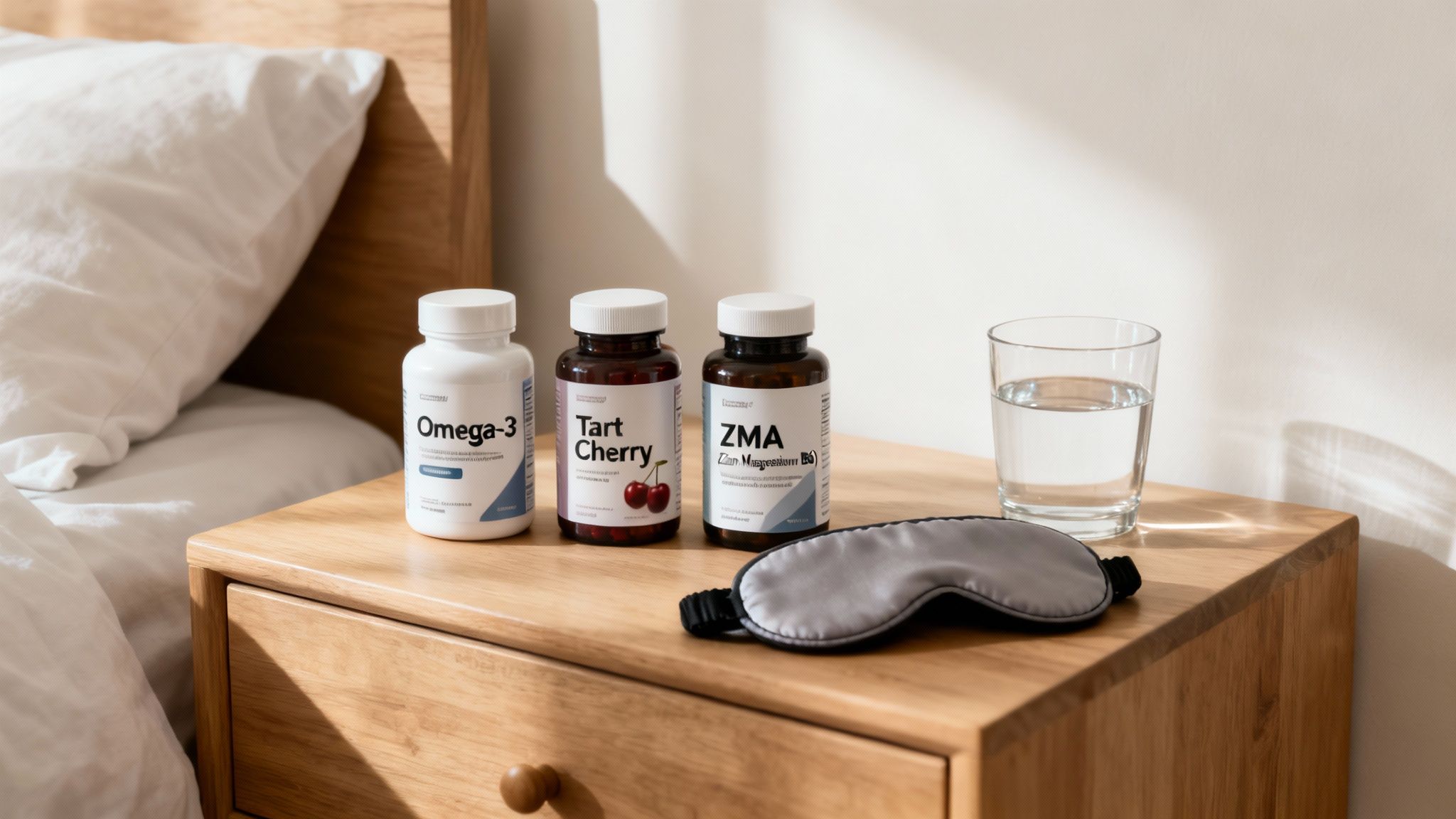
True athletic progress isn't made in the gym or on the track; it's forged in the quiet hours between workouts. This is when your body repairs, rebuilds, and adapts, coming back stronger than before. If you neglect recovery, you’re trying to build a house on an unstable foundation—sooner or later, things will start to break down.
The right supplements can seriously speed up this crucial process, cutting down on soreness and getting you back to training at your peak. These aren't stimulants for your workout. Think of them as essential tools that work overnight and between sessions to ensure you're always ready for the next challenge.
Omega-3 Fatty Acids: The Cellular Fire Department
Every tough workout creates a degree of inflammation. While some of this is a necessary signal for muscle repair, chronic or excessive inflammation will absolutely hinder recovery, dial up soreness, and slow your progress to a crawl. This is where Omega-3 fatty acids, especially EPA and DHA, play a starring role.
Think of Omega-3s as your body's cellular fire department. When the alarm of post-exercise inflammation goes off, they arrive on the scene to help manage the response and keep it from getting out of control. This anti-inflammatory action soothes overworked muscles and joints, making them a cornerstone supplement for performance and long-term health.
By helping to balance the body's inflammatory response, Omega-3s can reduce muscle soreness and support joint health, which is critical for anyone engaged in repetitive, high-impact training.
For most athletes, a daily intake of 1-2 grams of combined EPA and DHA is the sweet spot for supporting recovery. While post-workout protein is non-negotiable for muscle repair—a topic we cover in our guide to the evidence-backed benefits of whey protein—Omega-3s work in the background to create a healthier internal environment for that repair to happen efficiently.
Tart Cherry Extract: Taming Muscle Soreness
Few things can derail a training week like severe Delayed Onset Muscle Soreness (DOMS). That intense, day-after ache can make even simple movements feel like a monumental effort. Tart cherry extract has emerged as a powerful, natural tool for combating this exact problem.
Packed with compounds called anthocyanins, tart cherries have potent antioxidant and anti-inflammatory properties. These compounds work to neutralize the oxidative stress and inflammation that get kicked up during strenuous exercise, directly targeting the mechanisms that cause muscle damage and soreness.
Studies show that athletes who supplement with tart cherry often experience significantly less muscle pain and faster recovery of strength after tough workouts. Consider it a targeted solution for taking the edge off DOMS, allowing you to stay consistent without being sidelined by debilitating soreness.
ZMA: The Ultimate Sleep and Recovery Formula
Sleep is arguably the single most powerful recovery tool you have. It's when your body releases growth hormone, repairs tissues, and solidifies the motor patterns you learned during training. Optimizing your sleep quality is completely non-negotiable for peak performance.
ZMA is a smart, synergistic blend of three micronutrients that directly support this nightly restoration:
- Zinc: A key player in immune function and regulating hormones, including testosterone, which is vital for muscle repair and growth.
- Magnesium: Essential for calming the nervous system, reducing the stress hormone cortisol, and promoting deep, restful sleep. Athletes often run low due to losses through sweat.
- Vitamin B6: Included to enhance the absorption and utilization of both zinc and magnesium, making the whole formula more effective.
Taking a ZMA supplement 30-60 minutes before bed can help you fall asleep faster and achieve a deeper state of restorative sleep. This creates the ideal hormonal and physiological environment for your body to fully recover, ensuring you wake up feeling repaired, refreshed, and ready to go.
Building an Unbreakable Athletic Foundation
Peak performance isn’t just about what you chug down minutes before a workout. It's built on a foundation of deep, consistent health. The most powerful pre-workout or cleanest protein powder can only do so much if the underlying systems that govern energy, immunity, and stress are running on fumes.
This is where foundational supplements come in. They aren't about the immediate, flashy results; they're about long-term resilience and optimization. Think of these as the essential maintenance crew for your body—the unsung heroes working behind the scenes to make sure you can train hard, recover fully, and stay in the game without hitting a wall.
The Micronutrient Power Trio
Certain vitamins and minerals play such a massive role in athletic function that they demand special attention. If you're deficient in any of these key areas, it can quietly sabotage your performance, creating frustrating plateaus and even raising your risk of injury or getting sick.
For any serious athlete, these are the non-negotiables:
- Vitamin D: Often called the "sunshine vitamin," this one is critical for bone health because it helps your body actually absorb calcium. It also plays a vital role in immune function and muscle contraction, directly impacting your strength and ability to fend off illness.
- Magnesium: This mineral is a true workhorse, involved in over 300 enzymatic reactions that include energy production, muscle function, and nerve signaling. Athletes lose a lot of magnesium through sweat, making them especially prone to low levels, which can show up as cramps, poor sleep, and sluggish recovery.
- Iron: This is absolutely essential for creating hemoglobin, the protein in your red blood cells that ferries oxygen to your muscles. Low iron means less oxygen delivery, which translates directly to hitting a wall with fatigue and a serious drop in your endurance.
Probiotics and Your Second Brain
There’s a good reason your gut microbiome—the trillions of bacteria living in your digestive tract—is often called your "second brain." It has a huge influence on everything from your mood and immune system to how well you absorb nutrients from your food. Intense training is a stressor, and it can throw this delicate ecosystem out of whack.
Probiotics are the beneficial bacteria that help reinforce a healthy gut lining. For an athlete, this means more efficient nutrient absorption from your diet and other supplements, which is key for energy and repair. A healthy gut is also the headquarters of your immune system; a strong microbiome can help you stay healthy during tough training blocks. You can find more insights on crucial support nutrients like these in our guide to the benefits of Omega-3 fatty acids.
Think of your gut as the central processing hub for all incoming fuel. If the hub is compromised, even the highest-quality fuel won't be distributed effectively to where it's needed most—your muscles.
Adaptogens: The Stress Regulators
Athletic training is a form of stress—a good one, but still a stress. When you pile that on top of life's other demands, your body's stress-response system can get overworked, leading to elevated cortisol, fatigue, and burnout. Adaptogens are remarkable herbs that help your body adapt to and manage stress more effectively.
Ashwagandha is one of the most well-researched adaptogens for athletes. It works by helping to regulate cortisol levels, promoting a sense of calm and resilience against both physical and mental stressors.
Regular use has been linked to:
- Reduced perceived stress and anxiety
- Improved sleep quality
- Enhanced endurance and strength
A common dosage for athletic support is around 500–600 mg daily. By acting as a "stress regulator," ashwagandha helps you absorb the strain of training without letting it overwhelm your system. Think of it as your long-term insurance policy against burnout.
How to Build Your Personal Supplement Stack
Knowing what each supplement does is one thing. Learning how to combine them into a smart, personalized stack is where you’ll see real results. Don’t worry, this doesn't have to be complicated. It’s simply about matching the right tools to your specific athletic goals—whether you're a powerlifter chasing a new PR or a marathoner aiming for a personal best.
The trick is to start with a solid foundation and then layer in performance-specific ingredients. Every athlete, regardless of sport, runs better on a baseline of good health. From there, you can add compounds that directly support the unique demands of your training.
Start with Your Goal in Mind
Your primary objective in the gym or on the field should steer your supplement choices. A one-size-fits-all approach just won’t cut it. Let’s look at two very different athletes to see how this works in the real world.
The Powerlifter's Stack
This person is all about maximizing strength, raw power, and muscle growth. Their entire stack is built for explosive, short-duration efforts.
- Foundation: High-quality protein powder (post-workout), Vitamin D, and Magnesium.
- Performance: Creatine Monohydrate (5g daily) to fuel those heavy, explosive lifts.
- Support: Beta-Alanine (4g daily) to help buffer that muscle burn during high-rep accessory work.
The Marathon Runner's Stack
This athlete is focused on sustained energy, efficient oxygen delivery, and bulletproof hydration. Their stack prioritizes endurance and recovery above all else.
- Foundation: Vitamin D, Iron (if needed), and Omega-3s to help manage inflammation.
- Performance: Caffeine (~200mg pre-run) to lower the feeling of perceived effort.
- Support: An electrolyte blend (during long runs) to maintain hydration and fight off cramps.
Choosing Safe and Effective Products
The supplement industry is a wild west, and not all products are created equal. Putting safety and quality first is non-negotiable for protecting your health and actually getting what you pay for. The sports nutrition space is also evolving fast, with things like gummies and chewables now competing with classic powders. You can learn more about these global sports supplement trends on innovamarketinsights.com.
To make sure you’re choosing wisely, always look for these signs of a quality product:
- Third-Party Testing: Look for seals from organizations like NSF Certified for Sport or Informed-Sport. These verify that a product is free from banned substances and that the label is accurate.
- Transparent Labeling: Steer clear of "proprietary blends." A brand you can trust will list the exact amount of every single active ingredient, so you know exactly what you’re putting in your body.
Your goal should be to build a supplement routine with clean, effective ingredients. Choosing third-party tested products ensures that you're fueling your body safely and giving yourself the best possible chance to perform at your peak without any unwanted additives.
This decision tree illustrates how foundational supplements like Vitamin D, Magnesium, and Probiotics should form the base of any solid stack.
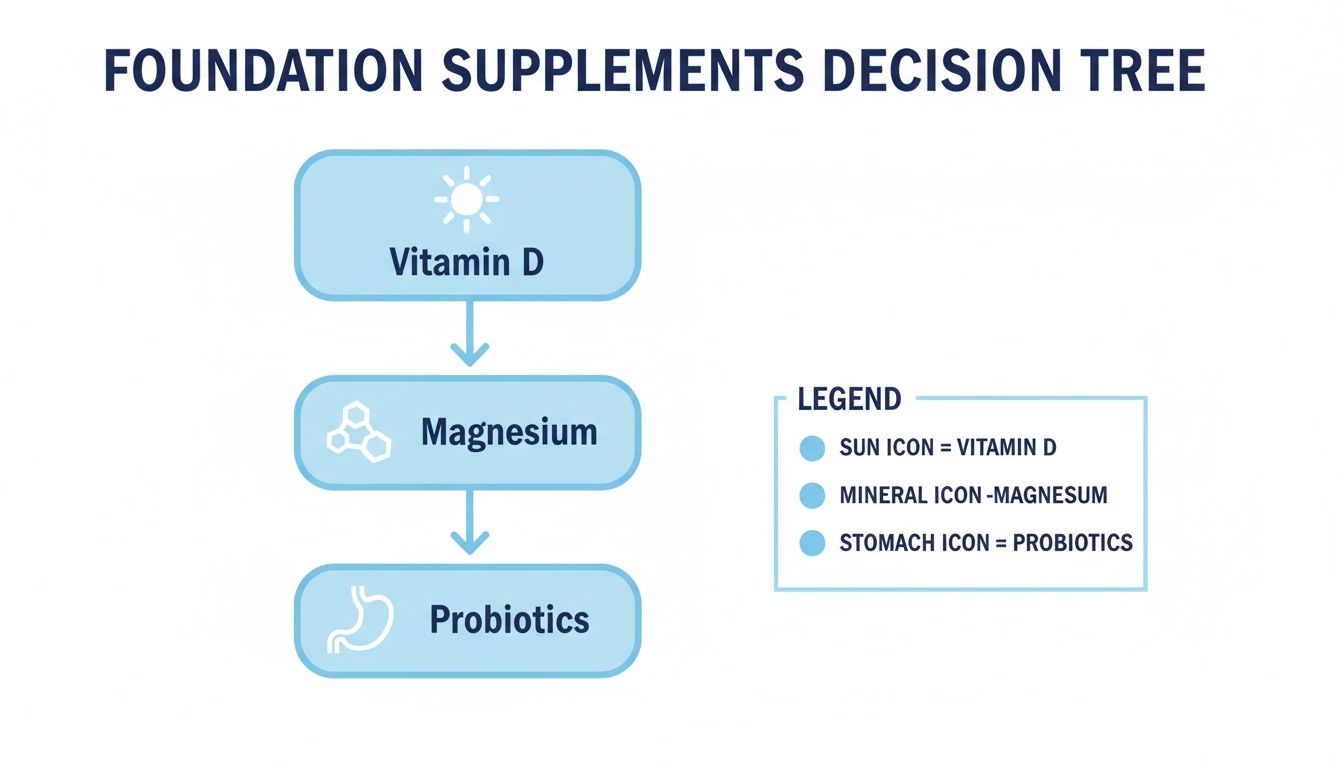
As you can see, a solid health base is the non-negotiable first layer. Only after that’s handled should you start adding supplements for specific performance goals.
Your Questions, Answered
Navigating the world of athletic supplements can feel overwhelming. Let's clear up some of the most common questions to help you build a smart, effective strategy.
Do I Need to Cycle My Supplements?
This is a great question, and the answer really depends on what you’re taking.
For stimulants like caffeine, cycling—taking a planned break—is a smart move. If you use it daily, your body builds a tolerance, and you’ll find you need more and more to get the same kick. Taking a week off every month or so can help reset your sensitivity so it works when you need it.
On the other hand, foundational supplements like creatine and beta-alanine work by building up in your system. They are most effective with consistent, daily use to keep your muscles saturated. The same goes for protein, vitamins, and minerals. Always check the product's specific guidelines and talk to a healthcare pro if you’re unsure.
Can I Get Everything I Need from Food Alone?
A whole-food diet is the absolute cornerstone of performance. Supplements are never a substitute for great nutrition, period. Food gives you the energy, macronutrients, and micronutrients your body needs to function, recover, and thrive.
That said, supplements are a strategic tool to fill specific gaps and push performance to the next level. They can deliver targeted compounds like creatine or beta-alanine at doses that are almost impossible to get from food alone, especially if you have a high training volume.
Think of supplements as a way to complement and amplify an already solid diet, not replace it. They provide a specific, concentrated dose of a key compound right when your body needs it most—like fast-absorbing protein after a workout or electrolytes during a long race.
How Soon Can I Expect to See Results?
Patience is key, but the timeline really depends on how the supplement works.
- Immediate Effects: You'll feel the buzz from stimulants like caffeine within an hour. Simple as that.
- Saturation-Based Effects: For supplements that need to build up, like creatine and beta-alanine, it typically takes 2-4 weeks of consistent use before your muscles are fully saturated. That’s when you’ll start to notice real performance benefits.
- Long-Term Support: Foundational and recovery aids like Omega-3s or Vitamin D work in the background. Their benefits are cumulative and build up over time to support your overall health and resilience.
No matter what you're taking, consistency is what unlocks its full potential.
Are Supplements Only for Professional Athletes?
Absolutely not. While elite athletes rely on supplements to find that competitive edge, anyone who is serious about their fitness can benefit.
Whether you're a dedicated gym-goer, a weekend warrior hitting the trails, or just trying to stay active and strong, supplements can help improve your performance, speed up recovery, and support your overall health. The trick is to match the supplement to your specific needs and goals.
Ready to build a clean, effective supplement stack that actually supports your performance goals? At Elemental Edge Health, we provide transparent, third-party-tested supplements designed for athletes who demand the best. Explore our collection and start building your edge today.